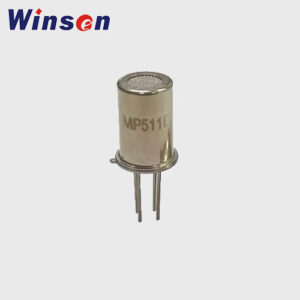
Refrigerant Gas Leak Sensor

Refrigerant Gas Leak Sensor (Leak Detector) — A1 / A2L / A3

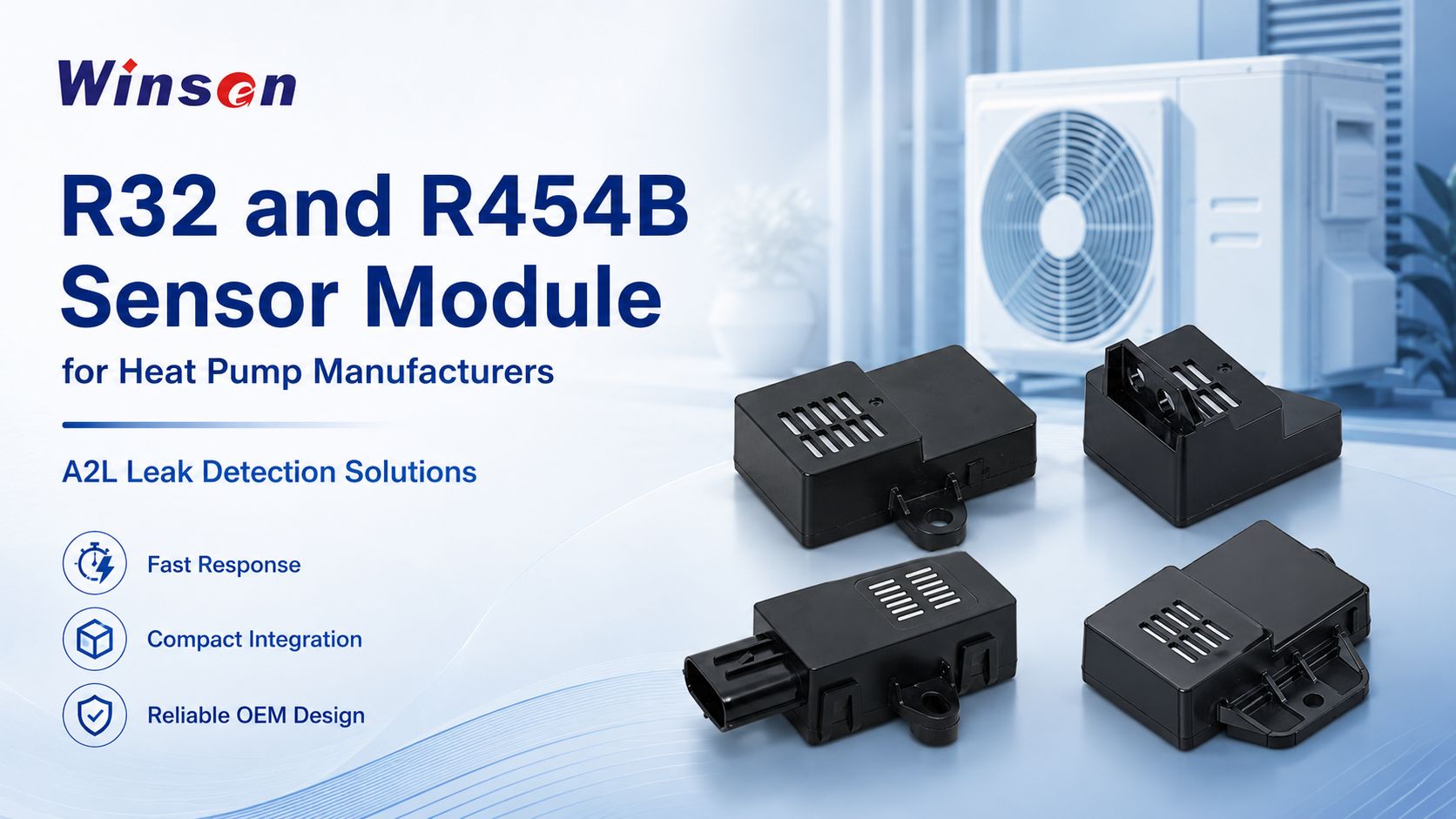
Winsen® manufactures fixed refrigerant gas leak sensors and detectors for A1 (R134a, R410A, R404A), A2L (R32, R454B, R1234yf/ze), and A3 (R290, R600a) na mga gas. Pumili Ay n para sa ppm maagang babala o MOS/DIR para sa %LEL na mga interlock na pangkaligtasan—handa para sa BMS/PLC sa pamamagitan ng 4–20 mA, RS-485 Modbus, at mga output ng relay.

Model Guide — Select by Refrigerant Class

A1 HFC/HFO — NDIR PPM

  • Ranges: 0–1,000 / 0–5,000 ppm (customizable)
  • Mga Output: 4–20 mA, RS-485 Modbus, 1–2 relay
  • T90 ≤ 30 s • Mababang drift, mahabang buhay

A2L Low-GWP — NDIR PPM / %LEL

  • Maagang babala ng PPM at/o 0–100% LFL/LEL
  • 4–20 mA / RS-485 / mga relay
  • Ideal for VRF/VRV rooms & heat pumps

A3 Nasusunog — %LEL Kaligtasan

  • Saklaw: 0–100% LEL (NDIR-LEL o MOS)
  • Relays for fan/start-stop interlocks
  • Rugged housings up to IP65

Why a Refrigerant Gas Leak Sensor?

  • Early warning: Detect ppm-level leaks before comfort or uptime is affected.
  • Safety interlocks: Use %LFL thresholds to start ventilation and shut down equipment.
  • Integration: Native 4–20 mA / RS-485 / relays for BMS, PLC, horns and beacons.
  • Lower loss & service cost: Continuous monitoring reduces refrigerant escape and downtime.

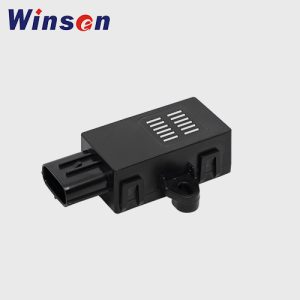
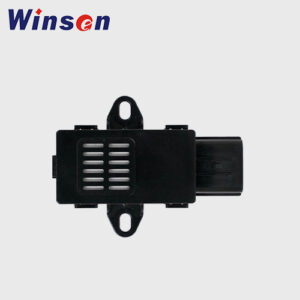
NDIR Refrigerant Sensor

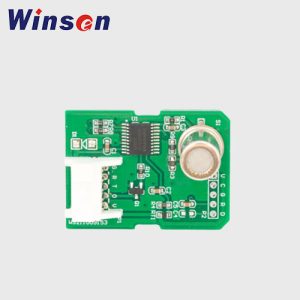
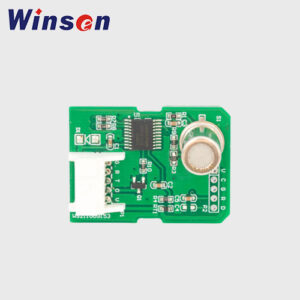
Semiconductor Refrigerant Sensor

Paghahambing ng Teknolohiya

TeknolohiyaPinakamahusay Para saSaklawKalamanganMga pagsasaalang-alang
NDIR (Infrared)A1 ppm; A2L ppm/%LELppm → %LELHigh selectivity, low drift, not O₂-dependentProtektahan mula sa mabigat na condensation/dust (mga filter/enclosures)
MOS (Semiconductor)A2L/A3%LEL0–100% LELMabilis na tugon; matatag; cost-effectivePossible cross-sensitivities; periodic calibration
Catalytic BeadPangkalahatang hydrocarbon (A3)0–100% LELMature, widely usedNeeds O₂; can be poisoned (silicones/lead)

Typical AC Applications

VRF/VRV indoor units & hotel rooms

Mababa ang bundok (~150–300 mm sa itaas ng sahig) malapit sa mga panloob na unit at pooling point. Pre-alarm → fresh-air purge; pangunahing alarma → pagsara ng fan/indoor-unit.

Chiller & machinery rooms, compressor racks

Place near compressors, oil separators, valves, and floor low spots/sumps. Use IP-rated housings and BMS interlocks.

Cold storage & refrigerated display cases

Install beneath cases and along manifolds/pipe runs. Use condensation-resistant designs; alarms can close curtains and start extract.

Mga in-row/CRAC unit ng data center

Position in return-air paths, beneath raised floors, and near coils. PPM early warning protects personnel and uptime.

Heat pumps & general HVAC equipment

For A2L/A3, use %LFL tiers (~25% pre-alarm; ~50% main) to trigger ventilation and safe shutdown.

Mga Pagpipilian sa Teknolohiya

TeknolohiyaPinakamahusay Para saSaklawKalamanganMga pagsasaalang-alang
NDIR (Infrared)A1 ppm; A2L ppm/%LELppm → %LELHigh selectivity, low drift, not O₂-dependentProtektahan mula sa mabigat na condensation/dust (mga filter/enclosures)
MOS (Semiconductor)A2L/A3%LEL0–100% LELMabilis na tugon; matatag; cost-effectivePossible cross-sensitivities; periodic calibration
Catalytic BeadPangkalahatang hydrocarbon (A3)0–100% LELMature, widely usedNeeds O₂; can be poisoned (silicones/lead)

Placement & Setpoints — Good Practice

  • Taas ng pag-mount: Most refrigerants are heavier than air ⇒ mount low; confirm with on-site airflow.
  • Saklaw: ~5–10 m radius bawat sensor sa mga bukas na silid; magdagdag ng mga yunit na malapit sa mga balbula/joint at mababang bulsa.
  • Mga alarm: A2L/A3: pre-alarm ≈25% LFL; pangunahing ≈50% LFL. A1: mga ppm band (hal., 1,000–5,000 ppm) bawat spec ng proyekto.
  • Interlocks: Pre-alarm → ventilation; Main → equipment shutdown + beacon/horn/BMS event.

I-finalize ang mga threshold at dami kumpara sa detalye ng iyong proyekto at mga lokal na code.

Bakit Pinipili Kami ng mga Global Client?

Ang kumpanya ay patuloy na sumusunod sa kalidad ng patakaran ng "Fine Craftsmanship, Scientific Innovation, Pursuit of Excellence, at Value-Added Service." Sa pamamagitan ng pagbabalangkas ng mga plano sa pagkontrol sa proseso ng produksyon at mga tagubilin sa trabaho, ito ay nagtatag ng isang standardized, accountable, at regulated na sistema ng pamamahala ng proseso. Bukod pa rito, ang kumpanya ay nakapag-iisa na bumuo ng isang MES production management system, na nagpapagana ng komprehensibo at visual na pamamahala sa buong workflow.

30+ TAON NG KARANASAN

R&D, manufacture and sales of sensors and sensing solutions.

KALIDAD GUARANTEE PATULOY NA PAGPAPABUTI

Kumpleto at mahigpit na kontrol sa daloy ng proseso, kasama ng mga makabuluhang pagpapabuti.

INTERNATIONAL MARKET

Maghatid ng mga sensing na produkto sa higit sa 100 bansa at rehiyon.

MATATAG NA SUPPLY CHAIN ​​MAAASAHANG PRODUKSIYON

Mga pangunahing bahagi na hindi napapailalim sa mga hadlang, mga advanced na kagamitan para sa paggawa at pagsubok.

R&D STRENGTH TECHNOLOGY INNOVATION

200+ patents, 180+ R&D team members, self-built labs for continous innovation.

One-stop na serbisyo

Propesyonal na konsultasyon, mabilis na paghahatid, 24 na oras na suporta pagkatapos ng benta.

Leading the Industry, Innovative & Controllable Technology

With robust R&D capabilities, we maintain sustained input in R&D and unwavering commitment to technological innovation. This not only ensures that we remain at the forefront of industry but also drives continuous innovation, leading the future trend of the sensing industry.

10% R&D Input

The average annual R&D input exceeds 10% of the annual revenue.

5+ R&D Layout

With Zhengzhou headquarters as the core, a nationwide R&D and innovation system is being established, encompassing cities of Shanghai, Wuhan, Shenzhen, and Taiyuan.

180+ R&D Team

There are over 180 R&D personnel, including more than 10 with doctoral degrees and over 50 with master's degrees, who have an average of more than 8 years of experience in sensor development.

20+ Uri ng Eksperimento

Kaugnay ng gas, Kapaligiran sa Klima, EMC, Pagganap ng Elektrisidad, Pagganap ng Mekanikal, atbp.

10+ Advanced na Laboratoryo

CNAS Laboratory, MEMS Laboratory, UL Laboratory, Nanocomposite Materials Laboratory, atbp.

400+ sets Leading R&D Equipment

Cube Storage, Die Bonder, Lithography Machine, Coating Machine, SMT Placement Machine, Automatic Probe Station, atbp.

Humiling ng Konsultasyon

    Tagumpay! Ang iyong mensahe ay ipinadala sa amin.
    Error! Nagkaroon ng isang error na nagpapadala ng iyong mensahe.

    WeChat

    Whatsapp

    FAQs — Infrared (NDIR) Refrigerant Leak Sensors

    How many sensors do I need per room?

    As a rule of thumb, plan ~5–10 m radius coverage per sensor in unobstructed rooms. Add units near compressors, valves, brazed joints, and low-lying pockets where gas may pool. Complex layouts and aisle shelving typically require more sensors.

    What alarm thresholds should I use?

    For A2L/A3 gases, common practice is a pre-alarm around ~25% LFL to start ventilation and a main alarm around ~50% LFL to trip equipment and trigger beacons/horns. For A1 gases, use ppm bands (e.g., 1,000–5,000 ppm) per project spec. Always follow local codes and your risk assessment.

    Where should sensors be mounted?

    Most refrigerants are heavier than air, so mount low (≈150–300 mm above floor) near likely leak sources and pooling points. Avoid strong supply air that could bypass the sensor. For ducts/returns, use probe or in-duct models with splash/dust guards.

    How often should I calibrate and bump-test?

    Typical calibration intervals are 12–24 months, with periodic bump tests (e.g., quarterly/bi-annually). Dusty, humid, or high-traffic sites may require more frequent checks and filter maintenance.

    What can cause cross-sensitivity or false alarms?

    Strong solvents and aerosols (e.g., silicone sprays, alcohol cleaners, paint fumes) can affect semiconductor elements; heavy condensation or dust can obstruct optics. Use IP-rated housings, splash/dust guards, and good placement/maintenance to minimize effects.

    How do I integrate with BMS/PLC?

    Sensors provide 4–20 mA (2/3-wire), RS-485 Modbus RTU (configurable address/baud), and 1–2 relays (N.O./N.C.). Typical scaling is 4 mA = 0 and 20 mA = full-scale. Map pre-alarm to ventilation and main alarm to shutdown/interlocks per your control philosophy.

    Higit pang Kaalaman sa Mga Refrigerant Sensor

    Hindi sigurado Aling sensor tama ba?

    Kumuha ng isang libreng paunang konsultasyon ngayon

    ay naidagdag sa iyong cart.
    Pag -checkout