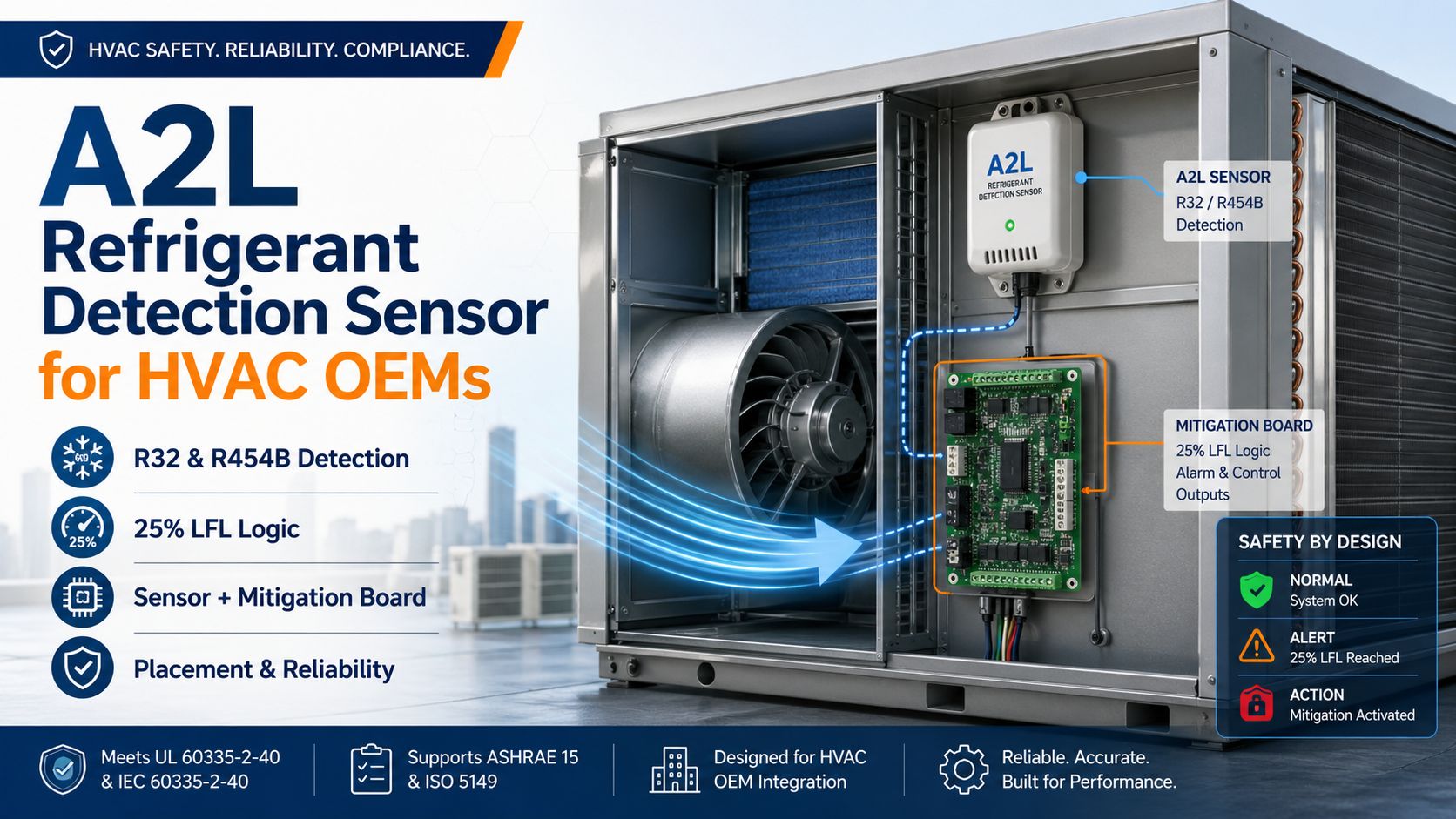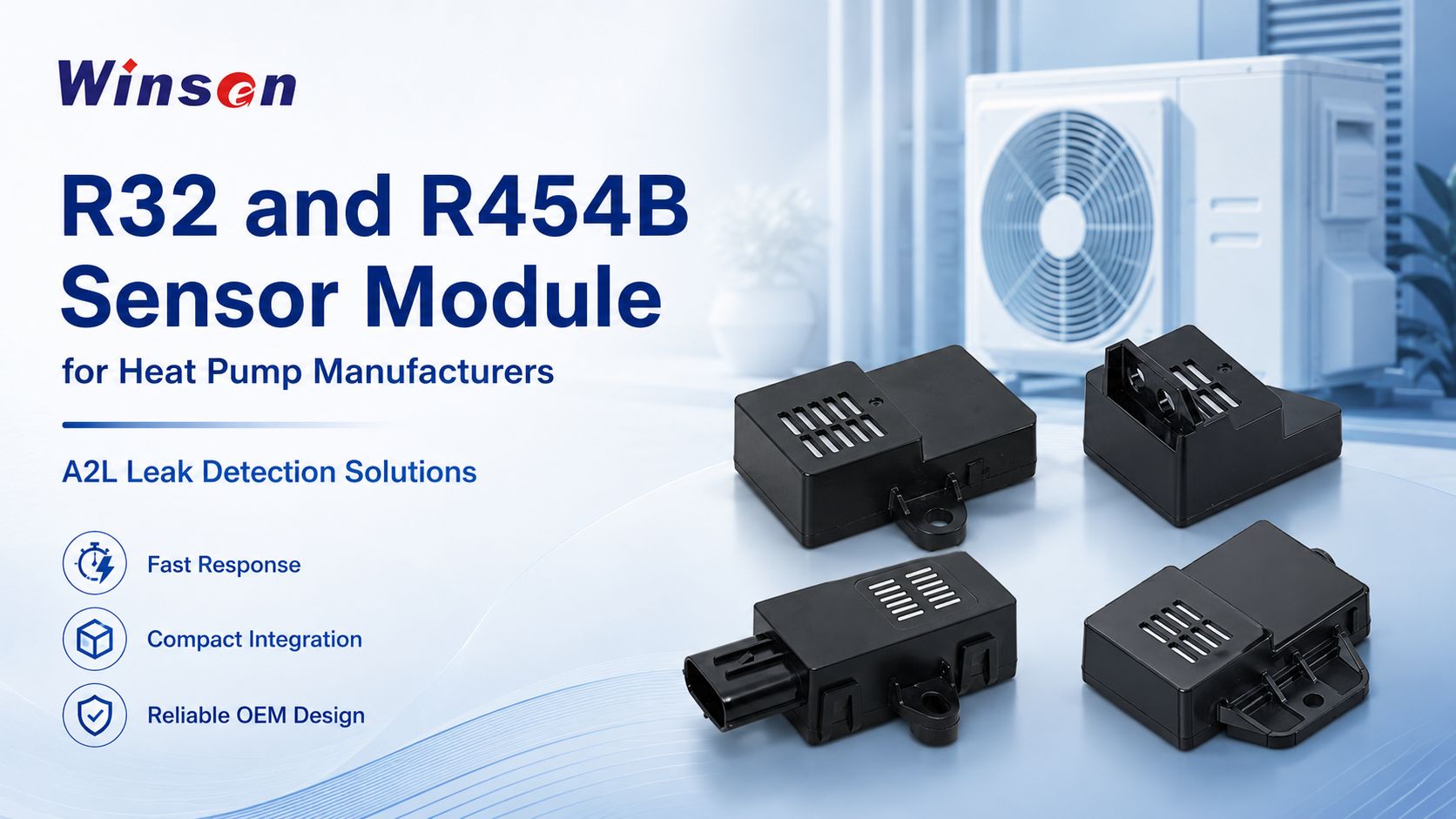
AC Refrigerant Sensor (Leak Detector) — Split/VRF • Central AC • Heat Pump
Sensor kebocoran AC elektronik Winsen® memberikan pemantauan terus menerus dan tetap pendingin AC di seluruh bangunan perumahan dan komersial. Kami mendukung A1 (R134a, R410A, R404A), A2L (R32, R454B, R1234yf/ze) dan A3 (R290, R600a) gas. Memilih Adalah n untuk ppm peringatan dini atau MOS/IR-LEL untuk interlock pengaman %LEL—siap untuk BMS/PLC via 4–20 ma, Modbus RS-485, Dan keluaran relai.
- Cakupan A1 / A2L / A3
- NDIR ppm & MOS %LEL
- OEM/ODM • Pesanan Massal
- Waktu Pimpin yang Cepat


Pick by Refrigerant Class & Measurement
A1 (R410A / R134a) — NDIR PPM
- Kisaran umum: 0–1.000 / 0–5.000 ppm
- Keluaran: 4–20 mA, RS-485 Modbus, 1–2 relai
- T90 ≤ 30 dtk • Drift rendah, umur panjang
A2L (R32 / R454B / R1234yf/ze) — NDIR PPM / %LEL
- Peringatan dini PPM dan/atau 0–100% LFL/LEL
- 4–20 mA / RS-485 / relai
- VRF/VRV rooms & hotel guestrooms
A3 (R290 / R600a) — %LEL Keamanan
- Kisaran: 0–100% LEL (IR-LEL atau MOS)
- Relays for ventilation & shutdown interlocks
- IP options for plant/mechanical rooms
What is an AC Refrigerant Sensor?
An AC refrigerant sensor is a fixed, electronic detector installed near AC equipment to measure refrigerant concentration and automatically trigger alarm Dan saling bertautan (ventilation, unit shutdown). It complements handheld sniffers used by technicians for pinpoint leak search.
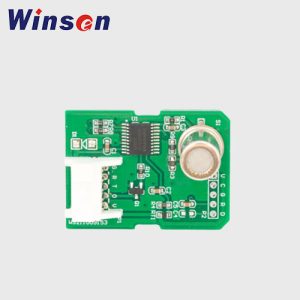
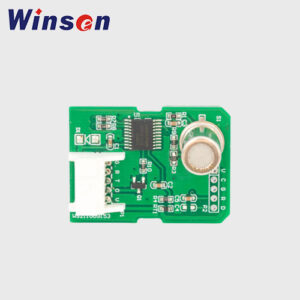
Sensor Refrigeran Ndir
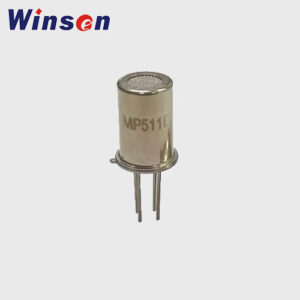
Sensor Refrigeran Semikonduktor
Pilihan Teknologi
| Teknologi | Terbaik Untuk | Jangkauan | Keuntungan | Pertimbangan |
|---|---|---|---|---|
| NDIR (Inframerah) | A1 ppm; A2L ppm/%LEL | ppm → %LEL | High selectivity & stability; not O₂-dependent; long life | Melindungi optik dari kondensasi/debu (filter/penutup) |
| Mos (semikonduktor) | A2L/A3%LEL | 0–100% LEL | Respon cepat; kokoh; hemat biaya | Possible cross-sensitivities; periodic calibration advised |
| Manik Katalitik | Hidrokarbon umum (A3) | 0–100% LEL | Teknologi yang matang | Kebutuhan O₂; dapat diracuni oleh silikon/timbal |
Aplikasi Khas

Split/VRF indoor units & hotel rooms
Pasang rendah (~150–300 mm di atas lantai) di dekat unit dalam ruangan dan titik pengumpulan. Pra-alarm → pembersihan udara segar; alarm utama → mematikan kipas/unit dalam-ruang.

Central AC (AHU/MAU) & mechanical rooms
Place near coils, TXVs, service valves, and floor low spots/sumps; use IP-rated housings and BMS interlocks.

Line sets & evaporator/condenser sections
Monitor around brazed joints, manifolds; avoid strong supply streams that could bypass the sensor.

Pompa panas
For A2L systems, use %LFL tiers (≈25% pre-alarm; ≈50% main) to trigger ventilation and safe shutdown.
Spesifikasi Inti
| Parameter | Nilai / Opsi |
|---|---|
| Pengukuran | NDIR ppm dan/atau %LFL (MOS/IR-LEL) |
| Keluaran | 4–20 mA (2/3 kabel), RS-485 Modbus RTU, 1–2 relai (N.O./N.C.) |
| Waktu respons (T90) | ≤ 20–30 detik tipikal |
| Memasok | 12–24 VDC (lainnya berdasarkan permintaan) |
| Kondisi operasi | −20…+50 °C; 15–95% RH non-kondensasi (tergantung model) |
| Penutup | Dinding, panel, saluran; perumahan hingga IP65 |
| Kepatuhan | CE & RoHS; designed for BMS/PLC integration |
Placement & Setpoints — Good Practice
- Ketinggian pemasangan: Most AC refrigerants are heavier than air ⇒ mount low; verify with site airflow.
- Cakupan: ~radius 5–10 m per sensor di ruangan terbuka; tambahkan unit di dekat katup/sambungan dan kantong rendah.
- Alarm: A2L/A3: pra-alarm ≈25% LFL; utama ≈50% LFL. A1: pita ppm (misalnya 1.000–5.000 ppm) per spesifikasi proyek.
- Interlock: Pra-alarm → ventilasi; Utama → penghentian peralatan + acara suar/klakson/BMS.
Selesaikan ambang batas dan kuantitas berdasarkan spesifikasi proyek dan kode lokal Anda.
Mengapa Klien Global Memilih Kami?
Perusahaan secara konsisten mematuhi kebijakan kualitas “keahlian yang bagus, inovasi ilmiah, pengejaran keunggulan, dan layanan bernilai tambah.” Dengan merumuskan rencana kontrol proses produksi dan instruksi kerja, telah menetapkan sistem manajemen proses standar, akuntabel, dan diatur. Selain itu, perusahaan telah secara mandiri mengembangkan sistem manajemen produksi MES, memungkinkan manajemen komprehensif dan visual di seluruh alur kerja.

30+ tahun pengalaman
R&D, manufacture and sales of sensors and sensing solutions.
Jaminan Kualitas Perbaikan Berkelanjutan
Kontrol aliran proses lengkap dan kaku, ditambah dengan peningkatan yang signifikan.


Pasar Internasional
Memberikan produk penginderaan ke lebih dari 100 negara dan wilayah.
Produksi rantai pasokan yang stabil
Komponen inti tidak tunduk pada kendala, peralatan canggih untuk manufaturing dan tes.


R&D STRENGTH TECHNOLOGY INNOVATION
200+ patents, 180+ R&D team members, self-built labs for continous innovation.
Layanan satu atap
Konsultasi profesional, pengiriman cepat, dukungan 24 jam setelah penjualan.

Leading the Industry, Innovative & Controllable Technology
With robust R&D capabilities, we maintain sustained input in R&D and unwavering commitment to technological innovation. This not only ensures that we remain at the forefront of industry but also drives continuous innovation, leading the future trend of the sensing industry.

10% R&D Input
The average annual R&D input exceeds 10% of the annual revenue.
5+ R&D Layout
With Zhengzhou headquarters as the core, a nationwide R&D and innovation system is being established, encompassing cities of Shanghai, Wuhan, Shenzhen, and Taiyuan.
180+ R&D Team
There are over 180 R&D personnel, including more than 10 with doctoral degrees and over 50 with master's degrees, who have an average of more than 8 years of experience in sensor development.
20+ jenis percobaan
Lingkungan yang berhubungan dengan gas, iklim, EMC, kinerja listrik, kinerja mekanik, dll.
10+ Laboratorium Tingkat Lanjut
Laboratorium CNAS, Laboratorium MEMS, Laboratorium UL, Laboratorium Bahan Nanokomposit, dll.
400+ sets Leading R&D Equipment
Penyimpanan kubus, bonder die, mesin litografi, mesin pelapis, mesin penempatan SMT, stasiun probe otomatis, dll.
Meminta konsultasi
FAQ — Sensor Gas Freon
How many sensors are needed in a guestroom or office?
Plan ~5–10 m radius coverage per sensor in open rooms. Add units near indoor units, valves, joints, and floor-level pockets where gas can accumulate. Irregular layouts typically need more sensors.
Should I choose ppm or %LEL measurement?
Use ppm (NDIR) for early warning and comfort/process monitoring; use %LEL (MOS or IR-LEL) to drive safety interlocks for A2L/A3 systems. Many projects deploy both.
Where exactly should sensors be mounted?
Most AC refrigerants are denser than air; mount low (≈150–300 mm AFF) near likely leak sources and pooling points. Avoid strong supply air. Duct/return versions can monitor airflow.
How often do I need calibration and bump tests?
Typical calibration is every 12–24 months with periodic bump tests (quarterly/biannual). Dusty/humid or aerosol-rich sites may need more frequent checks and filter maintenance.
What causes false alarms or cross-sensitivity?
Solvents/aerosols (silicone sprays, alcohol cleaners, paints) can affect semiconductor elements; heavy condensation/dust can obstruct optics. Use IP-rated housings, splash/dust guards, and good placement.
Can Winsen customize for OEM/volume rollouts?
Yes—ranges, firmware/Modbus mapping, connectors/harnesses, housings (IP), labels/branding, and packaging are customizable for volume deployments.