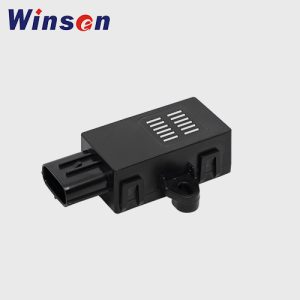
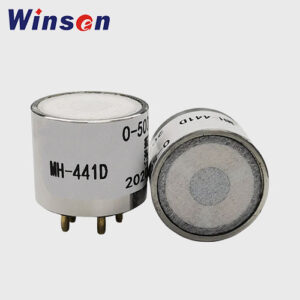
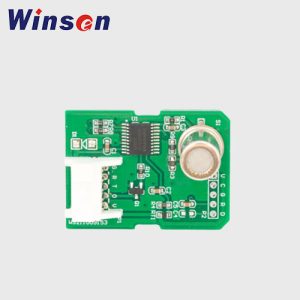
Refrigerant Gas Leak Sensor (Leak Detector) — A1 / A2L / A3
Winsen® manufactures fixed refrigerant gas leak sensors and detectors for A1 (R134a、R410A、R404A)、 A2L (R32, R454B, R1234yf/ze), and A3 (R290、R600a)气体。选择 是n 用于 ppm 预警或 MOS/DIR 用于 %LEL 安全联锁 — 为 BMS/PLC 做好准备,通过 4–20 Ma,,,, RS-485 总线, 和 继电器输出。


Model Guide — Select by Refrigerant Class
A1 HFC/HFO — NDIR PPM
- Ranges: 0–1,000 / 0–5,000 ppm (customizable)
- 输出:4–20 mA、RS-485 Modbus、1–2 个继电器
- T90 ≤ 30 s • 低漂移,长寿命
A2L Low-GWP — NDIR PPM / %LEL
- PPM 预警和/或 0–100% LFL/LEL
- 4–20 mA / RS-485 / 继电器
- Ideal for VRF/VRV rooms & heat pumps
Why a Refrigerant Gas Leak Sensor?
- 预警: Detect ppm-level leaks before comfort or uptime is affected.
- 安全联锁: Use %LFL thresholds to start ventilation and shut down equipment.
- 一体化: Native 4–20 mA / RS-485 / relays for BMS, PLC, horns and beacons.
- Lower loss & service cost: Continuous monitoring reduces refrigerant escape and downtime.
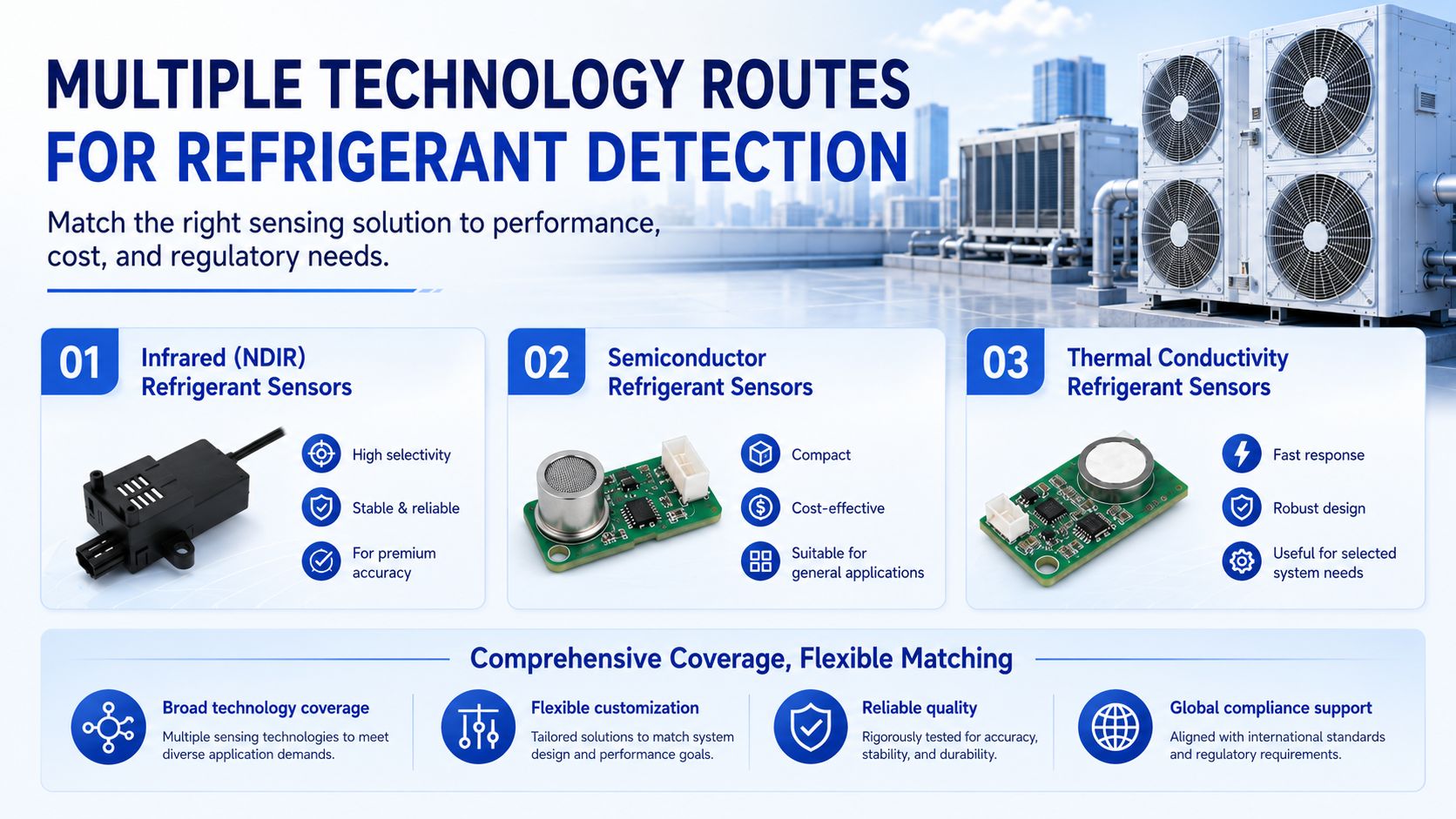
NDIR制冷剂传感器
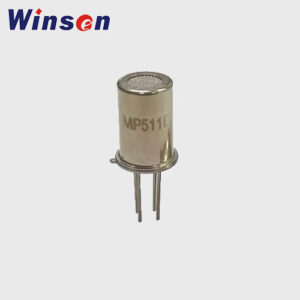
半导体制冷剂传感器
技术比较
| 技术 | 最适合 | 范围 | 优势 | 注意事项 |
|---|---|---|---|---|
| NDIR(红外线) | A1 ppm; A2L ppm/%LEL | ppm → %LEL | 高选择性、低漂移、不依赖氧气 | 防止严重凝结/灰尘(过滤器/外壳) |
| MOS(半导体) | A2L/A3%LEL | 0–100% LEL | 快速响应;强壮的;性价比高 | Possible cross-sensitivities; periodic calibration |
| 催化珠 | 一般碳氢化合物 (A3) | 0–100% LEL | 成熟、应用广泛 | 需要氧气;可能中毒(硅树脂/铅) |
典型交流应用

VRF/VRV indoor units & hotel rooms
安装在室内设备和汇集点附近的低处(距地面约 150-300 毫米)。预报警→新鲜空气吹扫;主报警→风机/室内机关闭。

Chiller & machinery rooms, compressor racks
Place near compressors, oil separators, valves, and floor low spots/sumps. Use IP-rated housings and BMS interlocks.

Cold storage & refrigerated display cases
Install beneath cases and along manifolds/pipe runs. Use condensation-resistant designs; alarms can close curtains and start extract.

数据中心行内/CRAC 单元
Position in return-air paths, beneath raised floors, and near coils. PPM early warning protects personnel and uptime.

Heat pumps & general HVAC equipment
For A2L/A3, use %LFL tiers (~25% pre-alarm; ~50% main) to trigger ventilation and safe shutdown.
技术选择
| 技术 | 最适合 | 范围 | 优势 | 注意事项 |
|---|---|---|---|---|
| NDIR(红外线) | A1 ppm; A2L ppm/%LEL | ppm → %LEL | 高选择性、低漂移、不依赖氧气 | 防止严重凝结/灰尘(过滤器/外壳) |
| MOS(半导体) | A2L/A3%LEL | 0–100% LEL | 快速响应;强壮的;性价比高 | Possible cross-sensitivities; periodic calibration |
| 催化珠 | 一般碳氢化合物 (A3) | 0–100% LEL | 成熟、应用广泛 | 需要氧气;可能中毒(硅树脂/铅) |
Placement & Setpoints — Good Practice
- 安装高度: Most refrigerants are heavier than air ⇒ mount low; confirm with on-site airflow.
- 覆盖范围: 开放房间中每个传感器的半径约为 5–10 m;在阀门/接头和低口袋附近添加单元。
- 警报: A2L/A3:预报警≈25%LFL;主要约 50% LFL。 A1:每个项目规范的 ppm 范围(例如 1,000–5,000 ppm)。
- 联锁: Pre-alarm → ventilation; Main → equipment shutdown + beacon/horn/BMS event.
根据您的项目规范和当地规范最终确定阈值和数量。
为什么全球客户选择我们?
该公司始终遵守“精通工艺,科学创新,追求卓越和增值服务”的质量政策。”通过制定生产过程控制计划和工作指导,它建立了标准化,负责和受监管的过程管理系统。此外,该公司独立开发了MES生产管理系统,从而在整个工作流程中实现了全面和视觉管理。

30多年的经验
R&D, manufacture and sales of sensors and sensing solutions.
质量保证持续改进
完整且刚性的流程控制,并取得重大改进。


国际市场
向100多个国家和地区提供传感产品。
稳定的供应链可靠生产
核心组件不受限制,用于制造和测试的高级设备。


R&D STRENGTH TECHNOLOGY INNOVATION
200+ patents, 180+ R&D team members, self-built labs for continous innovation.
一站式服务
专业咨询,快速交货,售后24小时。

Leading the Industry, Innovative & Controllable Technology
With robust R&D capabilities, we maintain sustained input in R&D and unwavering commitment to technological innovation. This not only ensures that we remain at the forefront of industry but also drives continuous innovation, leading the future trend of the sensing industry.

10% R&D Input
The average annual R&D input exceeds 10% of the annual revenue.
5+ R&D Layout
With Zhengzhou headquarters as the core, a nationwide R&D and innovation system is being established, encompassing cities of Shanghai, Wuhan, Shenzhen, and Taiyuan.
180+ R&D Team
There are over 180 R&D personnel, including more than 10 with doctoral degrees and over 50 with master's degrees, who have an average of more than 8 years of experience in sensor development.
20+实验类型
气体相关,气候环境,EMC,电性能,机械性能等。
10多个高级实验室
CNAS实验室,MEMS实验室,UL实验室,纳米复合材料实验室等。
400+ sets Leading R&D Equipment
立方体存储,模具螺栓,光刻机器,涂料机,SMT放置机,自动探测站等等。
常见问题解答 — 红外 (NDIR) 制冷剂泄漏传感器
每个房间需要多少个传感器?
As a rule of thumb, plan ~5–10 m radius coverage per sensor in unobstructed rooms. Add units near compressors, valves, brazed joints, and low-lying pockets where gas may pool. Complex layouts and aisle shelving typically require more sensors.
我应该使用什么警报阈值?
For A2L/A3 gases, common practice is a pre-alarm around ~25% LFL to start ventilation and a main alarm around ~50% LFL to trip equipment and trigger beacons/horns. For A1 gases, use ppm bands (e.g., 1,000–5,000 ppm) per project spec. Always follow local codes and your risk assessment.
Where should sensors be mounted?
Most refrigerants are heavier than air, so mount low (≈150–300 mm above floor) near likely leak sources and pooling points. Avoid strong supply air that could bypass the sensor. For ducts/returns, use probe or in-duct models with splash/dust guards.
我应该多久校准和通气测试一次?
Typical calibration intervals are 12–24 months, with periodic bump tests (e.g., quarterly/bi-annually). Dusty, humid, or high-traffic sites may require more frequent checks and filter maintenance.
What can cause cross-sensitivity or false alarms?
Strong solvents and aerosols (e.g., silicone sprays, alcohol cleaners, paint fumes) can affect semiconductor elements; heavy condensation or dust can obstruct optics. Use IP-rated housings, splash/dust guards, and good placement/maintenance to minimize effects.
How do I integrate with BMS/PLC?
Sensors provide 4–20 mA (2/3-wire), RS-485 Modbus RTU (configurable address/baud), and 1–2 relays (N.O./N.C.). Typical scaling is 4 mA = 0 and 20 mA = full-scale. Map pre-alarm to ventilation and main alarm to shutdown/interlocks per your control philosophy.