

Replacing an older refrigerant (like R-134a or R-410A) is no longer just a “performance + oil compatibility” decision. Today’s most common replacements are A2L légèrement inflammable refrigerants (R32, R454 blends, R1234yf/ze), and sometimes A3 highly flammable hydrocarbons (R290, R600a). That shift changes what the system must do when a leak happens—especially setpoints, response time, placement, and mitigation controls.
This guide explains what changes, why it changes, and how to translate “replacement refrigerant choice” into a correct leak detection specification.
1) Start here: detection requirements come from the refrigerant’s safety class
Refrigerant safety classes (from ASHRAE 34) combine toxicity (A/B) et flammability (1/2/2L/3). A2L is defined as a subset of “2” refrigerants with maximum burning velocity ≤ 10 cm/s, which is why it’s treated differently from A3 hydrocarbons.
Why that matters:
- A1 (nonflammable) leaks are primarily managed for exposure / oxygen displacement and environmental loss.
- A2L (mildly flammable) leaks must be detected early enough to prevent reaching flammable concentrations, often tied to %LFL rules and mitigation.
- A3 (très inflammable) usually requires combustible-gas style detection and stricter hazard controls.
Déverrouiller les secrets de la classification de la sécurité d'Ashrae: ce que vous devez savoir
2) What changes when you move from A1 → A2L/A3
The big shift: from RCL/OEL-based logic to LFL-based safety logic
In many HVACR safety contexts, nonflammable systems use detector setpoints linked to Limite de concentration de réfrigérant (RCL), especially in machinery rooms. ASHRAE 15 states the refrigerant detector setpoint must be not greater than the applicable RCL in ASHRAE 34.
Pour inflammable refrigerants, the critical reference becomes LFL (Lower Flammability Limit). UL’s safety guidance describes leak detection activation below 25% of LFL (a “4× safety factor”) and mitigation actions like fans.
3) Requirements by refrigerant class (simple decision table)
| If you choose… | Typical replacements | What detection must focus on | Common requirement anchor |
|---|---|---|---|
| A1 replacement (nonflammable) | R-513A / R-450A (examples) | Exposure/RCL management, machinery-room ventilation triggers | Setpoint ≤ RCL (ASHRAE 15) |
| A2L replacement (mildly flammable) | R32, R454B/R454C, R1234yf/ze | Prevent flammable mixture; integrate mitigation controls | Activate < 25% LFL, response-time expectations (UL/industry adoption) |
| A3 replacement (highly flammable) | R290, R600a | Combustible-gas hazard control + ignition prevention | %LEL alarm strategy + ventilation/controls (often code-driven) |
4) A1 systems: “detector required” often means machinery-room compliance
If your replacement stays A1, your detection requirements may still be strict in machinery rooms:- Setpoint requirement: ASHRAE 15 requires the refrigerant detector setpoint be ≤ the lowest applicable RCL of any refrigerant present.
- Ventilation integration: newer ASHRAE 15 addenda discuss detectors activating ventilation at defined setpoints/response times.
- You usually don’t need “flammability mitigation” logic (fans/shutoff solely for ignition prevention), because A1 does not propagate flame.
- Sensor placement is still important, but the hazard model is not “prevent flammable cloud,” it’s “detect leak early for safety + cost.”
5) A2L systems: detection becomes part of the safety function (not just monitoring)
When you switch to A2L, detection is often treated as a système de détection de réfrigérant (RDS) that must reliably trigger mitigation.
5.1 The headline rule: < 25% LFL
UL guidance describes the leak detection system activating below 25% of LFL and triggering mitigation such as circulation fans.
5.2 Response-time expectations
Industry adoption guidance (example: Texas Instruments’ A2L adoption brief) summarizes that an RDS should make output within 30 secondes d'une exposition directe à 25% LIE.
ASHRAE addenda also include time-based activation concepts at 25% LFL for detection/mitigation logic.
5.3 Setpoint control: “field-adjustable” may be restricted
ASHRAE 15 addenda language for refrigerant detection systems includes nonadjustable setpoints and restrictions on field recalibration in certain contexts.
Practical takeaway for OEMs/installers:
With A2L, you’re no longer just “reading ppm.” You’re implementing a safety loop: sensor → logic → mitigation (fan/valve/shutdown) → fault behavior.
6) A3 systems (R290/R600a): treat it like combustible gas safety
Hydrocarbons like R290 (propane) are widely known to have LFL ~2.1% by volume.
That lower LFL means an A3 leak can reach flammable concentration at much lower volumetric percentages than many A2Ls (example: R32’s LFL is often cited around 14–14.4% by volume).
What this changes:
- More conservative alarm strategy (often %LIE-style thresholds)
- Stronger emphasis on ignition source control, ventilation design, and hazardous-area thinking (depending on installation)
7) Placement changes with the refrigerant (and can make or break the system)
Detection isn’t just “which sensor,” it’s “where the gas goes.”
EN 378 guidance states that detectors should be installed:
- at the lowest underground room / low points for refrigerants plus lourd que l'air
- at the highest points for refrigerants lighter than air
and that detectors in machinery rooms should actuate alarms and emergency ventilation.
Field-proven placement checklist
- Put sensors near sources probables de fuite (valves, compressor compartment, braze joints)
- Avoid direct supply-air blasts that dilute a leak plume
- Cover “dead zones” and low points where gas can accumulate
- Protect sensors from water/oil/dust (filters + enclosure design)
8) Converting “25% LFL” into usable setpoints (ppm / vol%)
You’ll often need to communicate thresholds in ppm, while standards talk in %LFL.
Formulas
ppm = vol% × 10,00025% LFL setpoint (vol%) = LFL (vol%) × 0.25
Example: R32 (A2L)
LFL commonly cited ≈ 14.4% vol.
- 25% LFL = 14.4% × 0.25 = 3.6% vol = 36,000 ppm
Example: R290 propane (A3)
LFL ≈ 2.1% vol.
- 25% LFL = 2.1% × 0.25 = 0.525% vol = 5,250 ppm
This is why switching from A2L to A3 dramatically tightens detection margins in terms of absolute concentration.
9) Sensor technology implications
When refrigerants change, sensor technology selection often changes too:
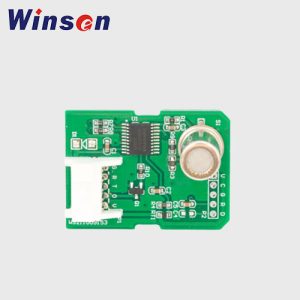
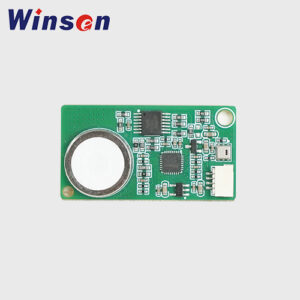
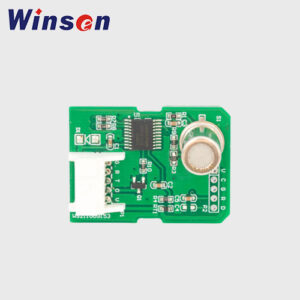
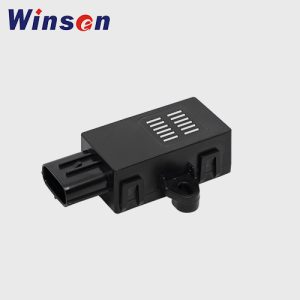
- NDIR/IR refrigerant sensing is commonly chosen for A2L refrigerant detection systems because it can target refrigerant absorption features and support stable threshold logic. (This is why many A2L RDS references focus on “system + calibration + drift.”)
- Catalytic bead (%LEL) sensing is widely used for combustible gases but requires careful handling of poisoning/aging and calibration strategy.
- Comportement de défaut matters: for safety-loop use, you must define what the equipment does if the detector fails (safe state).

10) Compliance-ready checklist
When specifying a replacement refrigerant detection solution, document:
- Refrigerant(s) and safety class (A1/A2L/A3)
- Threshold basis: RCL (A1 machinery room) or %LFL (A2L/A3)
- Activation threshold: e.g., ≤25% LFL (A2L safety loop)
- Response time requirement at the defined threshold
- Mitigation outputs: ventilation, shutoff valve, compressor disable, alarms
- Placement plan following EN 378 logic (low/high based on density)
- Maintenance plan: calibration interval, drift handling, sensor replacement access
FAQ
Does switching from R-134a to R-513A change detection requirements?
Usually less than switching to A2L/A3. If you stay A1, detection is commonly driven by machinery-room rules such as setpoint ≤ RCL and ventilation integration.
Why do A2L replacements require “25% LFL” logic?
Because the goal is to trigger mitigation avant the refrigerant-air mixture approaches flammability. UL guidance describes activation below 25% LIE as a 4× safety factor and links detection to mitigation devices like fans.
What is special about “2L” in A2L?
A2L refrigerants have low burning velocity—ASHRAE 34 defines subclass 2L with maximum burning velocity ≤ 10 cm/s, which helps shape code requirements.
How should detectors be placed for refrigerants that can pool low?
EN 378 guidance places detectors at low points for refrigerants plus lourd que l'air and emphasizes alarms and emergency ventilation in machinery rooms.
Is R32 “less risky” than R290 in terms of flammability thresholds?
R32’s LFL is often cited around 14–14.4% vol, while propane (R290) is around 2.1% vol, meaning R290 reaches flammability at much lower concentration.
Conclusion
If you’re transitioning to a lower-GWP refrigerant, treat leak detection as part of the system safety architecture, not a standalone component. The correct approach starts with the refrigerant’s safety class (A1/A2L/A3), then maps to RCL or %LFL thresholds, response time, placement, and mitigation controls.

