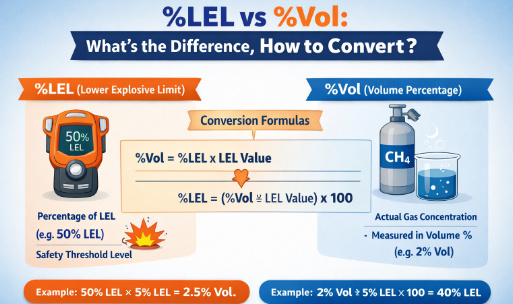
administrer2026-03-25T18:10:22+08:00When you work with combustible gas detection—natural gas (methane), LPG (propane/butane), hydrogen, or hydrocarbon vapors—you’ll repeatedly see two units:%LEL (Percent of the Lower Explosive Limit)
%Vol (Percent by Volume in air)They look similar, but they answer different safety questions. This guide explains what each...
administrer2026-03-19T18:25:50+08:00A refrigerant sensor works by sampling the surrounding air, detecting a physical or chemical change caused by leaked refrigerant, converting that change into an electrical signal, and then triggering an alarm or control action when the gas concentration crosses a defined threshold. The exact mechanism...
« Déplacer l'oxygène » expliqué : pourquoi c'est dangereux et comment le détecter
When a safety label or SDS says a gas can “displace oxygen,” it’s warning about a simple but deadly mechanism: a released gas dilutes the air, reducing the oxygen available for breathing. Unlike many toxic...
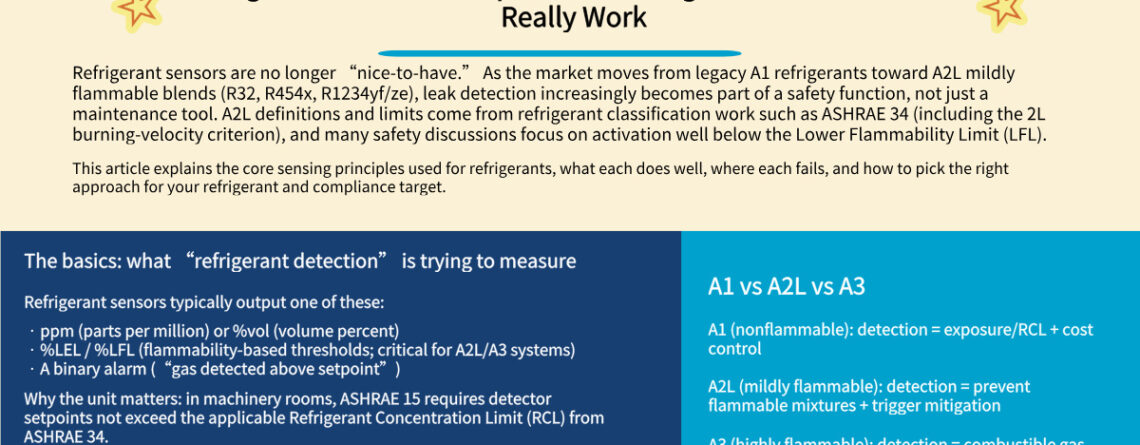
administrer2026-03-06T13:09:05+08:00Refrigerant sensors are no longer “nice-to-have.” As the market moves from legacy A1 refrigerants toward A2L mildly flammable blends (R32, R454x, R1234yf/ze), leak detection increasingly becomes part of a safety function, not just a maintenance tool. A2L definitions and limits come from refrigerant classification work...
administrer2026-02-28T15:24:13+08:00Replacing an older refrigerant (like R-134a or R-410A) is no longer just a “performance + oil compatibility” decision. Today’s most common replacements are A2L mildly flammable refrigerants (R32, R454 blends, R1234yf/ze), and sometimes A3 highly flammable hydrocarbons (R290, R600a). That shift changes what the system...
administrer2026-02-06T14:47:10+08:00R-134a (HFC-134a) has been one of the most widely used refrigerants for automotive A/C, medium-pressure chillers, and many refrigeration applications. The problem is climate impact: under widely used IPCC AR4 values, R-134a has a 100-year GWP of 1,430 and is classified A1 (non-flammable, low toxicity).Because...
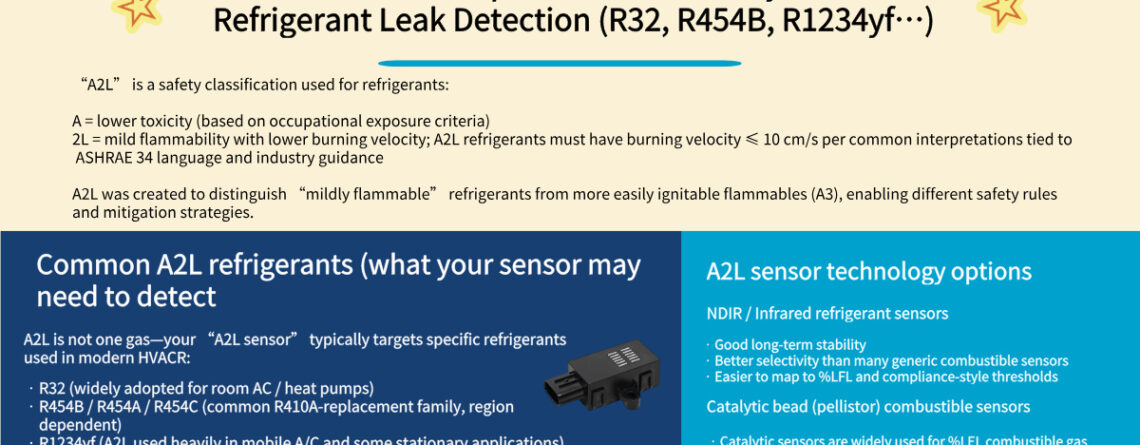
“A2L” is a safety classification used for refrigerants:A = lower toxicity (based on occupational exposure criteria)2L = mild flammability with lower burning velocity; A2L refrigerants must have burning velocity ≤ 10 cm/s per common interpretations tied toAshrae 34...
1) Qu’est-ce que le R290 et pourquoi nécessite-t-il une détection dédiée ?
R290 is propane (C₃H₈) used as a natural refrigerant in air conditioners, heat pumps, and refrigeration equipment. Its biggest advantage is climate impact: GWP is typically stated...
HFC stands for hydrofluorocarbon—a family of man-made gases widely used as refrigerants in air conditioning and refrigeration, and also used in foams and aerosols. HFCs were introduced largely as replacements for older ozone-depleting refrigerants, but many HFCs still have very high climate...
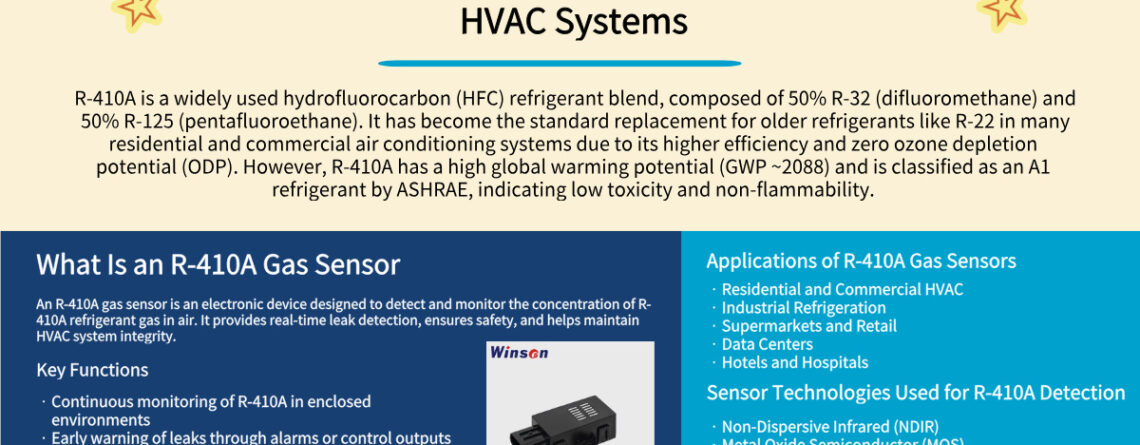
R-410A is a widely used hydrofluorocarbon (HFC) refrigerant blend, composed of 50% R-32 (difluoromethane) and 50% R-125 (pentafluoroethane). It has become the standard replacement for older refrigerants like R-22 in many residential and commercial air conditioning systems due to its higher...
Dites-nous vos exigences cibles en matière de réfrigérant, d’application et d’interface. Notre équipe d’ingénieurs en capteurs vous recommandera un modèle adapté.