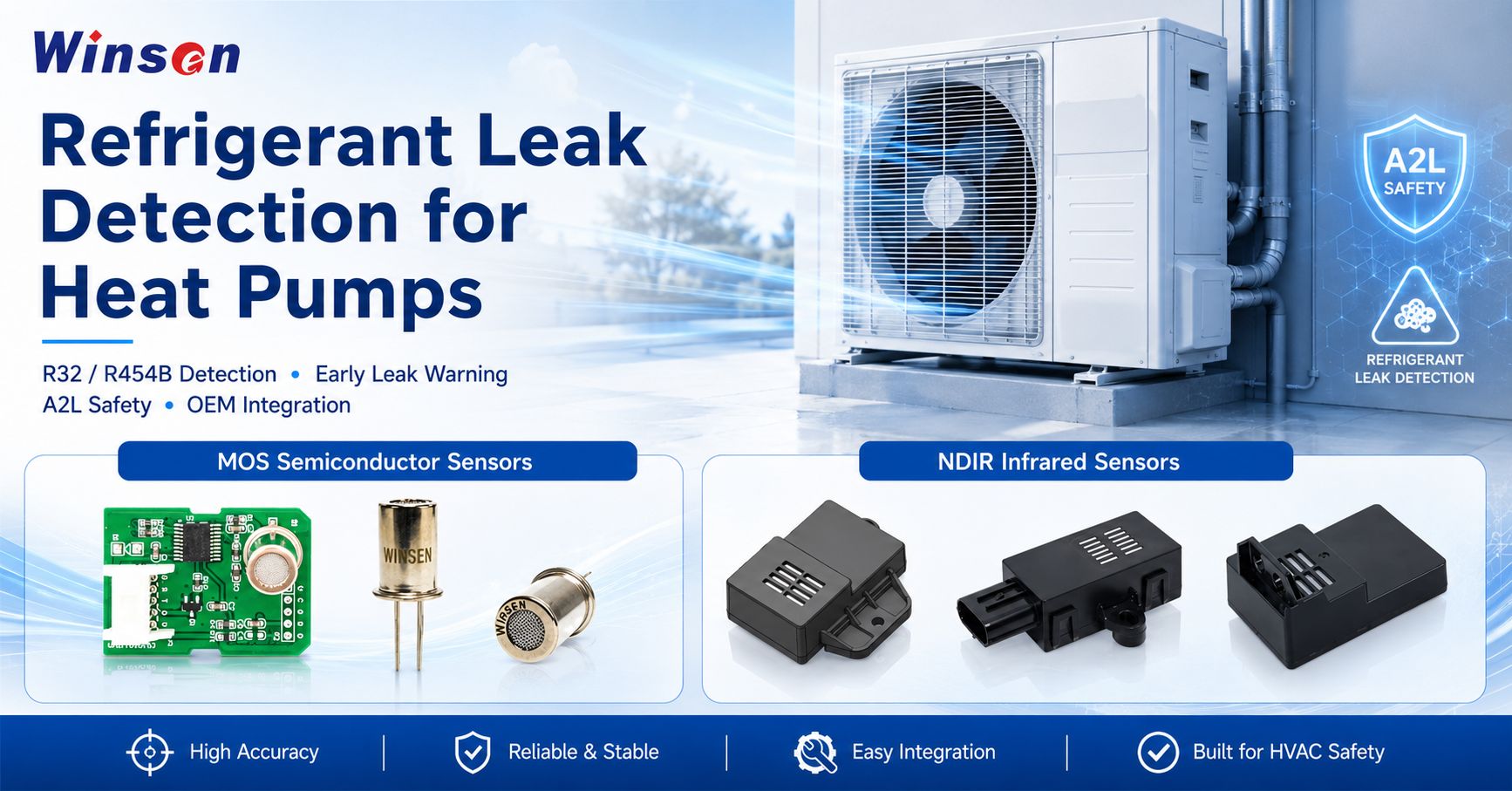
Ko se sistemi toplotnih črpalk vse bolj uporabljajo v stanovanjskih, komercialnih in industrijskih aplikacijah HVAC, je varnost hladilnega sredstva postala pomemben del načrtovanja sistema. Toplotna črpalka je za učinkovit prenos toplote odvisna od kroženja hladilnega sredstva, a ko pride do puščanja, se lahko sistem sooči z zmanjšano zmogljivostjo, višjimi stroški vzdrževanja, vplivom na okolje in varnostnim tveganjem.
S prehodom na hladilna sredstva z nižjim GWP, kot npr R32 in R454B, odkrivanje puščanja hladilnega sredstva ni več samo vzdrževalna funkcija. Pri številnih sodobnih oblikah toplotnih črpalk lahko senzor podpira tudi izhod alarma, aktiviranje ventilatorja, zaščito kompresorja, nadzor prezračevanja ali druge ublažitvene ukrepe. Smernice UL 60335-2-40 pojasnjujejo, da sistemi za zaznavanje hladiva v ustrezni opremi HVAC vključujejo senzorje in krmilno logiko ter da je odziv sistema vezan na doseganje koncentracije hladiva 25 % spodnje meje vnetljivosti (LFL).
pri Winsennudimo senzorje in module za hladilne pline za proizvajalce toplotnih črpalk, proizvajalce originalne opreme za HVAC, klimatske sisteme in hladilno opremo. Naš portfelj senzorjev za hladilno sredstvo zajema Infrardeči NDIR, toplotna prevodnostin polprevodnik tehnologije, ki podpirajo različna območja zaznavanja, izhodne metode, namestitvene strukture in cilje hladilnega sredstva.
Zakaj je odkrivanje puščanja hladiva pomembno pri toplotnih črpalkah

Toplotna črpalka je zaprtozančni sistem, vendar lahko še vedno pride do puščanja na cevnih spojih, spajkanih spojih, ventilih, kompresorjih, toplotnih izmenjevalnikih ali servisnih vratih. Celo majhno puščanje lahko postopoma zmanjša zmogljivost hlajenja ali ogrevanja in poveča delovno obremenitev kompresorja. V sistemih hladilnega sredstva A2L je treba puščanje upoštevati tudi z vidika zgodnjega odkrivanja in odziva sistema.
Za proizvajalce toplotnih črpalk bi moralo odkrivanje puščanja hladilnega sredstva rešiti štiri praktične inženirske probleme:
- Zgodnje odkrivanje uhajanja preden izguba hladilnega sredstva vpliva na delovanje sistema.
- Zagotovite stabilen izhodni signal na krmilnik ali alarmno vezje.
- Podpira logiko varnostnega odziva kot je delovanje ventilatorja, alarm ali zaustavitev sistema.
- Namestitev v omejen prostor za namestitev znotraj notranjih enot, zunanjih enot, kanalov ali krmilnih predelkov.
Zato je treba senzor za hladilno sredstvo izbrati glede na arhitekturo toplotne črpalke, ne le glede na ime plina.
Pot rešitve Winsen za odkrivanje puščanja hladiva toplotne črpalke

Različni izdelki toplotnih črpalk potrebujejo različne strukture senzorjev. Pri Winsenu priporočamo izbiro senzorskega modula glede na vrsta hladilnega sredstva, območje zaznavanja, prostor za namestitev, izhodni vmesnik in krmilna funkcija.
1. Za toplotne črpalke R32 in R454B, ki zahtevajo zaznavanje na osnovi LFL
Za sisteme toplotnih črpalk, ki potrebujejo zaznavanje hladiva A2L s komunikacijo krmilnika, ZRT512E-R454B & R32 Series je močna rešitev. Cilja R454B in R32, podpira 0–100 % LFL, uporablja Je n tehnologijo in zagotavlja RS485 protokol. Modul je zasnovan z visoko občutljivostjo, visoko ločljivostjo in hitrim odzivom za aplikacije HVAC, hlajenje in toplotne črpalke.
Ta rešitev je primerna, ko regulator toplotne črpalke potrebuje stabilno digitalno komunikacijo in širši obseg zaznavanja LFL.
2. Za kompaktne strukture toplotnih črpalk in izvedbe z nizko porabo energije
Za kompaktne izdelke toplotnih črpalk, kjer je prostor za namestitev omejen, ZR210 nudi še eno praktično pot. Cilja R32 in R454B, uporablja toplotna prevodnost tehnologijo, odlikujejo pa ga hitra odzivnost, majhnost, nizka poraba energije, dolga življenjska doba in dobro delovanje proti kondenzaciji. Njegova navedena velikost je 37 × 20 × 7 mm, zaradi česar je primeren za prostorsko omejene strukture opreme.
Ta vrsta modula je še posebej uporabna za kompaktne notranje enote, integrirane module toplotnih črpalk in zasnove, pri katerih je pomembna odpornost na kondenzacijo.
3. Za glavne platforme za zaznavanje toplotnih črpalk A2L
Za opremo, ki zahteva 0–50 % LFL zaznavanje hladilnega sredstva, Serija ZRT512C zagotavlja prilagodljivo platformo NDIR. Winsen ponuja možnosti ZRT512C za R454B in za R32 / R454B / R290, z visoko občutljivostjo, visoko ločljivostjo in hitrim odzivom.
Ta družina je primerna za proizvajalce, ki želijo skupno platformo modulov v več projektih hladilnega sredstva A2L.
4. Za izvedbe toplotnih črpalk, specifičnih za hladilno sredstvo
Nekateri proizvajalci toplotnih črpalk imajo raje namensko rešitev za hladilno sredstvo. V tem primeru ZRT510 Senzorski modul hladilnega sredstva R32 in ZRT510 Senzorski modul hladilnega sredstva R454B se lahko uporablja za bolj osredotočene platforme izdelkov. Ti moduli NDIR so zasnovani za visoko občutljivost, visoko ločljivost in hiter odziv s prilagodljivostjo za sorodna hladilna sredstva, kot so R32, R454B ali R290.
Ta smer je primerna, ko je platforma izdelka fiksirana okoli enega hladilnega sredstva in inženirska ekipa želi bolj neposredno pot validacije.
5. Za vgrajene alarme ali alarme za uhajanje na ppm
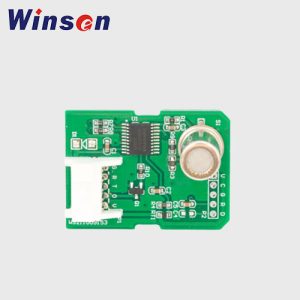
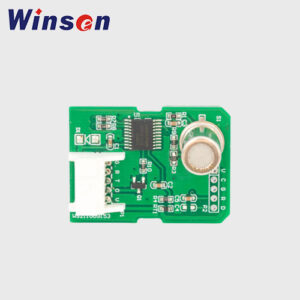
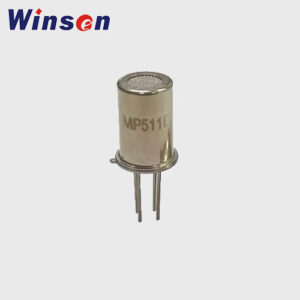
Vsak projekt toplotne črpalke ne zahteva modula, ki temelji na LFL. Nekatere aplikacije potrebujejo kompakten alarm za ppm ali pomožno funkcijo zaznavanja. Winsen za te modele zagotavlja polprevodniške in modularne rešitve, kot je npr MP511D, MP510Cin ZP201.
MP511D je polprevodniški senzor hladilnega plina z 200–10000 ppm obseg in značilnosti, vključno z visoko selektivnostjo, hitrim odzivom in dobro zaščito pred motnjami. MP510C je polprevodniški senzor za hladilne pline, vključno z R32, R134a, R410a in R290, z 100–10000 ppm obseg. ZP201 je polprevodniški modul za zaznavanje hladilnega plina za zaznavanje puščanja R32 z navedeno alarmno vrednostjo 5000 ppm.
Ti izdelki so bolj primerni za alarmne naprave za uhajanje, kompaktne nadzorne plošče in aplikacije, kjer je glavni cilj zgodnje opozarjanje na ravni ppm.
NDIR, toplotna prevodnost ali polprevodnik: kateri ustreza toplotnim črpalkam?

Pri proizvajalcih toplotnih črpalk je pravilno načelo zaznavanja odvisno od funkcije sistema.
Infrardeči senzorji NDIR imajo običajno prednost, ko sistem potrebuje stabilno kvantitativno zaznavanje, izhod na podlagi LFL, močno selektivnost in integracijo s krmilnikom. Zaradi tega je NDIR dobra izbira za platforme toplotnih črpalk A2L, ki uporabljajo R32 ali R454B.
Moduli za toplotno prevodnost so uporabni, ko so pomembni kompaktna velikost, nizka poraba energije, hiter odziv in zmogljivost proti kondenzaciji.
Polprevodniški senzorji so primerni za alarme puščanja na ppm, kompaktne alarmne naprave in cenovno občutljive aplikacije za odkrivanje.
Praktično pravilo je:
- Izberite Je n za toplotno črpalko A2L RDS usmerjeno zaznavanje.
- Izberite toplotna prevodnost za kompaktno integracijo modula R32/R454B.
- Izberite polprevodnik za alarmne naprave za uhajanje in zgodnje opozarjanje na ppm.