
As the global HVAC and refrigeration industry accelerates its transition toward lower-GWP refrigerants, product safety requirements are entering a new stage.
What used to be a discussion centered mainly on cooling performance and energy efficiency is now increasingly focused on refrigerant safety, leak detection and system protection.
This shift is being driven by two forces at the same time. On one side, environmental regulations are pushing OEMs and system designers away from traditional high-GWP refrigerants. On the other side, many of the newer low-GWP alternatives introduce different safety characteristics, especially flammability, which makes refrigerant monitoring increasingly important.
For manufacturers of air conditioners, heat pumps, dehumidifiers, commercial refrigeration systems and other HVAC/R equipment, refrigerant leak detection is becoming an important part of product design, compliance planning and long-term market competitiveness.
Global Refrigerant Rules Are Moving the Industry Forward
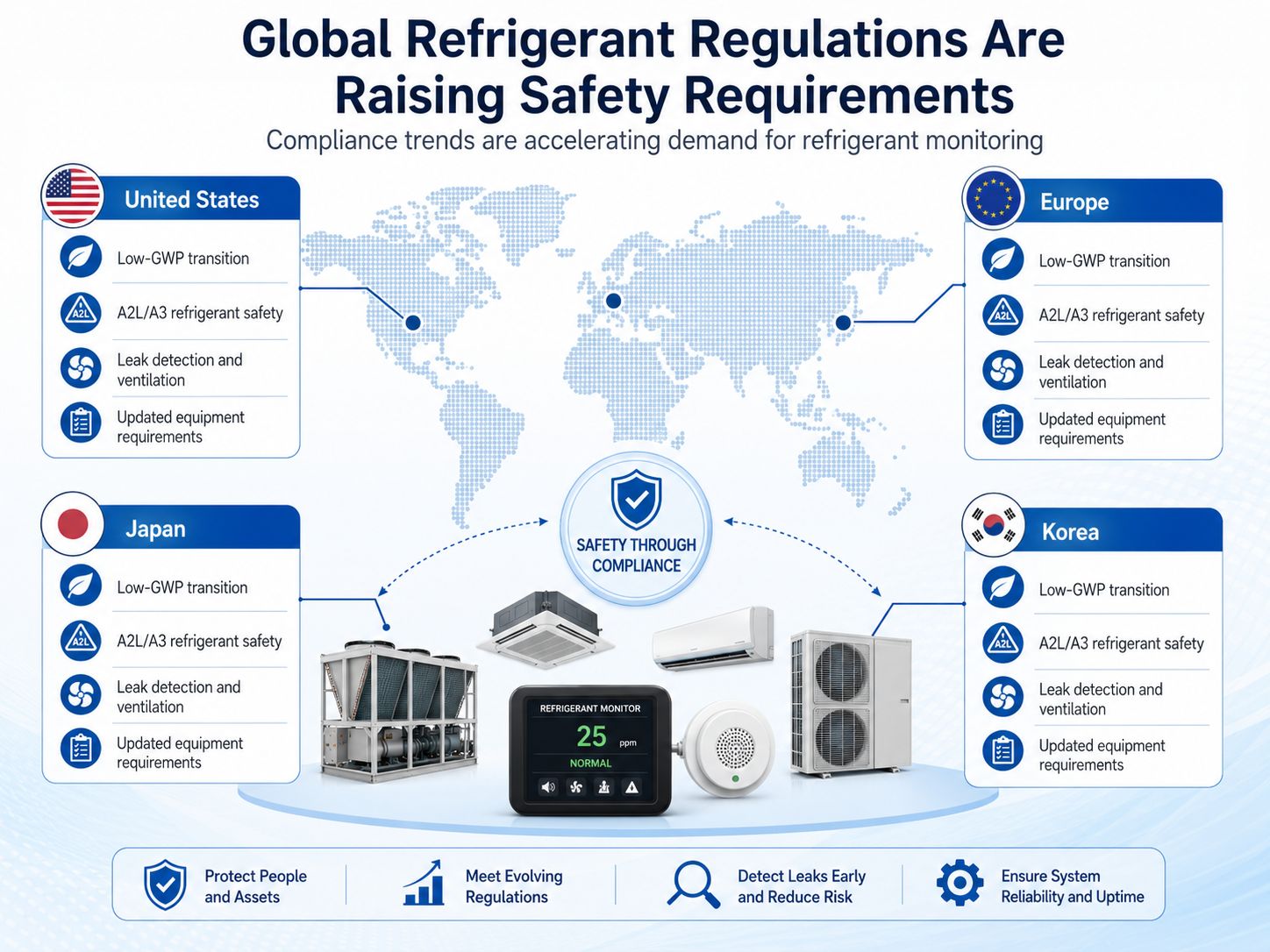
The global refrigerant transition is not happening in one single market.
The Kigali Amendment established the overall direction of global HFC phasedown, but individual countries and regions are implementing different refrigerant restrictions, GWP thresholds, equipment rules and transition timelines.
Manufacturers therefore need to evaluate not only the GWP of a refrigerant, but also:
- the target market;
- equipment category;
- refrigerant safety classification;
- applicable safety standards;
- charge limits;
- leak-management requirements;
- future regulatory timelines.
A broader overview of the major U.S., European, Japanese and other regional transition frameworks can be found in this guide to global refrigerant regulations.
Statele Unite
The U.S. HVAC market is moving rapidly toward lower-GWP alternatives under the AIM Act and EPA Technology Transitions framework.
This has accelerated adoption of refrigerants such as R32 and R454B in residential and light-commercial air-conditioning and heat-pump equipment.
Because both refrigerants are classified as A2L, equipment manufacturers increasingly need to consider refrigerant detection, airflow management and mitigation strategies as part of the complete safety architecture.
Uniunea Europeană
The EU F-Gas Regulation is pushing selected HVAC and refrigeration equipment categories toward substantially lower GWP limits.
This transition is creating stronger interest not only in A2L refrigerants but also in very-low-GWP natural refrigerants such as R290 propane.
For OEMs targeting Europe, refrigerant selection therefore needs to balance:
GWP + Flammability + Charge Limits + Equipment Architecture + Safety Controls
Japan and Other Asian Markets
Japan places strong emphasis on refrigerant lifecycle management, leak prevention, service practices and proper refrigerant recovery.
Across other Asian markets, including South Korea, the direction is also moving toward lower-GWP refrigerants and improved refrigerant-management practices.
Although regulatory details differ, the industry trend is consistent:
HVAC/R systems are becoming greener, while refrigerant safety requirements are becoming more important.
Why Refrigerant Monitoring Is Becoming a Core Safety Capability
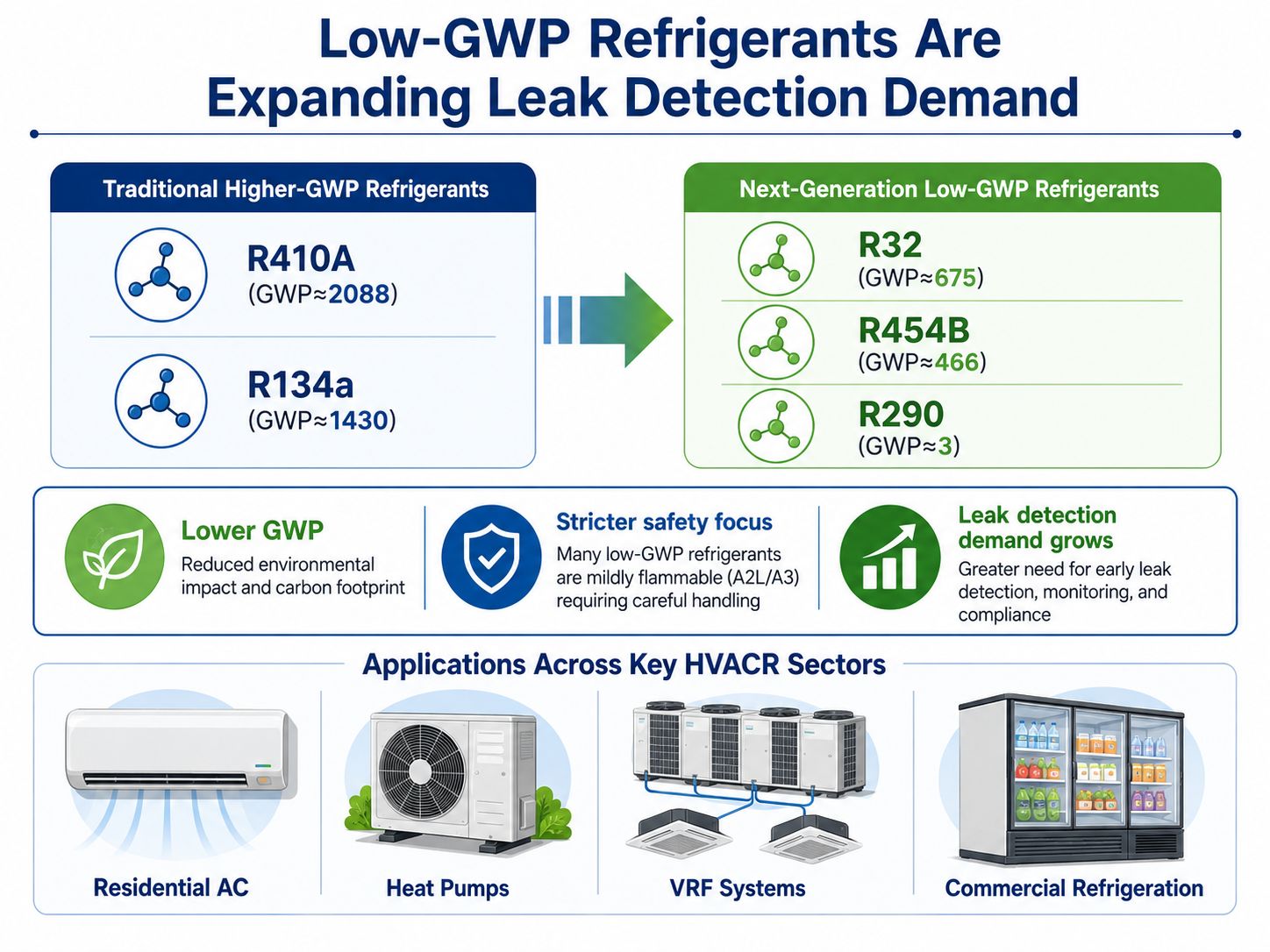
Low-GWP refrigerants offer clear environmental advantages, but some also introduce new safety challenges.
R32 and R454B, for example, are classified as A2L mildly flammable refrigerants, while R290 propane is classified as A3.
If a refrigerant leak occurs inside an enclosed or poorly ventilated space, the resulting concentration can become a safety concern depending on:
- refrigerant type;
- charge quantity;
- leak rate;
- room volume;
- airflow;
- equipment construction;
- potential ignition sources.
This makes refrigerant leak detection an increasingly important capability in modern HVAC equipment.
A refrigerant detection system can help equipment:
- identify an abnormal refrigerant concentration;
- transmit the signal to the main controller;
- trigger predefined mitigation logic;
- operate ventilation or fans;
- control valves or compressors;
- activate an alarm or system shutdown where required.
The sensor therefore becomes part of a wider safety-control architecture rather than simply acting as an independent measuring component.
Low-GWP Refrigerants Are Driving New Sensor Demand
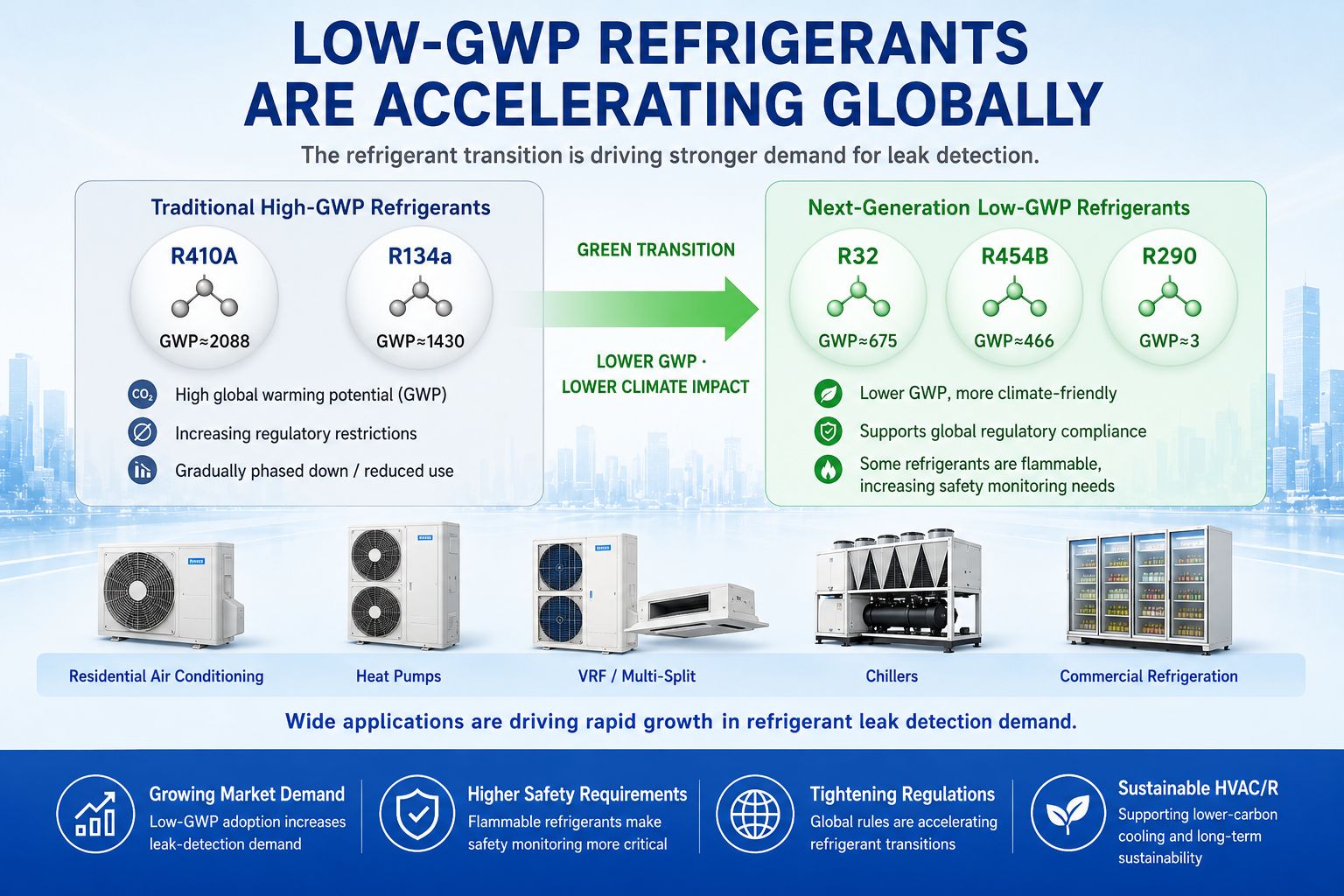
The transition from traditional refrigerants toward R32, R454B, R290 and other lower-GWP alternatives is expanding demand for refrigerant sensing technologies.
For HVAC manufacturers, the challenge is not simply to find a sensor that responds to refrigerant.
A practical refrigerant sensor also needs to consider:
- target-gas selectivity;
- detection range;
- response speed;
- temperature influence;
- humidity and condensation;
- cross-interference;
- long-term drift;
- service life;
- mechanical dimensions;
- communication interface;
- integration cost.
Different equipment platforms may therefore require different sensing technologies.
A compact residential air conditioner, for example, may prioritize sensor size, cost and long operating life.
A heat pump operating outdoors may place greater emphasis on wide-temperature performance and condensation resistance.
A VRF or commercial refrigeration system may require distributed monitoring, digital communication and multiple sensing points.
For OEMs, refrigerant sensor selection is increasingly becoming an early-stage system-design decision.
Why NDIR Is Well Suited to Refrigerant Leak Detection
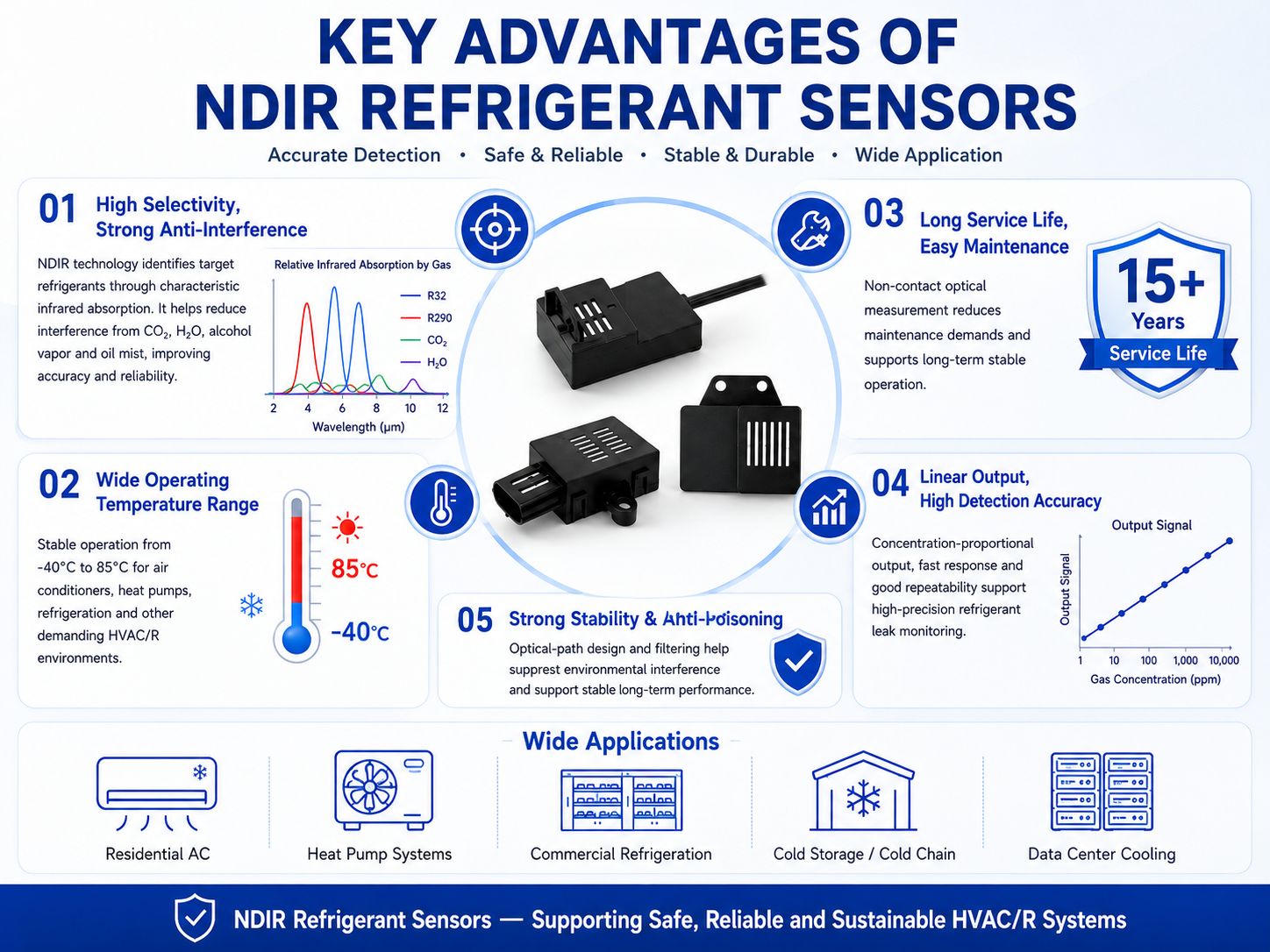
Among available refrigerant detection technologies, non-dispersive infrared (NDIR) sensing has become an important technical route for applications requiring high selectivity and stable continuous monitoring.
NDIR technology takes advantage of the fact that different gas molecules absorb infrared radiation at characteristic wavelengths.
A simplified measurement process is:
Infrared Source → Refrigerant Gas → Infrared Absorption → Detector → Concentration Signal
Because the measurement is based on optical absorption, NDIR technology offers several useful characteristics for HVAC applications.
Selectivitate ridicată
Characteristic infrared absorption bands make it possible to distinguish target refrigerants from many common background gases.
This helps reduce the influence of substances such as:
- water vapor;
- CO₂;
- alcohol vapor;
- oil mist;
- other environmental interferents.
Wide Environmental Adaptability
HVAC equipment can experience significant temperature changes.
Depending on the specific sensor design, Winsen refrigerant sensing products can support wide operating temperature ranges and environmental compensation to meet demanding equipment conditions.
Long Service Life
The optical measurement process does not rely on continuous consumption of a chemical sensing material.
This makes NDIR suitable for equipment expected to remain in operation for many years.
Stable Concentration Output
NDIR sensors can provide concentration-related output suitable for integration into appliance control systems.
This allows the refrigerant signal to become part of:
Detection → Analysis → Mitigation → Protection
rather than serving only as a basic leak indicator.
Condensation Is a Real Challenge Inside HVAC Equipment
The actual environment inside an air conditioner or heat pump can be far more demanding than room-temperature laboratory testing.
Depending on the installation position, a refrigerant sensor may encounter:
- high humidity;
- condensation;
- rapid temperature cycling;
- refrigerant oil;
- vibration;
- compressor heat;
- airflow changes;
- long periods without an actual leak event.
Condensation is particularly important.
A sensor installed near evaporators or cold piping may experience repeated changes between high humidity and low surface temperatures.
For this reason, OEM evaluation should consider not only basic refrigerant response, but also the sensor’s behavior under realistic HVAC environmental conditions.
Multi-Technology Refrigerant Detection for Different HVAC Designs
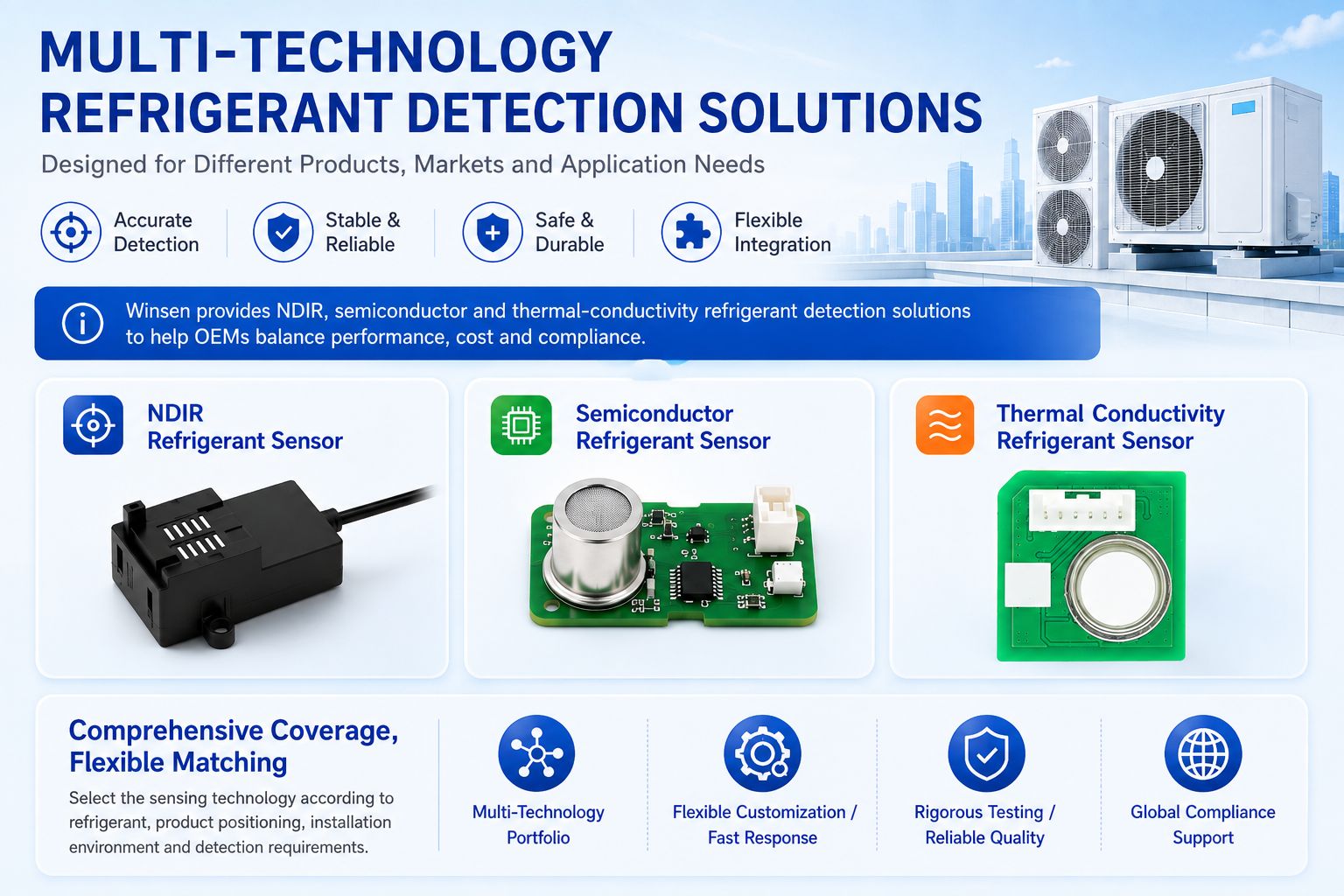
There is no single refrigerant sensing technology that is optimal for every product.
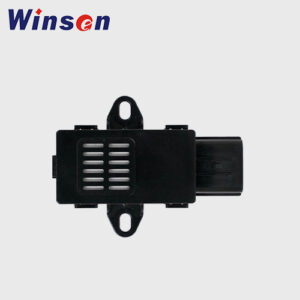
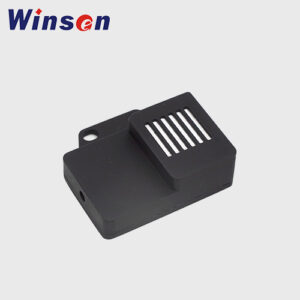
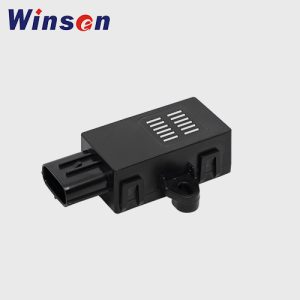
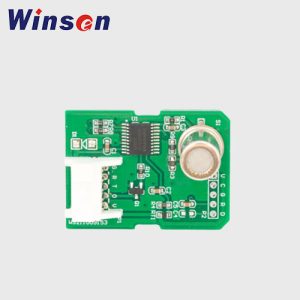
Winsen provides multiple technical routes for refrigerant leak detection, including:
- NDIR infrared sensing
- semiconductor sensing
- thermal conductivity sensing
This allows OEM manufacturers to select a solution according to refrigerant type, product positioning, installation space, environmental conditions and system cost.
You can explore the complete portfolio on the Winsen Refrigerant Sensor Solution page.
NDIR Refrigerant Sensors
NDIR solutions are particularly suitable where customers prioritize:
- high selectivity;
- reliable concentration detection;
- long-term stability;
- strong anti-poisoning capability;
- continuous online monitoring.
Typical target refrigerants can include R32, R454B, R290 and other refrigerants depending on the sensor configuration.