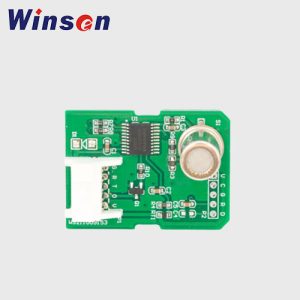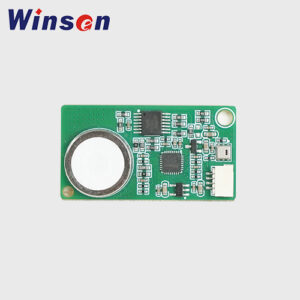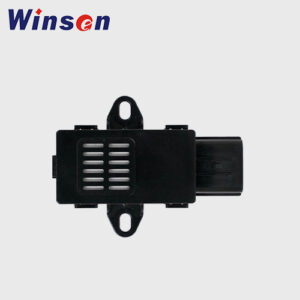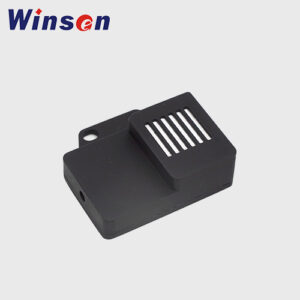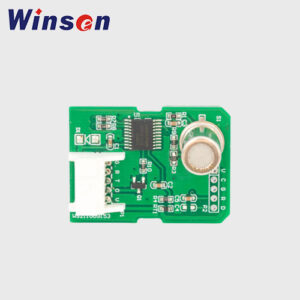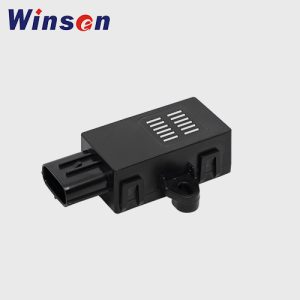
Refrigerant sensors are no longer “nice-to-have.” As the market moves from legacy A1 refrigerants toward A2L mildly flammable blends (R32, R454x, R1234yf/ze), leak detection increasingly becomes part of a safety function, not just a maintenance tool. A2L definitions and limits come from refrigerant classification work such as ASHRAE 34 (including the 2L burning-velocity criterion), and many safety discussions focus on activation well below the Lower Flammability Limit (LFL).
This article explains the core sensing principles used for refrigerants, what each does well, where each fails, and how to pick the right approach for your refrigerant and compliance target.
Refrigerant sensors typically output one of these:
Why the unit matters: in machinery rooms, ASHRAE 15 requires detector setpoints not exceed the applicable Refrigerant Concentration Limit (RCL) from ASHRAE 34.
For A2L appliances/systems, many widely used guidance documents emphasize activation at < 25% of LFL and response-time expectations.
A1 leaks are usually managed for safety (exposure/oxygen displacement in confined spaces), equipment reliability, and refrigerant loss. In machinery rooms, the RCL-based setpoint rule is central.
ASHRAE 34 defines Subclass 2L by a maximum burning velocity (≤ 10 cm/s) as part of the classification framework.
In many A2L adoption materials, the detector is part of a “refrigerant detection system (RDS)” that must react early (commonly framed around 25 % LFL) and drive mitigation controls (fan/valve/shutdown strategy).
Related Read: https://refrigerantsensor.com/knowledge/a2l-sensor/
A3 refrigerants (like hydrocarbons) often use combustible-gas style thresholds (%LEL), plus strong attention to ignition prevention.
Best for: many halocarbon refrigerants (HFC/HFO blends), CO₂, and various IR-active gases.
How it works: gas molecules absorb infrared light at characteristic wavelengths. The sensor measures how much IR is absorbed through a gas path to estimate concentration (often explained using Beer–Lambert concepts).
Typical NDIR block diagram
Styrker
Common pitfalls
Best for: high-sensitivity, high-selectivity detection where you can afford more complexity (often in premium instruments).
How it works: modulated light is absorbed by the target gas → turns into heat → periodic pressure waves (“sound”) form in a chamber → microphone/transducer measures the acoustic signal proportional to concentration.
Styrker
Tradeoffs
Best for: hydrocarbons / combustible gases (including propane-based refrigerants like R290) when you want %LEL-style measurement.
How it works: combustible gas oxidizes on a heated catalyst bead, producing heat → the bead’s temperature rises → resistance changes → Wheatstone bridge measures the change.
Styrker
Common pitfalls
Best for: cost-sensitive alarms and embedded detection where you can accept more cross-sensitivity and drift management.
How it works: gas interactions with a heated metal-oxide surface change the sensor’s electrical resistance (a surface chemistry process influenced by adsorption/desorption and oxygen species).
Styrker
Common pitfalls
Best for: specific industrial setups where the target gas strongly changes thermal conductivity relative to the background gas, or as part of analytical systems.
How it works: a heated wire’s temperature (and thus resistance) changes depending on how well the surrounding gas conducts heat; that change is measured to infer concentration.
Styrker
Tradeoffs
| Refrigerant type | Eksempler | Recommended principles | Why |
|---|---|---|---|
| Halocarbons (HFC/HFO blends) | R134a, R410A, R32/R454 blends | Er n, sometimes PAS | Strong IR absorption signatures; stable thresholds |
| Hydrocarbons (A3) | R290, R600a | Catalytic bead, NDIR hydrocarbon | Combustible safety (%LEL) or IR stability depending on design |
| CO₂ (R744) | Co₂ | Er n, sometimes TCD | CO₂ is a classic NDIR target gas |
| “Harsh” industrial environments | machine rooms, oil mist | NDIR (with protection), PAS | Better stability; design enclosure/filtration carefully |
When you specify a refrigerant sensor, ask for:
For many modern HVAC refrigerants and blends, NDIR infrarød is widely used because it measures gas absorption directly and can be stable long-term.
A2L is mildly flammable (2L has a defined burning-velocity criterion), so detection often needs to trigger mitigation godt under LFL, commonly framed as < 25% LFL.
Catalytic bead measures combustion heat (great for %LEL alarms) but can be poisoned and needs oxygen; NDIR measures IR absorption and can be more stable if optics are protected.
MOS sensing depends on surface chemistry and is affected by humidity, contaminants, and baseline shifts, so compensation and calibration strategy matter.
PAS can be extremely sensitive and selective, but it’s typically more complex and costlier; many HVAC fixed detectors prefer NDIR for robustness and cost.
Fortell oss dine mål for kjølemiddel, applikasjon og grensesnittkrav. Vårt sensoringeniørteam vil anbefale en passende modell.
Innholdsfortegnelse
×