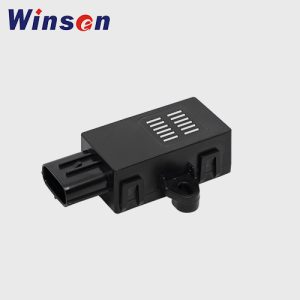
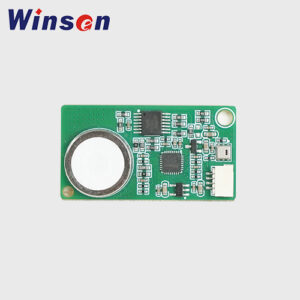
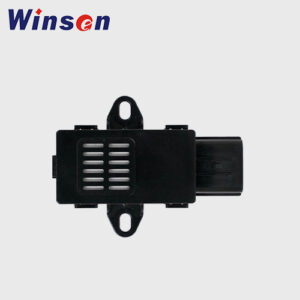
“A2L” is asafety classificationused for refrigerants:
EN= lower toxicity (based on occupational exposure criteria)
2L = mild flammability with lower burning velocity; A2L refrigerants must haveburning velocity ≤ 10 cm/sper common interpretations tied toASHRAE 34language and industry guidance
A2L was created to distinguish “mildly flammable” refrigerants from more easily ignitable flammables (A3), enablingdifferent safety rules and mitigation strategies.
2) Common A2L refrigerants (what your sensor may need to detect)
A2L is not one gas—your “A2L sensor” typically targetsspecific refrigerantsused in modern HVACR:
R32(widely adopted for room AC / heat pumps)
R454B / R454A / R454C(common R410A-replacement family, region dependent)
R1234YF(A2L used heavily in mobile A/C and some stationary applications)
Practical point:“A2L sensor” usually means akjølemiddeldeteksjonssystem (RDS)designed and validated for A2L refrigerants, not a generic combustible-gas sensor.
3) The most important requirement: detect and mitigate below 25% of LFL
Across modern A2L appliance safety discussions, the most repeated requirement is:
Leak detection must activate at a maximum concentration of < 25% of the LFL(Lower Flammability Limit)
Some guidance highlights a performance expectation such as producing output within a defined time at25 % LFL(e.g., 30 seconds in certain discussions/engineering summaries of IEC 60335-2-40-related requirements).
Why 25% LFL matters:it builds a safety buffer so the system can turn on ventilation / mitigationbeforea flammable mixture becomes possible.
4) Standards that drive A2L sensor design (what OEMs must align with)
UL and industry summaries describe updated requirements forrefrigerant detection systems, including testing around25 % LFLand lifetime reliability considerations.
ASHRAE 15 addenda and updates include requirements aroundrefrigerant detectors, ventilation activation, and setpoint logic in machinery-room contexts.
I 378/ ISO 5149 family (EU/International safety framework)
EN 378 guidance commonly states detector placement principles and machinery-room requirements (e.g., at least one detector; mounting low for heavier-than-air refrigerants, high for lighter-than-air).
5) How to choose alarm thresholds for A2L sensors
Because different A2L refrigerants have different LFL values, use afraction-of-LFLapproach:
Mitigation trigger:≤ 25% LFL(commonly cited requirement for RDS activation)
Worked example: R32
Multiple sources citeR32 LFL ≈ 14.4% vol.
So:
25% LFL = 14.4% × 0.25 = 3.6% vol = 36,000 ppm
10% LFL = 1.44% vol = 14,400 ppm
Note: Some safety discussions also connect RCL logic to fractions of LFL (e.g., 20% of 14.4% = 2.88% ≈ 28,800 ppm in one engineering discussion).
Worked example: R1234yf
One reference table listsR1234yf LFL ≈ 6.5% vol.
25% LFL = 1.625% vol = 16,250 ppm
Takeaway:Don’t publish a single ppm number as “the A2L threshold.” Publish%LFLtargets and show your conversion method.
6) A2L sensor technology options (what works best for mildly flammable refrigerants)
Option A — NDIR / Infrared refrigerant sensors
Many A2L-focused modules and datasheets explicitly useEr nfor refrigerant detection (R32, R454 blends), emphasizing accuracy and long-term stability.
Fordeler
Good long-term stability
Better selectivity than many generic combustible sensors
Easier to map to%LFLand compliance-style thresholds
Watch-outs
Optical contamination risks (dust/oil) → use protective housing/filters
Option B — Catalytic bead (pellistor) combustible sensors
Catalytic sensors are widely used for%LELcombustible gas detection and can work for hydrocarbons; however, for A2L refrigerants, OEMs must considerpoisoning, oxygen dependence, and correction-factor practices.
7) Placement and installation rules (why A2L detection fails in the field)
A2L refrigerants (and many HFC/HFO vapors) are commonly treated asdenser than air, so they can accumulate low in poorly ventilated areas. EN 378 guidance explicitly states mounting logic: install detectors at thelowest underground room / low points for heavier-than-air, and at the highest point for lighter-than-air.
Place nearlikely leak sources: coil connections, valves, compressor compartment
Avoid direct supply-air blasts that dilute the leak plume
In large rooms, useflere sensorerand cover dead zones
Protect from water, dust, oil mist (enclosure design matters)
8) Integration: what the detector shoulddowhen gas is detected
A2L sensor systems are not just “readouts.” They typically triggermitigation:
Ventilasjonsaktivering(machinery room ventilation triggered by detectors is part of ASHRAE 15 updates/addenda discussions)
Release mitigation controls(standards presentations and compliance discussions reference mitigation controls activated by an RDS in certain applications)
Fault behavior: if the sensor fails, the equipment should move to a safe state consistent with the applicable product standard approach
9) Calibration & long-term reliability (the hidden differentiator)
A2L sensors used in safety functions must be reliableover the lifetimeof HVAC equipment. UL notes the importance of evaluating reliability over life and discusses drift/deviation allowances in updated requirements context.
What to publish on your product page
Response time at a defined concentration (e.g., 25% LFL test condition)
Drift specification and recommended test interval
Self-test / fault output behavior
Temperature/humidity compensation method (especially for embedded indoor units)
10) Vanlige spørsmål
What does A2L mean?
A2L indicateslower toxicity (A) og mild flammability with low burning velocity (2L); A2L refrigerants haveburning velocity ≤ 10 cm/sin common classification guidance.
Which refrigerants are A2L?
Common examples includeR32 og R454A/B/Cfor HVAC, andR1234YFin many mobile A/C contexts.
What is the key detector activation threshold?
A widely cited requirement isactivation at < 25% of the refrigerant’s LFLto reduce ignition risk.
How fast does an A2L sensor need to respond?
Engineering summaries of IEC 60335-2-40-related requirements commonly reference producing output within a defined time when exposed to25 % LFL(often quoted as 30 seconds in industry summaries).
Where should an A2L sensor be installed?
EN 378 guidance generally recommends installing at least one detector in each machinery room/occupied space considered, and placing detectors low forheavier-than-air kjølemidler.
Which sensor technology is best for A2L refrigerants?
Many A2L refrigerant modules useNDIR (infrared)for stability and selectivity (R32/R454 blends). Catalytic sensors can work but require careful handling of poisoning/correction-factor issues.
Can one “A2L sensor” detect all A2L refrigerants?
Some modules support multiple A2L gases (e.g., R32 and R454 blends), but accuracy is best when the sensor isvalidated for the target refrigerant(s)and outputs in%LFLfor those gases.
Winsen Solution
If you’re designing A2L HVAC equipment (R32, R454 blends, etc.), anA2L sensor is part of the safety system, not just a measurement component. A supplier should supportgas selection, %LFL alarm strategy, placement guidance, og integration formats(UART/RS485/Modbus/analog) aligned with UL/IEC 60335-2-40 and the relevant system standards.