1) What is R290, and why does it need dedicated detection?
R290 is propane (C₃H₈) used as a natural refrigerant in air conditioners, heat pumps, and refrigeration equipment. Its biggest advantage is climate impact: GWP is typically stated as < 3 (very low).
The trade-off is safety: R290 is classified as A3 (low toxicity, highly flammable) under common refrigerant safety classification schemes.
That “A3” label is why modern A3 equipment designs increasingly include refrigerant leak detection + mitigation (fans, shutoff valves, alarms).
2) Key safety numbers: LFL/LEL for R290 (propane)
For propane, widely referenced flammability limits are:
- LFL (Lower Flammable Limit): 2.1% by volume
- UFL (Upper Flammable Limit): 9.5% by volume
Some HVAC references also express the LFL as a mass concentration: 0.038 kg/m³.
Common alarm language: “%LEL”
In leak detection, you’ll see readings and thresholds in %LEL (percent of the lower explosive limit). Two practical conversions (based on LFL = 2.1% vol):
| Threshold | Equivalent in vol% | Equivalent in ppm |
|---|---|---|
| 10% LEL | 0.21% vol | 2,100 ppm |
| 25% LFL | 0.525% vol | 5,250 ppm |
| 50% LEL | 1.05% vol | 10,500 ppm |
(1% = 10,000 ppm)
Why this matters: Many safety frameworks want detection/mitigation to happen well below LFL.
You May Like: LEL and UEL: The Complete Guide to Explosive Limits, %LEL, and Gas Detection
3) What standards require (and what OEMs must design for)
IEC/UL 60335-2-40: leak detection must act below 25% LFL
Safety guidance around the 60335 family emphasizes that the leak detection system activates below 25% of the LFL, to provide a large safety margin, and can trigger mitigations like circulation fans.
Manufacturers in the refrigerant detection industry explicitly position A3 (R290) detection around UL 60335-2-40 / IEC/EN 60335-2-40 requirements.
EN 378: leak detectors, alarms, ventilation for safety
EN 378 guidance highlights that for safety of personnel/buildings—especially in machinery-room contexts—there are requirements around ventilation, alarms, and leak detectors, including considerations for flammable refrigerants.
4) R290 sensor technologies (which one should you choose?)
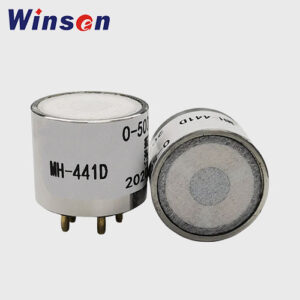
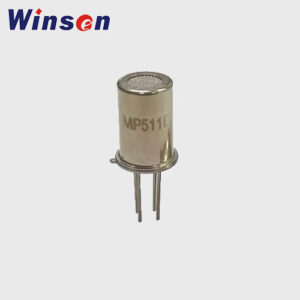
R290 detection is essentially propane detection. The best technology depends on your product (split AC indoor unit vs machinery room monitor vs refrigerant cabinet).
Technology comparison table
| Sensor type | Why OEMs use it | Typical strengths | Typical watch-outs |
|---|---|---|---|
| Catalytic bead (pellistor) | Classic combustible gas detection | Fast response; proven for %LEL | Can be poisoned by silicones/sulfur; needs oxygen; calibration/correction factors matter |
| NDIR / IR hydrocarbon | Stable hydrocarbon detection | Good long-term stability; less poisoning risk than catalytic in many cases | Must manage optics contamination; gas-specific calibration is important |
| Advanced property-spectrometry / smart sensors | “Self-test + compensation” in harsh HVAC environments | Built-in compensation, self-check features, robust designs (varies by vendor) | Higher BOM; integration constraints |
5) Setpoints: 10% LEL vs “<25% LFL” (how to design alarms)
Typical gas safety practice (industrial)
Many gas safety references describe low alarms around 10–20% LEL and higher alarms at 25–50% LEL for escalation.
What A3 HVAC safety language tends to push toward
For low-GWP refrigerants safety discussions (60335 ecosystem), the theme is: detect and mitigate below 25% of LFL.
Practical OEM pattern (recommended):
- Alarm 1 (Early warning): 10% LEL (0.21% vol) → log event, notify, increase ventilation
- Alarm 2 / Mitigation trigger: ≤25% LFL (0.525% vol) → activate mitigation (fan/valve) and fault state
- Fail-safe behavior: If detector faults, system should move to a safe state (implementation depends on standard/product class)
6) Placement guidelines (R290 leaks don’t behave like “normal air”)
R290/propane can form flammable clouds near the floor level in certain release scenarios; research/industry presentations explicitly note floor-level flame propagation risk in tests.
EN 378 placement discussions emphasize you must determine whether a flammable refrigerant is heavier or lighter than air to place detectors and exhaust appropriately.
Installation best practices (field-proven)
- Place sensors near likely leak sources (compressor area, valves, joints)
- Avoid mounting directly in supply air blast (can delay detection by dilution)
- In enclosures or tight indoor-unit volumes, consider multi-point detection coverage
- Protect the sensor from water splash, oil mist, and dust (filters + enclosure design)
7) Calibration & cross-gas issues (don’t get tricked by “methane-calibrated” LEL)
If you use catalytic bead or IR LEL-style sensing, calibration gas choice matters:
- Honeywell/RAE Systems guidance explains correction factors for LEL sensors and recommends calibrating with the target gas for best accuracy.
- Some industry notes warn that a methane-calibrated LEL sensor can significantly misread other hydrocarbons.
Common calibration point for propane
50% LEL propane = 1.05% volume propane in air is a widely used calibration concentration in the calibration gas market.
OEM tip: If your device is marketed as an R290 sensor, validate performance using propane/R290 calibration gas, not only methane.
8) What specs to include on an R290 sensor product page (buyers look for this)
Core performance specs
- Measurement range: 0–100% LEL (or application-specific)
- Response time (T90), warm-up time, accuracy/repeatability
- Drift profile + recommended calibration interval
- Operating temp/humidity + condensation tolerance
- Poison resistance statement (especially for catalytic types)
Integration specs
- Output: analog (0–5V / 4–20 mA), UART/I²C, RS485/Modbus (choose by market)
- Alarm pins / relay drive capability
- Self-test / fault output behavior (important for safety cases)
Compliance positioning
- Reference relevant appliance/system standards in your target market (UL/IEC 60335-2-40 family discussions, EN 378 context)
9) Applications: where R290 sensors are used
- Split AC / heat pump indoor units using R290
- Packaged HVAC units with sealed refrigerant circuits
- Refrigeration cabinets / cold rooms with hydrocarbon systems
- Mechanical rooms / plant rooms with hydrocarbon refrigerant systems (design depends on codes)
10) FAQ
Is R290 the same as propane?
Yes—R290 is the refrigerant designation for propane (C₃H₈).
Why do A3 systems need leak detection?
Because R290 is A3 (highly flammable), many safety frameworks emphasize early detection and mitigation for occupant safety.
What is the LFL of R290?
Propane’s LFL is commonly cited as 2.1% by volume (and some HVAC references also use 0.038 kg/m³).
What does “activate below 25% LFL” mean in real numbers?
Using LFL = 2.1% vol, 25% LFL ≈ 0.525% vol ≈ 5,250 ppm.
Is 10% LEL a good alarm point for R290?
10% LEL is widely used as an early warning concept in gas safety practice (often 10–20% LEL for low alarm).
Which sensor is better for R290: catalytic or IR?
Catalytic is cost-effective and proven; IR/NDIR often offers better stability and less poisoning risk—final choice depends on enclosure, contaminants, and compliance needs.
Can I calibrate an R290 sensor using methane?
You can use correction-factor approaches, but many technical references recommend calibrating with the target gas for the most accurate readings.
What calibration gas is typical for propane sensors?
A common point is 50% LEL propane = 1.05% vol in air (used by calibration gas suppliers).
Winsen ODM/OEM
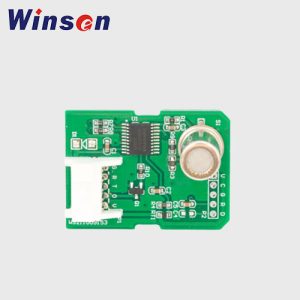
If you’re developing R290 (A3) air conditioners, heat pumps, or refrigeration equipment, we can help you select and integrate the right R290 sensor solution—including sensing principle choice, alarm strategy, and integration format (module/transmitter) based on your target standard and installation environment.