What is an HFC?

HFC stands for hydrofluorocarbon—a family of man-made gases widely used as refrigerants in air conditioning and refrigeration, and also used in foams and aerosols. HFCs were introduced largely as replacements for older ozone-depleting refrigerants, but many HFCs still have very high climate impact.

Are HFCs “ozone-safe”?

Most commonly used HFC refrigerants have zero ozone depletion potential (ODP) because they don’t contain chlorine or bromine (unlike many CFCs/HCFCs). However, being “ozone-safe” does not mean “climate-safe.”

Why HFCs are being phased down

HFCs can have very high Global Warming Potential (GWP)

GWP compares how much heat a gas traps in the atmosphere relative to CO₂ over a set period (commonly 100 years). Many HFCs have GWPs hundreds to thousands of times higher than CO₂, which is why policymakers target them for reduction.

A small leak can cause a big climate footprint

Refrigeration and A/C systems are intended to be sealed, but real-world leakage happens—especially in large commercial systems. Some regulators highlight that certain systems can leak 20% or more per year without strong maintenance and leak management.

Common HFC refrigerants (and typical GWP values)

Below are widely referenced IPCC AR4 (100-year) GWP values (often used in policy and compliance contexts).

RefrigerantTypeTypical GWP (100-yr)Where you’ll see it (examples)
R-410AHFC blend2,088Residential & light commercial A/C, heat pumps (legacy installs)
R-404AHFC blend3,922Commercial refrigeration (legacy supermarkets, cold rooms)
R-407CHFC blend1,774Packaged A/C, chillers (legacy installs)

GWP numbers can vary by IPCC assessment and calculation method; many regulations still reference AR4 values for consistency.

HFC phase-down: what’s happening globally

1) Global: Kigali Amendment (Montreal Protocol)

The Kigali Amendment adds HFCs to the Montreal Protocol framework and sets a global phasedown schedule (different timelines for different country groups). It is widely cited as a major climate action that can avoid up to ~0.5°C warming by the end of the century if fully implemented.

2) United States: AIM Act + EPA allowances

In the U.S., the American Innovation and Manufacturing (AIM) Act directs EPA to phase down HFC production and consumption to 15% of baseline by 2036 via an allowance allocation and trading program.

3) European Union: F-gas Regulation (EU) 2024/573

The EU’s updated F-gas framework (Regulation (EU) 2024/573) strengthens quotas, expands scope, and sets a long-term direction toward phasing out HFCs by 2050 in the EU market.

What this means in practice:

If you manufacture HVACR equipment, gas detectors, or cold-chain systems, you should assume continued pressure toward lower-GWP refrigerants, tighter emission prevention, and more traceable servicing and recovery practices.

HFC leak detection: best practices (and why sensors matter)

Even before a complete refrigerant transition, the fastest “win” is usually preventing and detecting leaks:

Where HFC leaks commonly occur

  • Service valves, flare joints, brazed connections
  • Compressor shaft seals / gaskets
  • Vibration points (transport refrigeration, rooftop units)
  • Evaporator coils in corrosive environments (kitchens, coastal sites)

What good leak detection achieves

  • Reduces refrigerant loss and downtime
  • Helps meet tightening compliance expectations around emission prevention
  • Protects equipment rooms and occupied spaces (especially where mild flammability refrigerants are adopted)

Sensor selection checklist (for HVACR & cold chain OEMs)

When choosing a refrigerant gas sensor/module for HFC monitoring, evaluate:

  • Target gas(es): R-410A / R-404A / mixed refrigerant environments
  • Detection range & alarm strategy: early warning vs. safety threshold
  • Cross-sensitivities: cleaners, VOCs, humidity, temperature swings
  • Long-term drift & calibration plan: service interval, bump test strategy
  • Integration form factor: module, probe, transmitter; analog/digital output
  • Compliance & system design: ventilation interlocks, alarm relays, BMS/Modbus options

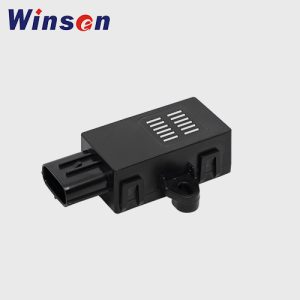
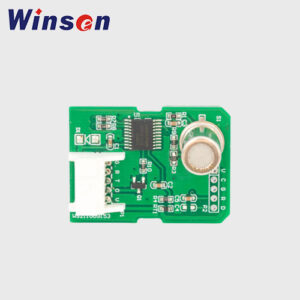
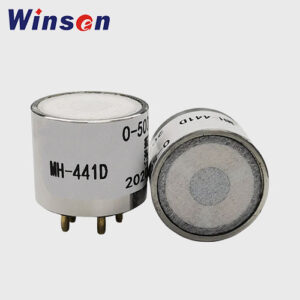
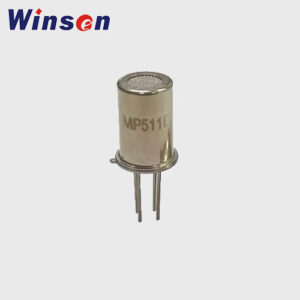
Winsen supply refrigerant gas sensing solutions for HVACR monitoring and can support OEM selection, integration, and customization (sensor + algorithm + enclosure/module options).

HFC alternatives: what’s replacing them?

As HFCs phase down, systems increasingly move to:

  • HFOs / HFO blends (lower GWP; can be mildly flammable depending on blend)
  • CO₂ (R-744) (very low GWP, high pressure design)
  • Ammonia (R-717) (excellent efficiency; toxicity management)
  • Hydrocarbons (R-290 propane, etc.) (very low GWP; higher flammability)

This transition also makes ASHRAE safety classifications more important (toxicity A/B + flammability 1/2L/2/3).

FAQ

1) What does HFC stand for?

HFC stands for hydrofluorocarbon, a family of synthetic gases commonly used as refrigerants in cooling and refrigeration.

2) Are HFCs banned?

In most places, HFCs are not “instantly banned,” but they are being phased down through quotas, sector rules, and equipment restrictions (global Kigali phasedown; U.S. AIM Act allowances; EU F-gas Regulation).

3) Do HFCs damage the ozone layer?

Most HFC refrigerants have zero ODP, but they can still be powerful greenhouse gases.

4) Why is R-410A being replaced?

R-410A has a high GWP (2,088), so many markets push newer lower-GWP options and updated equipment designs.

5) Which HFC has the highest impact?

It depends on the specific chemical; some HFCs have extremely high GWPs. (For example, HFC-23 is often cited as exceptionally high.)

6) What’s the Kigali Amendment in simple terms?

It’s a global agreement under the Montreal Protocol to phase down HFCs, delivering major climate benefits if implemented.

7) What is the U.S. AIM Act doing to HFCs?

It requires EPA to reduce U.S. HFC production/consumption to 15% of baseline by 2036 using an allowance system.

8) What does EU Regulation 2024/573 change?

It updates the EU F-gas framework, tightening quotas and setting a direction toward phasing out HFCs by 2050 in the EU market.

9) Why is refrigerant leak detection so important?

Because HFC leaks can carry a disproportionate climate impact, and regulators emphasize stronger emission prevention.

10) Can I retrofit an HFC system to a lower-GWP refrigerant?

Sometimes, but it depends on oil compatibility, pressure/temperature glide, expansion device sizing, seals, and safety classification. For OEM-grade outcomes, evaluate retrofit refrigerants and update detection + labeling practices.


Need an HFC leak detection solution for HVACR equipment?

Winsen provides refrigerant gas sensing solutions for OEMs and system integrators—supporting gas selection, integration guidance, and customization for modules/transmitters used in VRF/VRV units, chillers, cold storage, and machinery rooms.

Leave a Reply

Your email address will not be published. Required fields are marked *