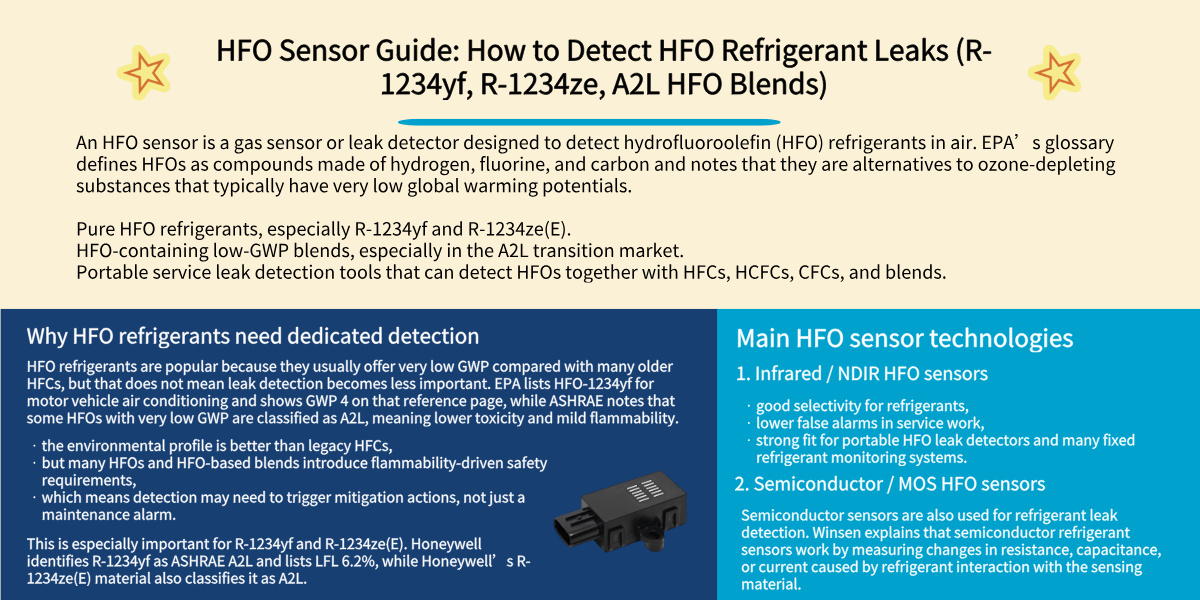
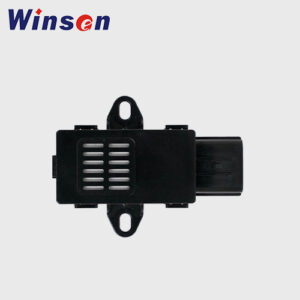
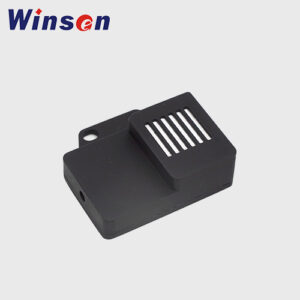
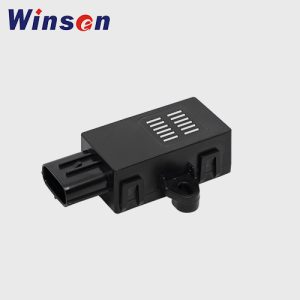
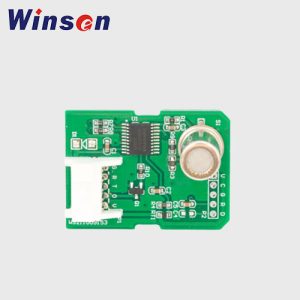
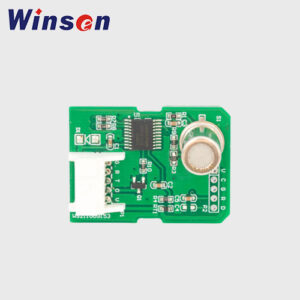
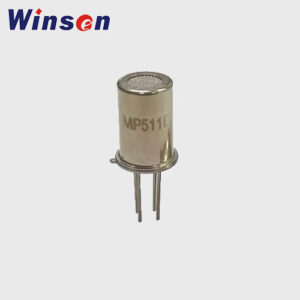
HFO Sensor: The Complete Guide to Detecting HFO Refrigerant Leaks

What is an HFO sensor?

Ein HFO sensor is a gas sensor or leak detector designed to detect hydrofluoroolefin (HFO) refrigerants in air. EPA’s glossary defines HFOs as compounds made of hydrogen, fluorine, and carbon and notes that they are alternatives to ozone-depleting substances that typically have very low global warming potentials.

In practice, an HFO sensor usually targets one of these groups:

  • Pure HFO refrigerants, especially R-1234yf Und R-1234ze(E).
  • HFO-containing low-GWP blends, especially in the A2L transition market.
  • Portable service leak detection tools that can detect HFOs together with HFCs, HCFCs, CFCs, and blends.

So the most accurate way to frame the keyword is this: an HFO sensor is not just a “refrigerant sniffer,” but a detector selected for the specific HFO refrigerant, installation environment, and safety requirement.

Why HFO refrigerants need dedicated detection

HFO refrigerants are popular because they usually offer sehr niedriges GWP compared with many older HFCs, but that does nicht mean leak detection becomes less important. EPA lists HFO-1234YF for motor vehicle air conditioning and shows GWP 4 on that reference page, while ASHRAE notes that some HFOs with very low GWP are classified as A2l, meaning lower toxicity and mild flammability.

That combination changes the risk profile:

  • the environmental profile is better than legacy HFCs,
  • but many HFOs and HFO-based blends introduce flammability-driven safety requirementsAnwesend
  • which means detection may need to trigger mitigation actions, not just a maintenance alarm.

This is especially important for R-1234yf Und R-1234ze(E). Honeywell identifies R-1234yf als ASHRAE A2L and lists LFL 6.2%, while Honeywell’s R-1234ze(E) material also classifies it as A2l.

Which HFO refrigerants are most relevant for HFO sensors?

R-1234yf sensor

R-1234yf is one of the most important HFO refrigerants in the market. EPA specifically lists HFO-1234YF on its motor vehicle refrigerant page, and Chemours positions it as the standard refrigerant for modern automotive air conditioning.

Because R-1234yf is mildly flammable A2L, sensor selection is not only about detecting the gas. It is also about meeting the practical needs of automotive serviceAnwesend safe chargingAnwesend service-bay leak checking, and, in some equipment classes, broader A2L safety logic.

R-1234ze(E) sensor

R-1234ze(E) is another major HFO refrigerant, especially in some chiller and specialty applications. Honeywell classifies it as A2l and presents it as a low-GWP refrigerant option.

How does an HFO sensor work?

An HFO sensor works by exposing a sensing element to ambient air and converting the presence of leaked refrigerant into an electrical signal. The underlying detection method varies by product type. Winsen’s refrigerant sensor overview describes infrared sensing as measuring refrigerant absorption in the infrared spectrum, while semiconductor sensing measures changes in electrical properties caused by refrigerant interaction with the sensing material.

In the actual market, the most common HFO detection methods fall into four groups: infrared/NDIRAnwesend heated diodeAnwesend semiconductor/MOS, Und integrated A2L refrigerant detection systems with fixed stationary sensors and mitigation controls.

Main HFO sensor technologies

1. Infrared / NDIR HFO sensors

Infrared sensing is one of the most common choices for HFO detection.

This matters because IR detection is widely associated with:

  • good selectivity for refrigerants,
  • lower false alarms in service work,
  • strong fit for portable HFO leak detectors and many fixed refrigerant monitoring systems.

2. Semiconductor / MOS HFO sensors

Semiconductor sensors are also used for refrigerant leak detection. Winsen explains that semiconductor refrigerant sensors work by measuring changes in resistance, capacitance, or current caused by refrigerant interaction with the sensing material.

This approach is usually attractive when cost, compact size, and easy integration matter more than premium selectivity. In embedded HVAC electronics or alarm modules, that can be useful, but performance must still be checked carefully against the target HFO refrigerant and the application environment.

3. Fixed refrigerant detection systems for A2L HFO applications

For modern equipment using mildly flammable refrigerants, the “sensor” is often part of a complete Kältemittelerkennungssystem (RDS), not just a standalone gas element. UL definiert eine integral RDS as a system using one or more stationary sensors to detect refrigerant at a specified concentration and automatically initiate mitigating actions.

This is an important distinction for HFO sensors. In many A2L applications, the customer is not really buying only a sensor. They are buying:

  • a sensor,
  • Schwellenwertlogik,
  • mitigation outputs,
  • and compliance-ready behavior over the equipment life cycle.

HFO sensor vs ordinary refrigerant leak detector

A general refrigerant leak detector may advertise that it detects Hfos, but an HFO sensor for OEM or safety use should usually be selected more carefully. UL says updated UL 60335-2-40 requirements refined refrigerant detection system requirements to accommodate different methods, improve robustness and reliability, and account for deviation and drift over the system life cycle.

That means the right question is not just “Can it detect HFO?” The better questions are:

  • Which HFO refrigerant oder blend was it calibrated for?
  • Is it a service detector or a fixed safety detector?
  • Does it need to trigger fans, shutdown, or mitigation?
  • Does it need to comply with A2L equipment requirements?

How A2L rules change HFO sensor requirements

UL states that for low-GWP flammable refrigerant applications, the leak detection system is required to activate below 25% of the LFL, the sensor setpoint is factory set and sealed, mitigation devices such as circulation fans are activated, and self-test protocols supervise correct operation.

UL’s 2024 code-authority article also states that an integral RDS is typically designed to initiate mitigation actions within 15 seconds of detecting refrigerant concentration at 25% of the LFL or more, and notes that A2L refrigerants are heavier than air, so sensor locations are typically chosen near areas where leaked refrigerant can sink and collect, often near the bottom of the enclosure.

Texas Instruments’ A2L standard overview likewise states that the refrigerant detection system shall make output within 30 Sekunden der direkten Exposition gegenüber 25 % LFL and that leaked gas should not exceed 25 % der LFL.

For HFO sensors, this changes the product brief completely. The discussion shifts from “find the leak” Zu “detect and control the leak before a hazardous concentration develops.”

Where HFO sensors are used

Kfz-Klimaanlage

R-1234yf is the dominant HFO example here. Portable HFO leak detectors for automotive service often use IR oder heated diode sensing, and product pages specifically advertise R-1234yf compatibility.

HVAC equipment with A2L refrigerants

As low-GWP refrigerants become more common, the sensor is increasingly part of an equipment-integrated refrigerant detection system. UL explicitly describes the integral RDS as one of the most important safety controls in HVAC equipment.

Chillers and refrigeration

R-1234ze(E) and HFO-containing blends push users toward fixed monitoring, alarm logic, and refrigerant-specific calibration rather than generic leak sniffing alone.

How to choose the right HFO sensor

The best HFO sensor depends on the use case.

Für portable leak checking, IR and heated diode tools are the most visible product categories on the market, and both are widely sold as HFO-capable.

Für fixed OEM equipment, the better choice is usually a refrigerant-specific module or detection system selected around:

  • the exact refrigerant,
  • the required alarm threshold,
  • the response time,
  • the output interface,
  • and the mitigation strategy.

Für A2L HFO systems, buyers should pay special attention to:

  • factory calibration,
  • drift and long-term reliability,
  • sensor placement,
  • fail-safe behavior,
  • and compatibility with the refrigerant named on the equipment.

FAQ

What is an HFO sensor?

An HFO sensor is a gas sensor or leak detector used to detect hydrofluoroolefin refrigerants wie zum Beispiel R-1234yf Und R-1234ze(E), or refrigerant blends containing HFO components.

Are HFO refrigerants flammable?

Many important HFO refrigerants are A2l, which means lower toxicity and mild flammability. ASHRAE notes that some HFOs with very low GWP are classified as A2L, and manufacturer literature for both R-1234yf Und R-1234ze(E) identifies them as A2L.

What sensor technology is best for HFO refrigerants?

For many applications, infrared/IR is a strong choice, especially for fixed detection and higher-selectivity portable tools. Heated diode is also common in service leak detectors, while semiconductor sensors are used where compact cost-sensitive integration is important.

Can one detector sense HFOs and HFCs together?

Yes. Several commercial refrigerant leak detectors explicitly state that they detect HFOs, HFCs, HCFCs, CFCs, and blends.

Is an HFO sensor the same as an A2L sensor?

Not always, but the terms often overlap. Many important HFO refrigerants are A2l, so HFO sensor selection is frequently tied to A2L refrigerant detection requirements.

Why does 25% LFL matter for HFO sensors?

UL and TI materials on A2L refrigerant detection systems explain that detection and mitigation are tied to 25% of the lower flammability limit, so the system reacts well before a flammable concentration is reached.

Where should an HFO sensor be installed?

For A2L HVAC equipment, UL says the sensor is typically placed where leaked refrigerant is likely to sink and collect, often near the bottom of the enclosure and near the indoor coil area.

Is R-1234yf the main HFO for automotive sensors?

Yes. EPA specifically lists HFO-1234yf on its motor vehicle refrigerant page, and many automotive leak detectors market explicit R-1234yf compatibility.

Abschluss

An HFO sensor is no longer just a niche leak detector. It sits at the center of the low-GWP refrigerant transition, especially for R-1234yfAnwesend R-1234ze(E), and other HFO-based refrigerants and blends. The most important decision is not simply whether the detector can “see HFO,” but whether it matches the refrigerant typeAnwesend use caseAnwesend alarm threshold, Und A2L safety logic required by the application.

For a sensor manufacturer or OEM page, that is the real conversion angle: low GWP does not remove the need for detection—it changes what good detection must do.

Hinterlasse eine Antwort

Ihre E -Mail -Adresse wird nicht veröffentlicht. Erforderliche Felder sind markiert *