
R454B Refrigerant Leak Sensor Modules for HVAC OEMs
Compare Winsen R454B gas sensor modules for residential air conditioners, heat pumps, rooftop units, ducted systems and other A2L HVAC equipment. Select a dedicated R454B NDIR module, a multi-refrigerant platform or a compact thermal-conductivity module according to detection range, interface and enclosure constraints.
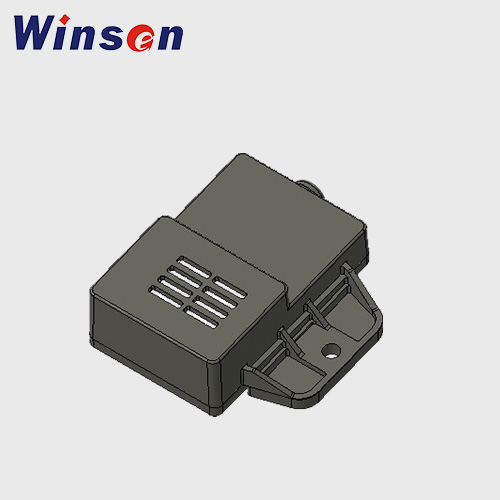
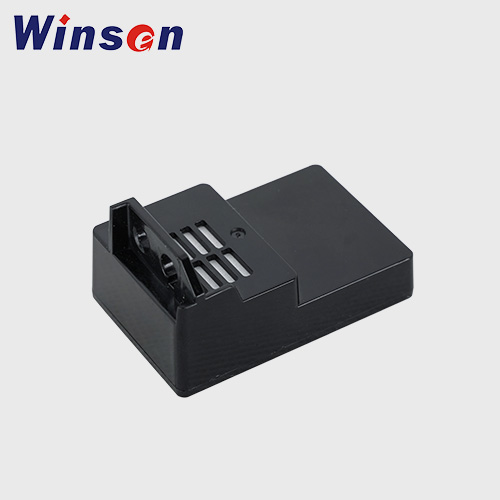 ZRT512C-R454B-4-TI · Dedicated R454B
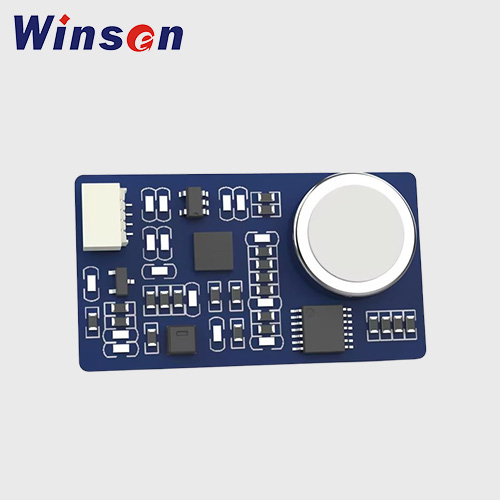 ZR210 · Compact Low-Power Module
R454B Is Reshaping Residential and Light Commercial HVAC Design
R454B is an A2L refrigerant increasingly used in new air-conditioning and heat-pump platforms as equipment manufacturers transition away from higher-GWP R410A. Its lower global warming potential supports current refrigerant-transition goals, while its mild flammability requires appliance designers to evaluate charge limits, leak concentration, sensor placement and mitigation controls.
An integral refrigerant detection system may combine one or more sensors with controller logic that starts airflow, closes valves, de-energizes selected components or reports a system fault. The sensor is therefore only one part of the complete protective function and must be validated in the final appliance.
Choose the R454B Sensor Architecture Before Choosing the Model
The best option depends on whether the HVAC platform is refrigerant-specific, shared across R32 and R454B variants, or constrained by board space and power.
Dedicated R454B Platform
For OEMs building an appliance around R454B and wanting a refrigerant-specific calibration and communication path.
- Dedicated R454B NDIR model
- 0–50% LFL range options
- RS485 integration
- Clear model-level validation path
Shared R32 / R454B Platform
For manufacturers using one controller or cabinet architecture across multiple A2L product variants.
- Multi-refrigerant NDIR modules
- 0–50% or 0–100% LFL options
- RS485, UART or PWM variants
- Useful for common hardware platforms
Compact Low-Power Design
For tight installation spaces where low current, UART communication and anti-condensation performance are priorities.
- Thermal-conductivity principle
- 0–25% LFL listed range
- 5 VDC and under 50 mA
- 37 × 20 × 7 mm package
Compare Winsen R454B Refrigerant Leak Sensors
The following models cover dedicated R454B detection, shared R32/R454B platforms, compact embedded designs and controller architectures that need relay control.
ZRT512E
Shared R454B and R32 module for HVAC and heat-pump platforms requiring quantitative LFL measurement and RS485 communication.
- Target gas: R454B and R32
- Detection range: 0–100% LFL
- Resolution: 0.1% LFL
- RS485 protocol; 1-second data update
- R454B alarm point listed as 10% LFL
- Response time: ≤15 seconds
ZRT512C-R454B-4-TI
Compact dedicated R454B NDIR module for HVAC equipment requiring RS485 communication and a 0–50% LFL measurement range.
- Target gas: R454B
- Detection range: 0–50% LFL
- NDIR measurement principle
- RS485 output
- Response time: under 10 seconds
- Temperature compensation and water-vapor resistance
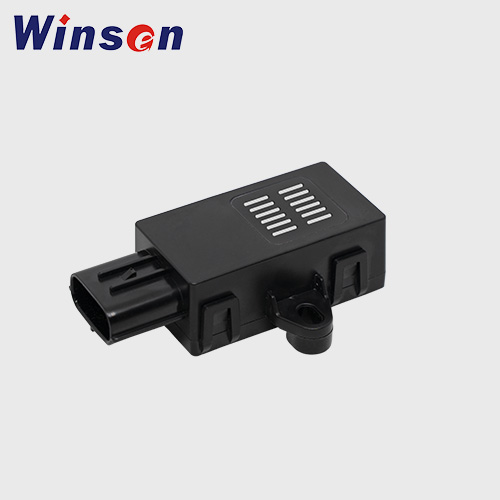
ZRT510-R454B
Refrigerant-specific NDIR module for OEM projects needing a mature enclosure, RS485 output and wide environmental operating range.
- Target gas: R454B
- 5 VDC power supply
- RS485 output; 1-second data update
- Preheat time: under 30 seconds
- Working conditions: −40 to 85°C
- Dimensions: 75.4 × 57 × 21.5 mm
ZRT512C-A
Compact multi-refrigerant NDIR module designed for R32, R454B or R290 product variants with flexible digital communication.
- Detection range: 0–50% LFL
- 3.6–5.5 VDC power supply
- RS485 / UART; PWM customizable
- R454B response time listed below 10 seconds
- Working temperature: −40 to 85°C
- Life span listed above 15 years
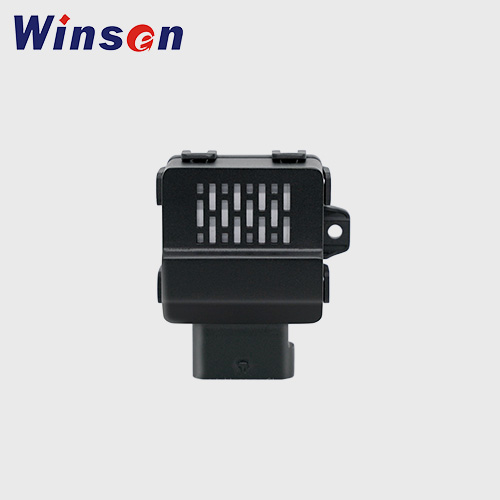
ZRT512J
Multi-refrigerant NDIR module for systems that need industrial power, serial communication and a relay-control path.
- Detection range: 0–50% LFL
- RS485 / UART; PWM customizable
- Relay control supported
- 24 VDC nominal power
- R454B response time listed below 10 seconds
- Dimensions: 63.1 × 54.1 × 25.5 mm
ZR210
Thermal-conductivity module for compact R32 and R454B equipment where low current, UART output and condensation resistance matter.
- Target gases: R32 and R454B
- Measurement range: 0–25% LFL
- 5 VDC power supply
- Average current: under 50 mA
- UART communication
- Dimensions: 37 × 20 × 7 mm
| मॉडेल | लक्ष्य गॅस | तत्त्व | श्रेणी | Interface | Design Priority |
|---|---|---|---|---|---|
| ZRT512E | R454B + R32 | आहे एन | 0–100% एलएफएल | आरएस 485 | Full-range shared A2L platform |
| ZRT512C-R454B-4-TI | आर 454 बी | आहे एन | 0–50% LFL | आरएस 485 | Dedicated compact R454B design |
| ZRT510-R454B | आर 454 बी | आहे एन | Confirm latest datasheet | आरएस 485 | Mature refrigerant-specific module |
| ZRT512C-A | R32 / R454B / R290 | आहे एन | 0–50% LFL | RS485 / UART / optional PWM | Wide-voltage common platform |
| ZRT512C-B | R32 / R454B / R290 | आहे एन | 0–50% LFL | RS485 / UART / optional PWM | Low-voltage common platform |
| ZRT512J | R32 / R454B / R290 | आहे एन | 0–50% LFL | RS485 / UART / relay | 24 V and relay-control architecture |
| ZR210 | R32 + R454B | Thermal conduction | 0–25% LFL | Uart | Small size, low power and anti-condensation |
Specifications shown here are based on currently available Winsen product information. Confirm the latest datasheet, exact gas calibration, cable, connector, firmware and certification documentation before design freeze or purchase.
Do Not Assume an R32 Calibration Is Automatically an R454B Calibration
What They Have in Common
- Both are classified as A2L refrigerants.
- Both are used in modern air-conditioning and heat-pump equipment.
- Many OEM platforms need similar sensor placement, control logic and environmental validation work.
- Selected Winsen modules can support both gases within a common hardware family.
What Must Be Verified Separately
- Gas-specific calibration and alarm threshold.
- LFL conversion and controller interpretation.
- Accuracy, drift and response across the required temperature and humidity range.
- Final appliance certification using the refrigerant marked on the equipment.
Where R454B Refrigerant Sensors Are Integrated
The sensor and its placement must be evaluated in the actual cabinet, airflow path and installation orientation of the final equipment.
Residential Unitary AC
Factory-integrated detection for ducted split and packaged equipment using R454B.
Explore AC Applicationsउष्णता पंप
Leak sensing for heating and cooling platforms exposed to wide seasonal temperatures.
Explore Heat Pump DetectionRooftop Units
A2L monitoring for packaged rooftop equipment with controller-driven mitigation actions.
Explore HVAC SolutionsMulti-Platform OEM Programs
Shared hardware strategies for R32 and R454B variants using configurable gas families.
Read the OEM GuideThe Sensor Must Work as Part of the Complete Refrigerant Detection System
For North American HVAC equipment, the applicable product standard evaluates the detection system together with the appliance, control logic, mitigation action, sensor location and lifetime reliability.
Concentration Response
Confirm the gas-specific response threshold, accuracy and reaction time required by the final equipment design.
Sensor Placement
Place the sensor where leaked refrigerant is expected to reach it under the tested equipment orientation and airflow condition.
Mitigation Logic
Define how the controller starts circulation, closes a valve, stops the compressor or enters a safe fault state.
Life and Diagnostics
Evaluate drift, fault detection, communication loss and the behavior of the appliance when the sensor or controller fails.
Design for Condensation, Airflow and Service Conditions
HVAC sensor modules may operate near evaporators, drain pans, insulation, return-air sections or outdoor cabinets. The concentration that reaches the sensing path can change with the cabinet geometry, leakage point, fan state, filter arrangement and installation orientation.
During prototype validation, test both normal operation and challenging conditions such as startup, defrost, condensate exposure, high humidity, vibration, contamination and communication interruption.
From Refrigerant Requirement to Validated Sensor Sample
Define the Appliance
Share equipment type, R454B charge, cabinet location, target market and applicable standard.
Choose the Architecture
Select dedicated or multi-gas detection, concentration range, supply voltage and interface.
Evaluate Samples
Test response, recovery, repeatability, condensation exposure and controller communication in the real appliance.
Freeze the Design
Confirm model suffix, gas calibration, connector, cable, protocol, documentation and production requirements.
Continue the R454B Selection and Integration Process
A2L Sensor Selection
Compare the design factors that determine the right technology, range and interface for HVAC equipment.
Read selection guide →NDIR vs MOS
Understand how measurement stability, selectivity, cost and system objective affect technology choice.
Compare technologies →R32 and R454B Heat Pumps
Review dedicated and shared sensor approaches for heat-pump product platforms.
Read heat-pump guide →Complete Sensor Portfolio
Compare Winsen NDIR, thermal-conductivity and semiconductor refrigerant sensor families.
View sensor solution →R454B Refrigerant Sensor FAQ
What type of sensor is commonly used for R454B leak detection?
NDIR modules are commonly selected when an OEM needs quantitative %LFL measurement, gas selectivity and long-term digital output. Compact thermal-conductivity modules can also be considered where size, power and condensation resistance are important.
Can one sensor detect both R32 and R454B?
Selected Winsen modules support both gases, including ZRT512E and ZR210, while other ZRT512C-family modules can be configured for different refrigerants. The final gas calibration, threshold and controller interpretation must still be confirmed for each appliance variant.
What detection range should an R454B HVAC sensor use?
The required range depends on the protective function and final appliance standard. Winsen options listed on this page include 0–25%, 0–50% and 0–100% LFL ranges. Select the range only after confirming the required threshold, accuracy and response performance.
Does an R454B sensor make the HVAC appliance UL compliant?
No. The complete refrigerant detection system and the finished appliance are evaluated together. Sensor placement, controller logic, mitigation actions, fault behavior, drift and environmental tests all affect the final compliance result.
Where should an R454B refrigerant sensor be installed?
The sensor should be installed where leaked refrigerant is expected to reach or accumulate under the tested orientation and airflow state. The final location must be established through appliance design analysis and validation rather than a universal mounting height.
Which interface is best for an HVAC controller?
RS485 is useful for robust serial communication and diagnostics, UART suits compact embedded controllers, PWM can simplify concentration or alarm signaling, and relay output can support certain industrial control architectures. Match the interface to the controller and fault-detection strategy.
Can Winsen customize an R454B sensor module?
Customization may include gas calibration, communication protocol, connector, cable, output or mechanical integration depending on project volume and validation requirements. Submit the application details for model confirmation.
What information should I provide when requesting a sample?
Provide the equipment type, target refrigerant, required concentration range, alarm threshold, response target, supply voltage, output interface, operating temperature, expected annual volume and target certification market.
Need Help Selecting an R454B Refrigerant Leak Sensor?
Send your refrigerant, appliance, concentration range, interface and environmental requirements. Winsen can recommend a model for prototype evaluation and OEM integration.