A refrigerant sensor works by sampling the surrounding air, detecting a physical or chemical change caused by leaked refrigerant, converting that change into an electrical signal, and then triggering an alarm or control action when the gas concentration crosses a defined threshold. The exact mechanism depends on the sensor technology: NDIR infrared, catalytic bead, MOS semiconductor, thermal conductivity, or newer MEMS property-based methods.
In other words, there is no single “refrigerant sensor principle.” Different refrigerants and applications use different methods. For example, many modern HVAC refrigerant detectors use infrared-based sensing for halocarbon refrigerants, while hydrocarbon refrigerants such as R290 may also be detected with catalytic bead or other combustible-gas technologies.
The basic working process of a refrigerant sensor
Most refrigerant sensors follow the same four-step logic:
1) Air reaches the sensing element
Ambient air diffuses into the sensor housing or is drawn into a sensing chamber. In fixed HVAC detectors, the sensing element is usually mounted in an enclosure designed to let target gas in while reducing dust, splash, and contamination.
2) The refrigerant changes a measurable property
This is the heart of the sensor. Depending on the sensor type, the refrigerant may:
absorb infrared light,
change the heat-transfer properties of the gas mixture,
burn on a catalytic surface and release heat, or
change the electrical resistance of a sensing film.
3) Electronics convert that change into concentration data
The sensor electronics amplify, linearize, compensate, and interpret the raw signal. In NDIR systems, this may involve thermopile-based signal conditioning; in MEMS-based refrigerant sensors, onboard algorithms convert measured gas properties into concentration output.
4) The detector compares the reading to alarm thresholds
If the gas concentration exceeds a programmed threshold, the system can trigger alarms, ventilation, shutdown, or mitigation controls. In machinery rooms and A2L systems, these thresholds are usually defined by codes or standards rather than by guesswork.
The main refrigerant sensor principles
1. NDIR infrared sensors
NDIR stands for non-dispersive infrared. This is one of the most common principles used for refrigerant leak detection because many refrigerant gases absorb infrared light at characteristic wavelengths. Horiba explains that an NDIR sensor typically includes an IR light source, sample cell, optical filter, and infrared detector, and uses attenuation of specific wavelengths to determine gas concentration.
How NDIR works
A beam of infrared light passes through the sampled air. If refrigerant molecules are present, they absorb part of the light at certain wavelengths. The detector measures how much light is lost, and the electronics convert that into a concentration reading using Beer–Lambert-style measurement logic.
Why NDIR is popular for refrigerants
NDIR is widely used because it offers good selectivity and long-term stability for many refrigerants, especially halocarbons and other IR-active gases. Texas Instruments also notes that thermopile front ends are commonly used in NDIR sensing applications, including refrigerant detection systems.
Best fit
NDIR is a strong choice for many HFC, HFO, CO₂, and blended refrigerant leak detection applications in fixed HVAC and refrigeration systems.
A newer approach uses a micro-machined MEMS transducer to measure changes in the thermodynamic properties of the air/gas mixture rather than relying only on optical absorption. NevadaNano describes its Molecular Property Spectrometer approach as using a membrane with an embedded Joule heater and resistance thermometer; when refrigerant is present, the properties of the gas mixture change, and algorithms convert that into concentration.
How this principle works
The sensor heats a tiny element and monitors how the surrounding gas affects heat transfer and related physical behavior. Since refrigerants alter the thermodynamic properties of air, the system can infer refrigerant concentration from the measured response.
Why it matters
This approach is used in some A2L and A3 refrigerant sensors because it can offer built-in compensation, factory calibration, and strong resistance to poisoning compared with catalytic bead designs in some applications.
3. Catalytic bead sensors
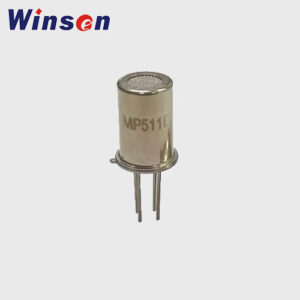
A catalytic bead sensor, also called a pellistor, is a classic combustible-gas sensing method. Winsen explains that it uses two heated beads in a Wheatstone bridge: an active bead and a reference bead. When a combustible gas reaches the active bead, it oxidizes on the catalyst surface, producing heat and changing the bead’s electrical resistance. The circuit measures that difference and reports gas level, often in %LEL.
How catalytic bead sensing works
the sensor heats the beads,
combustible gas reaches the active bead,
oxidation generates extra heat,
resistance changes,
the bridge circuit converts that change into a gas reading.
Best fit
Catalytic bead sensors are commonly used for hydrocarbon refrigerants such as R290 propane, where flammability detection is critical.
Limitations
Catalytic bead sensors can be affected by poisoning, overlimit exposure, and oxygen availability, which is why some manufacturers position infrared or MEMS approaches as lower-maintenance alternatives in harsh environments.
4. MOS semiconductor sensors
MOS sensors work through surface chemistry. A metal-oxide sensing layer changes electrical resistance when gas molecules interact with oxygen species on the heated surface. Technical reviews describe MOS gas sensors as conductometric devices whose output depends on changes in conductivity caused by gas/solid interaction.
How MOS works
The sensor keeps the sensing material at an elevated temperature. When refrigerant or another gas reaches the surface, the surface reaction changes the number of charge carriers, which changes resistance. The circuit measures that resistance shift and estimates gas concentration.
Best fit
MOS sensors are often used where low cost, compact size, and simple integration matter more than maximum selectivity.
Limitations
MOS sensors are more vulnerable to humidity effects, VOC cross-sensitivity, and long-term drift, so they often require compensation and careful calibration strategy.
A thermal conductivity sensor measures how the gas mixture transfers heat. Horiba explains that this method uses a heated wire or similar element; as the gas thermal conductivity changes, the element temperature and electrical resistance change too, allowing concentration to be calculated.
How it works
If leaked refrigerant changes the thermal conductivity of the air around the sensor, the sensor detects that change as a resistance shift in the heated element.
Best fit
Thermal conductivity sensing can work for some refrigerant applications, but it is generally less selective than NDIR because it responds to bulk gas-property changes rather than a specific optical fingerprint. Horiba explicitly notes that TCD does not exhibit selectivity in the same way and that other gases can affect the reading.
How the alarm logic works after the sensor detects refrigerant
A refrigerant sensor does not stop at “gas present.” In real HVAC and refrigeration systems, the reading is compared to a defined threshold, and the system then triggers a response. What counts as the correct threshold depends on the refrigerant class and the application.
For machinery rooms and many A1 refrigerants
ASHRAE guidance requires the refrigerant detector set point to be not greater than the applicable Refrigerant Concentration Limit (RCL), and more recent addenda continue to require a detector located where leaked refrigerant will concentrate so it can actuate alarms and mechanical ventilation.
For A2L mildly flammable refrigerants
UL explains that refrigerant detection systems for these applications are evaluated around 25% of the LFL, helping reduce fire risk from leaks. TI’s A2L application brief likewise discusses refrigerant leak detection sensors used to comply with UL 60335-2-40 requirements.
For mitigation-capable systems
When the threshold is exceeded, the detector may trigger:
audible/visual alarms,
ventilation fans,
a mitigation board,
compressor shutdown,
or other safety logic. Carrier’s A2L supplemental guide, for example, describes a detection sensor communicating with a control board that initiates dissipation mode once refrigerant concentration rises above a percentage of LFL.
Why placement matters as much as sensor technology
Even the best sensor can miss a leak if it is installed in the wrong place. ASHRAE requires machinery-room detectors to be located where refrigerant from a leak will concentrate, which means placement should follow expected leak behavior, airflow, and density effects.
That is why refrigerant detection is really a system design problem, not just a component choice. You need the right:
sensing principle,
calibration,
mounting location,
threshold logic,
and control outputs.
Which refrigerant sensor principle is best?
There is no universal winner.
For many halocarbon refrigerants, NDIR is often preferred for selectivity and stability.
For flammable hydrocarbons like R290, catalytic bead and newer MEMS property-based methods are common options.
For cost-sensitive embedded products, MOS may still be used, but compensation and drift control matter more.
For applications where you need simple bulk-gas property measurement, thermal conductivity can be considered, though it is less selective.
FAQ
How does a refrigerant sensor detect a leak?
It detects a leak by measuring a property change in the surrounding air caused by refrigerant, such as IR absorption, heat-transfer change, catalytic oxidation, or resistance change, then converting that signal into a concentration reading and alarm output.
What is the most common refrigerant sensor type?
For many modern HVAC refrigerants, NDIR infrared is one of the most common fixed-detection approaches because of its selectivity and stability.
Do all refrigerant sensors work the same way?
No. Different sensors use different principles, including NDIR, MEMS thermodynamic-property sensing, catalytic bead, MOS, and thermal conductivity.
Why do A2L refrigerants need different detection logic?
Because A2L refrigerants are mildly flammable, the sensor is often part of a refrigerant detection system designed to react at a fraction of the LFL, commonly discussed around 25% LFL in UL guidance.
Does the sensor only alarm, or can it control equipment too?
It can do both. In many systems, the detector reading is used to trigger fans, mitigation boards, alarms, or shutdown logic, not just a display warning.