
The global HVAC and refrigeration industry is moving rapidly toward ψυκτικά χαμηλά GWP. Refrigerants such as R32, R454B and R290 are increasingly used in residential air conditioners, heat pumps, VRF systems, chillers and commercial refrigeration equipment.
This transition supports greener cooling and lower climate impact, but it also brings new safety and monitoring requirements. Some low-GWP refrigerants are mildly flammable or flammable. Once leakage occurs, it may reduce system efficiency, increase maintenance cost and create potential safety risks.
As a result, refrigerant leak detection is no longer just an optional feature. It is becoming an important part of modern HVAC and refrigeration system design.
For equipment manufacturers, the challenge is clear: how to detect refrigerant leakage accurately, reliably and cost-effectively in different applications.
Why Refrigerant Leak Detection Is Becoming More Important
Refrigerant leakage can affect both system performance and safety.
In air conditioners and heat pumps, leakage may lead to lower cooling or heating capacity, higher compressor load and increased energy consumption. In commercial refrigeration systems and VRF systems, where refrigerant charge can be larger and pipeline networks are more complex, leakage may also affect system reliability and maintenance efficiency.
With the growing adoption of low-GWP refrigerants, leak detection is becoming important for three reasons:
Safety protection
For systems using flammable or mildly flammable refrigerants, early leak warning helps reduce risk before concentration reaches a dangerous level.
Equipment reliability
Continuous monitoring helps identify leakage earlier, preventing long-term refrigerant loss and performance degradation.
Regulatory and market requirements
Global environmental and safety requirements are pushing manufacturers to integrate better refrigerant management and leak monitoring functions into new equipment platforms.
How NDIR Refrigerant Sensors Detect Leaks
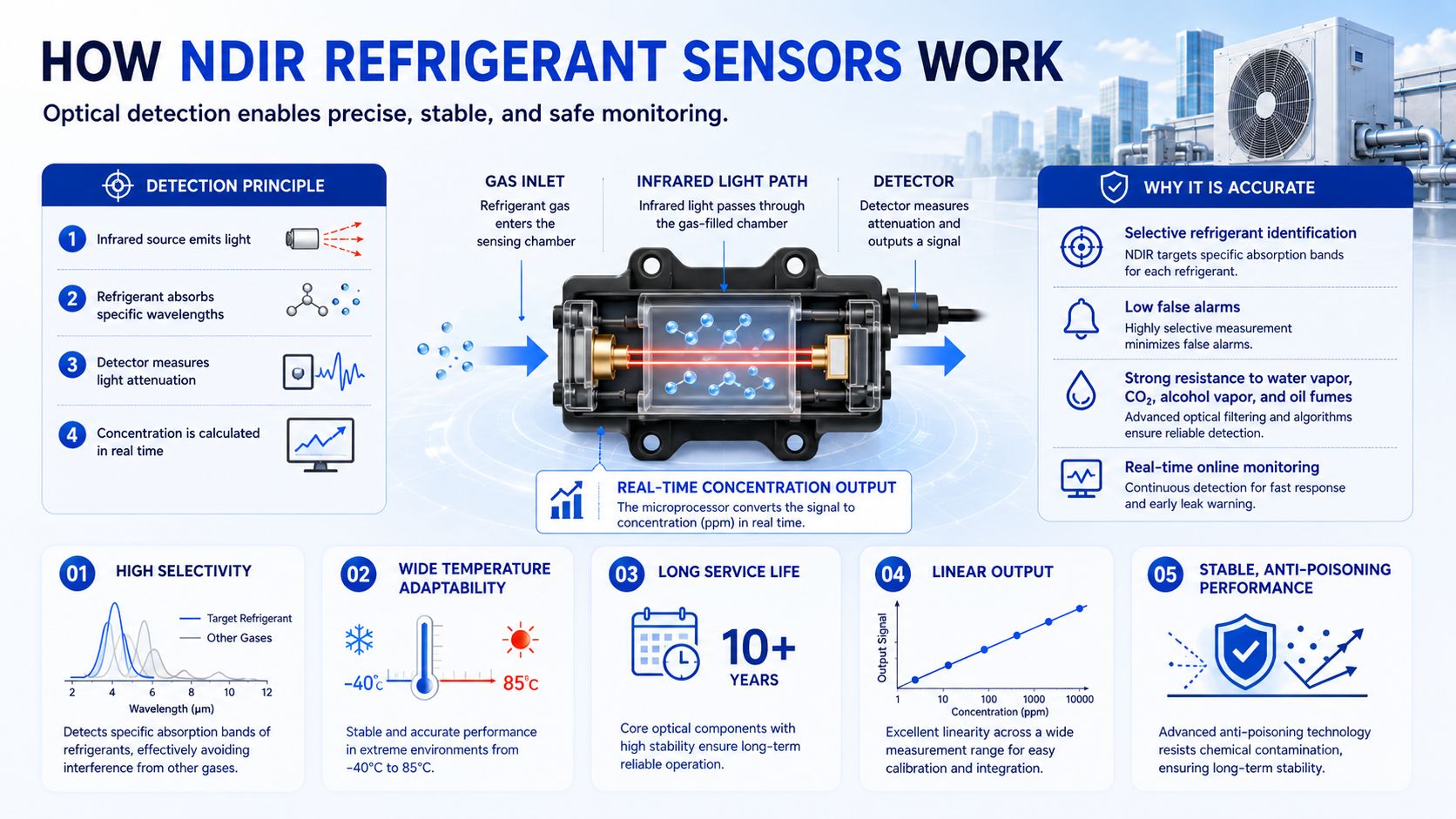
Among different refrigerant detection technologies, Ανίχνευση υπερύθρων NDIR has become one of the preferred solutions for applications that require high selectivity, long-term stability and strong anti-interference performance.
NDIR stands for Μη διασπασμένος υπέρυθρος. The principle is based on the fact that different gas molecules absorb infrared light at specific wavelengths.
Each refrigerant has its own infrared absorption characteristics. When refrigerant gas enters the sensing chamber, infrared light passes through the gas. The target refrigerant absorbs part of the infrared energy, and the detector measures the change in light intensity. The sensor then calculates the refrigerant concentration in real time.
This optical detection method gives NDIR refrigerant sensors several important advantages:
- High selectivity for target refrigerants
- Good resistance to common interference gases
- Stable output over long-term operation
- No chemical consumption during detection
- Suitable for real-time online monitoring
Because NDIR sensing relies on optical absorption rather than chemical reaction, it is especially suitable for HVAC and refrigeration equipment that requires stable long-term leak monitoring.
Key Advantages of Infrared Refrigerant Sensors
1. High Selectivity and Fewer False Alarms
In real HVAC and refrigeration applications, sensors may be exposed to humidity, CO₂, alcohol vapor, oil mist, cleaning agents and other environmental interference.
NDIR refrigerant sensors identify target gases through specific infrared absorption bands. This helps improve selectivity and reduce false alarms caused by non-target gases.
For equipment manufacturers, this means more reliable alarm logic and better user trust.
2. Long-Term Stability
Refrigeration equipment is expected to operate for many years. The leak detection sensor must remain stable during long-term use.
Infrared refrigerant sensors use a physical optical detection principle. There is no electrolyte consumption or sensitive chemical material depletion during normal operation. This supports longer service life and more stable performance compared with some traditional sensing methods.
3. Strong Environmental Adaptability
HVAC systems may operate under wide temperature and humidity conditions. Heat pumps, outdoor units and commercial refrigeration systems can face even more demanding environments.
NDIR refrigerant sensors can be designed with temperature compensation, optimized optical paths and stable signal processing to support reliable performance across different operating conditions.
4. Real-Time Online Monitoring
Refrigerant leakage may occur slowly over time or suddenly due to pipe damage, loose joints, vibration or system failure.
A built-in refrigerant sensor can provide continuous online monitoring and output real-time concentration data. This allows the host system to trigger alarms, start ventilation, stop equipment operation or take other protective actions when needed.
Different Applications Require Different Sensor Solutions
Refrigerant leak detection is not a one-size-fits-all requirement. Different equipment types have different priorities.
Οικιακά Κλιματιστικά
Residential air conditioners usually require compact size, reliable performance and good cost control. Sensor solutions should be easy to integrate into mass-produced products while maintaining stable detection performance.
Typical requirements include:
- Compact structure
- Reliable leak warning
- Χαμηλό ποσοστό ψευδών συναγερμών
- Μεγάλη διάρκεια ζωής
- Cost-effective integration
Αντλίες Θερμότητας
Heat pump systems operate in both heating and cooling modes and often face variable outdoor environments. They require sensors with better environmental adaptability and stable performance under changing temperature and humidity conditions.
Typical requirements include:
- High detection accuracy
- Strong environmental adaptability
- Stable long-term output
- Reliable operation in outdoor units
Συστήματα VRF και Multi-Split
VRF systems and multi-split systems often use longer refrigerant pipelines and larger refrigerant charge. Leakage detection becomes especially important because refrigerant may accumulate in indoor or enclosed spaces.
Typical requirements include:
- Higher sensitivity
- Stable multi-point monitoring
- Long-term reliability
- Compatibility with system safety control logic
Επαγγελματική Ψύξη
Commercial refrigeration systems are widely used in supermarkets, cold rooms, display cabinets, storage facilities and food supply chains. Refrigerant leakage can affect temperature control, food safety and operating cost.
Typical requirements include:
- Continuous monitoring
- Fast leak response
- Reliable operation in complex environments
- Support for maintenance and fault diagnosis
Winsen Refrigerant Detection Solutions
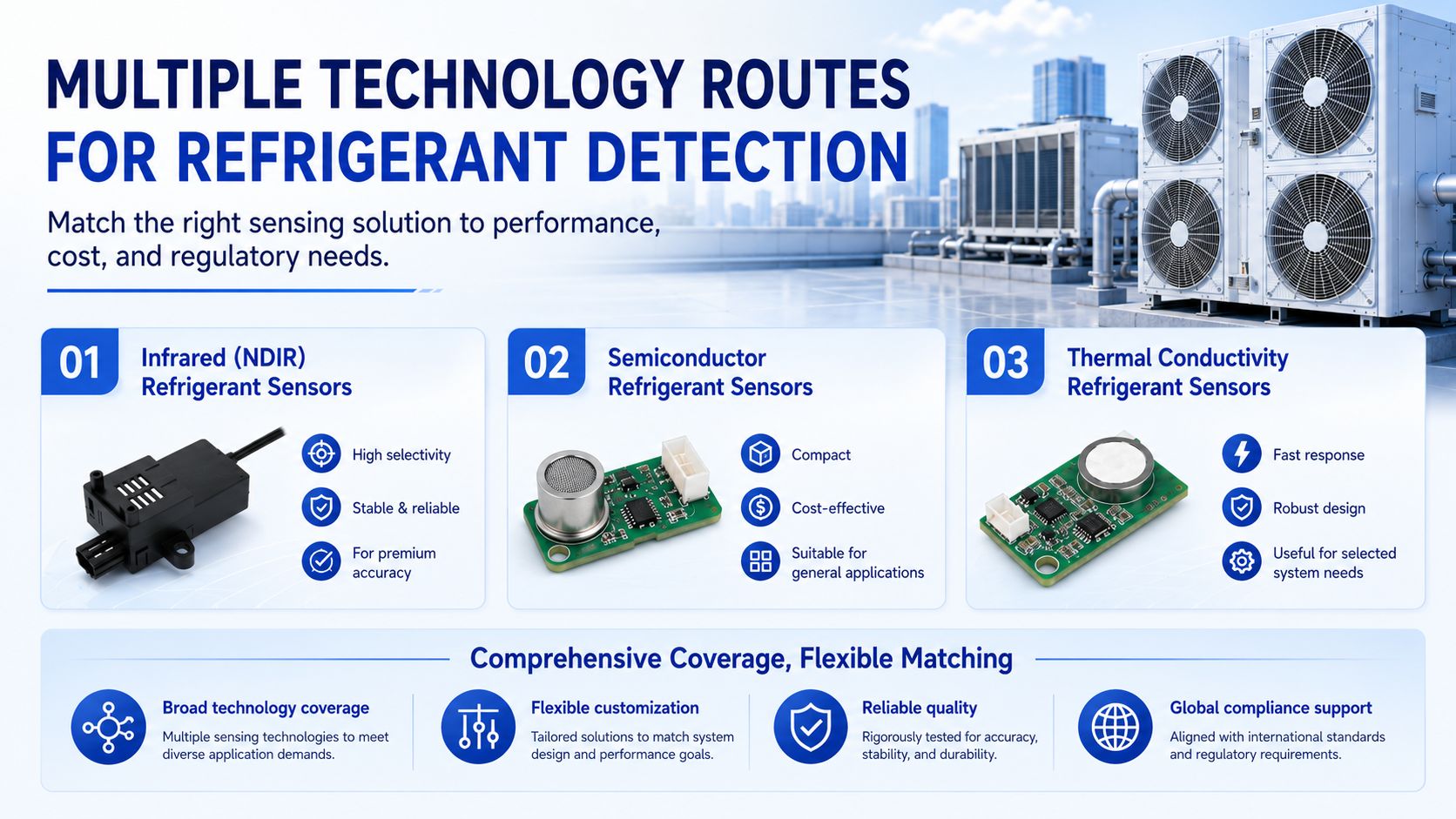
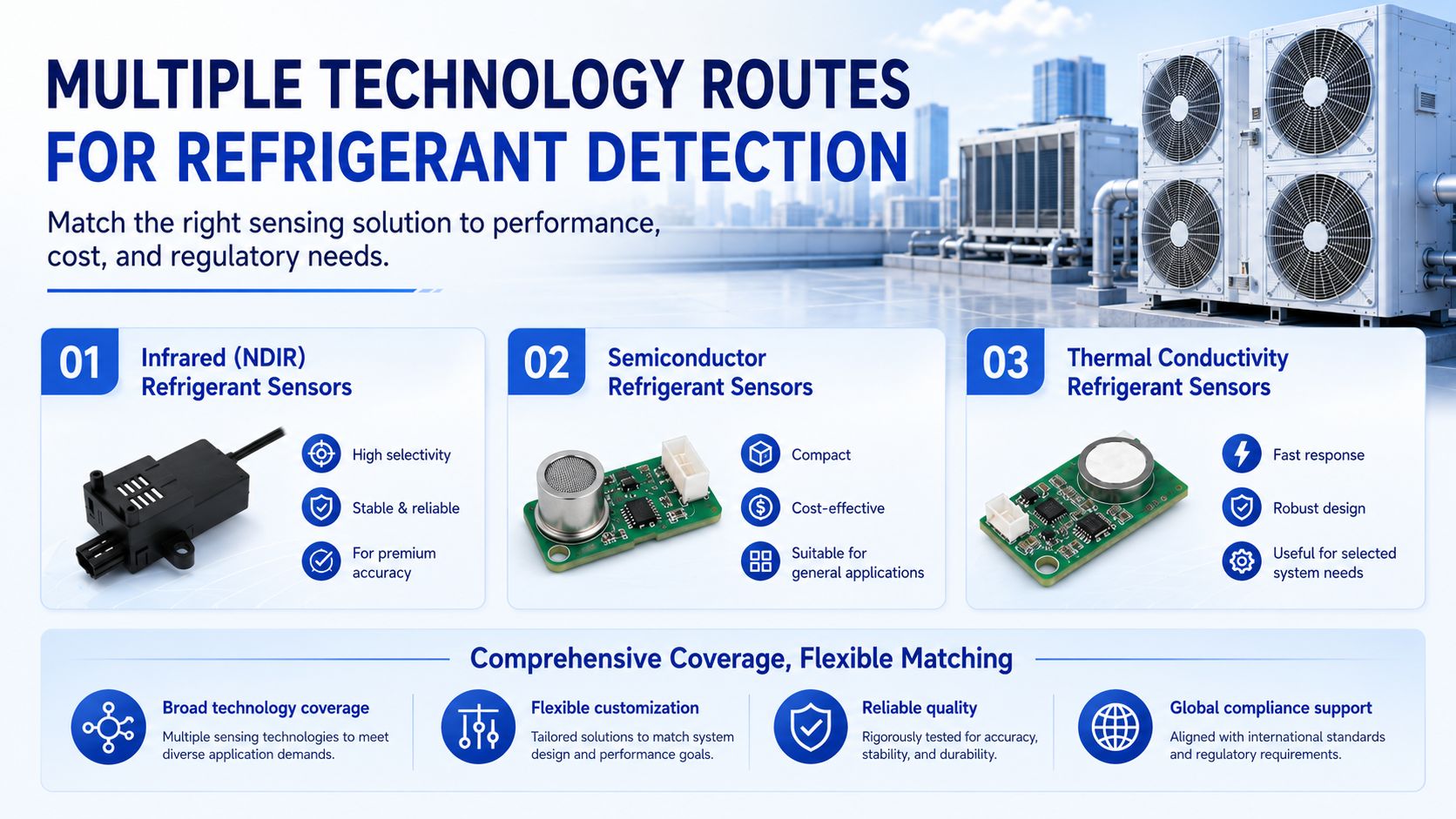
To meet different application requirements, Winsen provides multiple refrigerant sensing technology routes, including:
- Infrared NDIR refrigerant sensors
- Semiconductor refrigerant sensors
- Thermal conductivity refrigerant sensors
This allows customers to choose the most suitable solution according to target refrigerant, product positioning, system cost, accuracy requirement and compliance needs.
Infrared NDIR Refrigerant Sensors
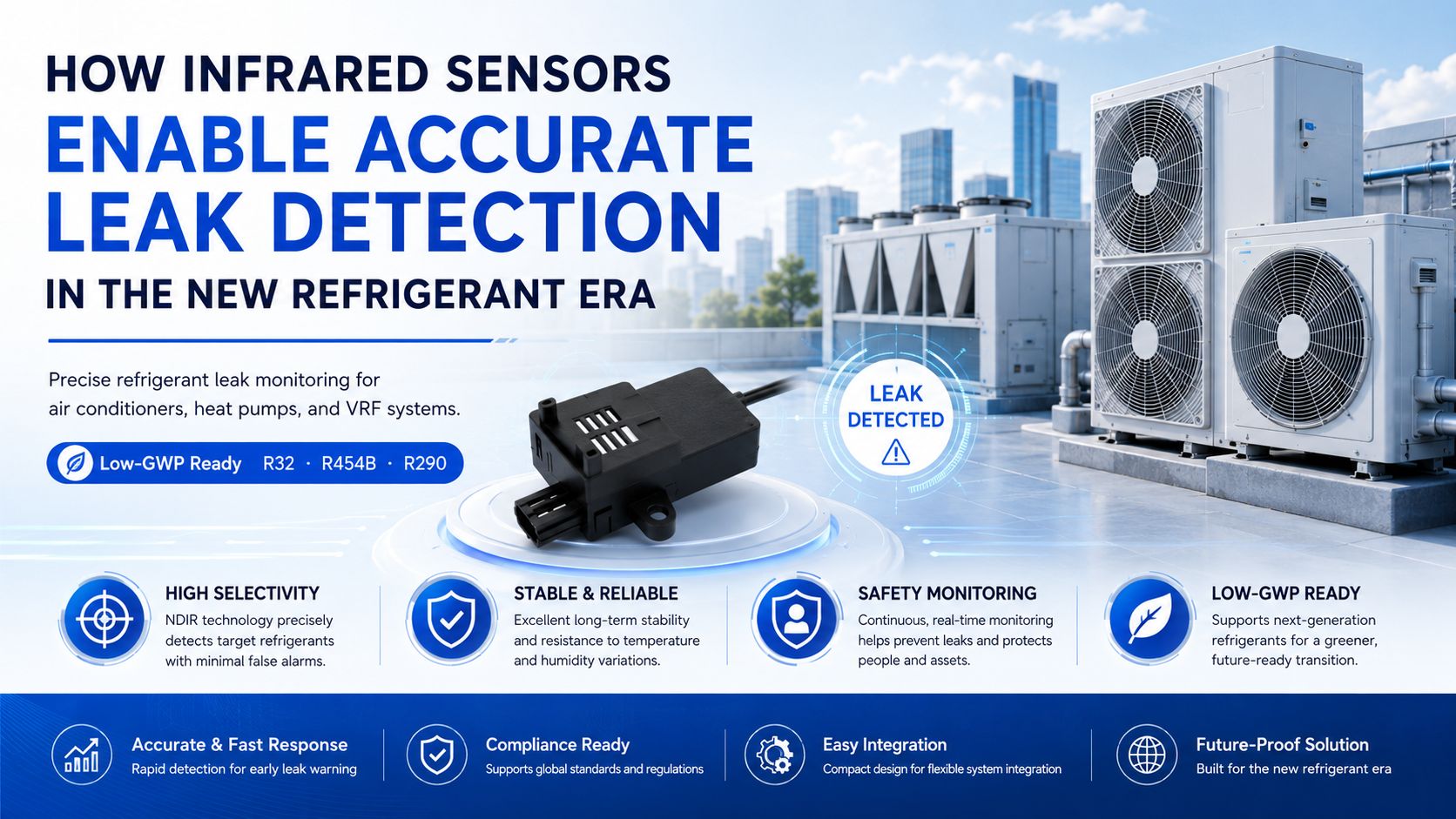
NDIR refrigerant sensors are suitable for applications requiring high selectivity, good accuracy and long-term stability.
They are especially valuable for detecting refrigerants such as:
- R32
- R454b
- R290
- R134a
- other common HVAC and refrigeration refrigerants
Typical advantages:
- High selectivity
- Strong anti-interference capability
- Μεγάλη διάρκεια ζωής
- Stable output
- Suitable for safety-critical monitoring
Recommended applications:
- αντλίες θερμότητας
- VRF systems
- high-end residential air conditioners
- commercial refrigeration equipment
- equipment requiring long-term stable leak monitoring
Αισθητήρες ψυκτικού μέσου ημιαγωγών
Semiconductor refrigerant sensors offer compact structure and cost-effective integration. They are suitable for applications where size, cost and general detection capability are key considerations.
Typical advantages:
- Compact design
- Γρήγορη ανταπόκριση
- Οικονομικά αποδοτική
- Suitable for general leak detection applications
Recommended applications:
- residential appliances
- compact HVAC systems
- general refrigerant alarm devices
- cost-sensitive product platforms
Αισθητήρες ψυκτικού μέσου θερμικής αγωγιμότητας
Thermal conductivity refrigerant sensors detect gas concentration based on the difference in thermal conductivity between the target gas and the background gas. They can be used in selected system designs where this principle matches the detection requirement.
Typical advantages:
- Simple and robust principle
- Γρήγορη ανταπόκριση
- Suitable for selected gas monitoring needs
- Flexible integration for specific applications
Recommended applications:
- customized refrigerant monitoring systems
- equipment with defined gas background conditions
- selected industrial or commercial refrigeration systems
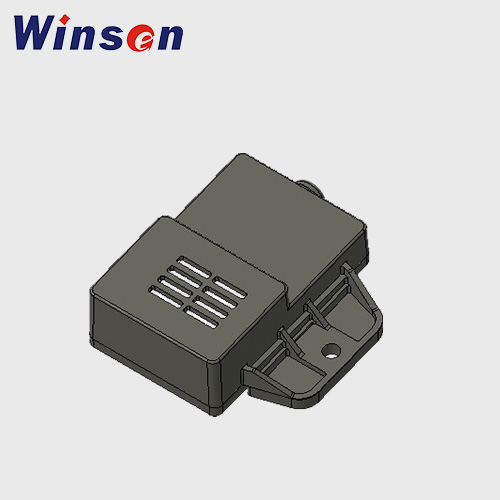
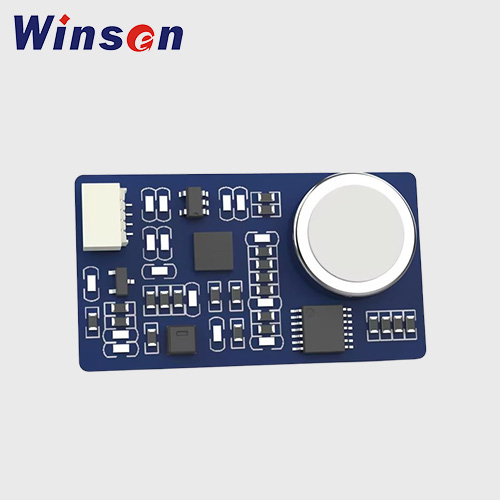
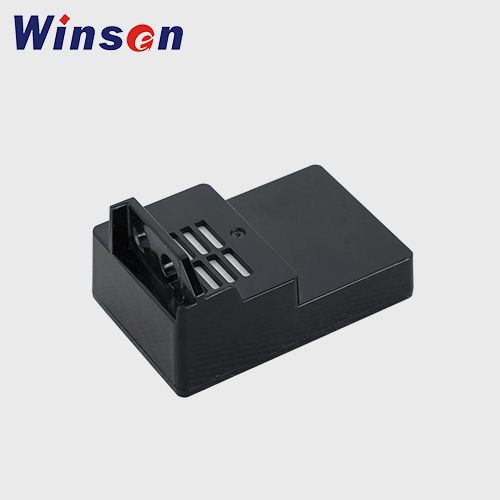
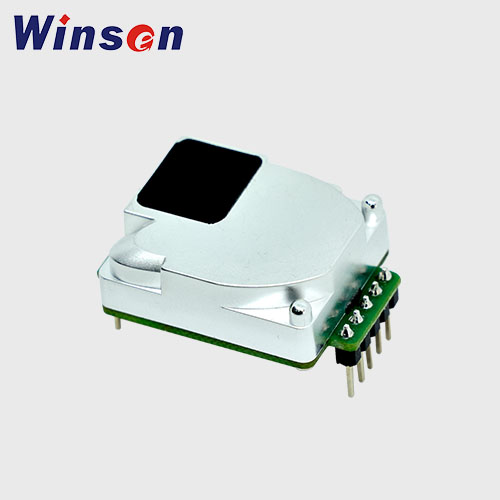
ZRT512C-B Μονάδα ανίχνευσης ψυκτικού μέσου – Τροφοδοτικό χαμηλής τάσης
- R32/R454B/R290
- 0 – 50% LFL
- Διαβάστε περισσότερα
ZRT512C-A Μονάδα ανίχνευσης ψυκτικού μέσου – Τροφοδοτικό ευρείας τάσης
- R32/R454B/R290
- 0 – 50% LFL
- Διαβάστε περισσότερα
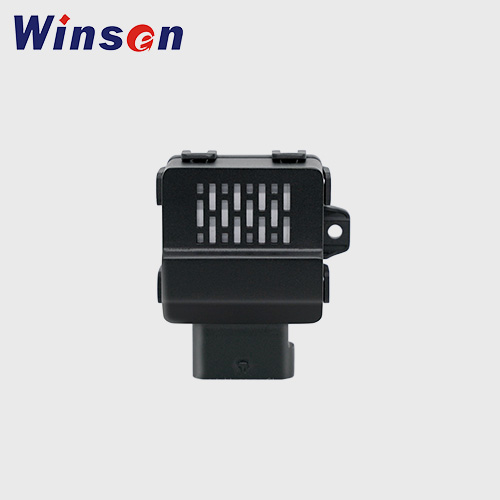
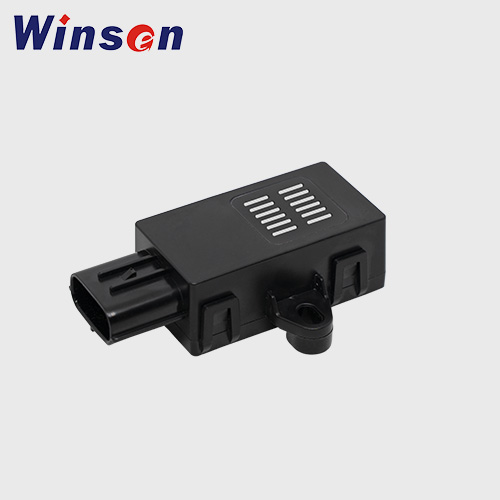
Μονάδα αισθητήρα ZRT510 Ψυκτικό R454B
- R454B (Το R32 ή το R290 μπορούν να προσαρμοστούν)
- Διαβάστε περισσότερα
Μονάδα αισθητήρα ZRT510 Ψυκτικό R32
- R32 (Το R454B ή το R290 μπορούν να προσαρμοστούν)
- Διαβάστε περισσότερα
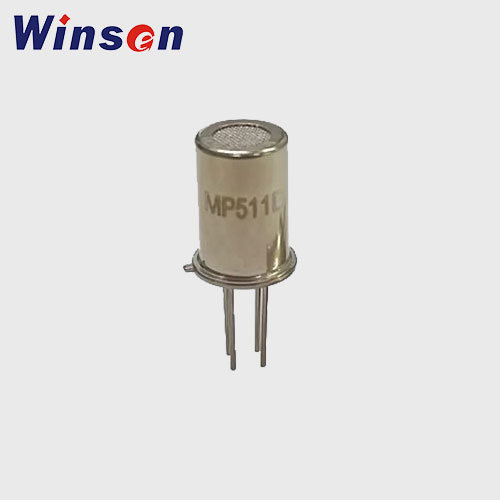
Μονάδα αισθητήρα ZRT510 Ψυκτικό R290
- R290 (το R454B ή το R32 μπορεί να προσαρμοστεί)
- Διαβάστε περισσότερα
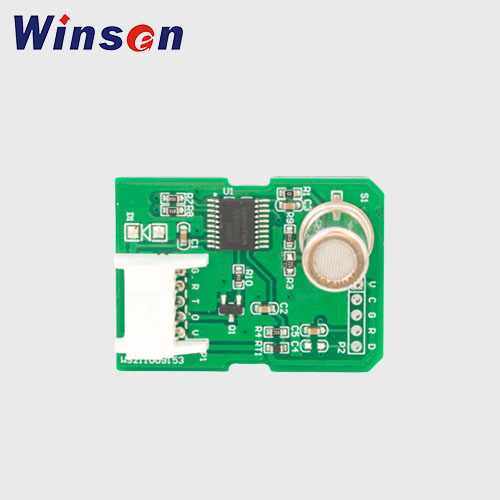
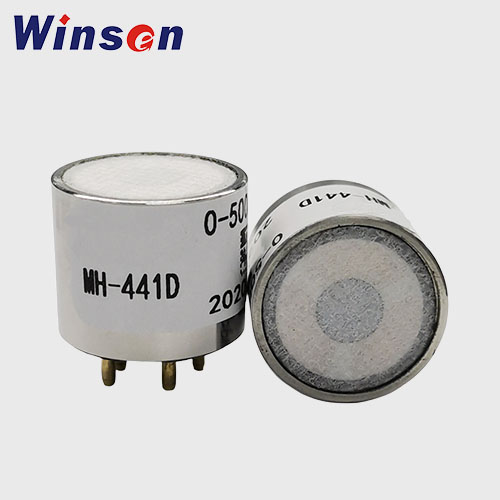
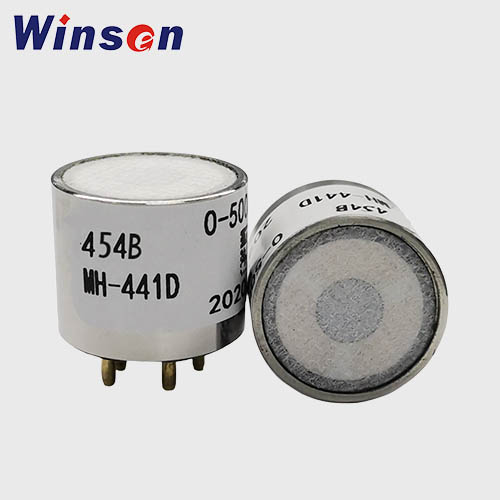
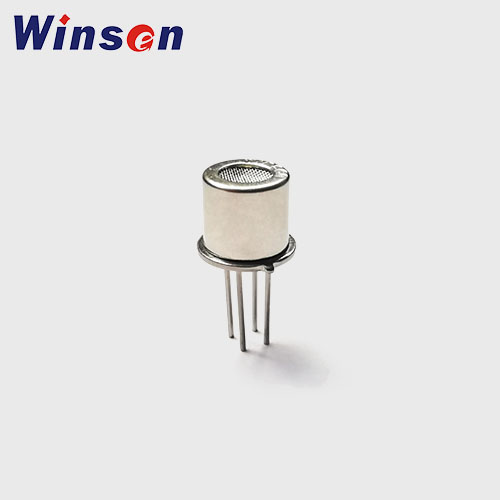
WSP5110 Αισθητήρας ψυκτικού αερίου
- Refrigerant, benzene, alcohol &etc.
- 10-1000 ppm
- Διαβάστε περισσότερα
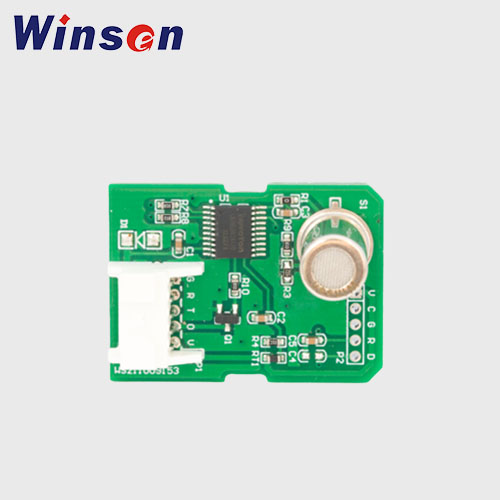
ZP201 Μονάδα ανίχνευσης ψυκτικού αερίου
- Ψυκτικό αέριο R32
- Τιμή συναγερμού 5000 ppm
- Διαβάστε περισσότερα
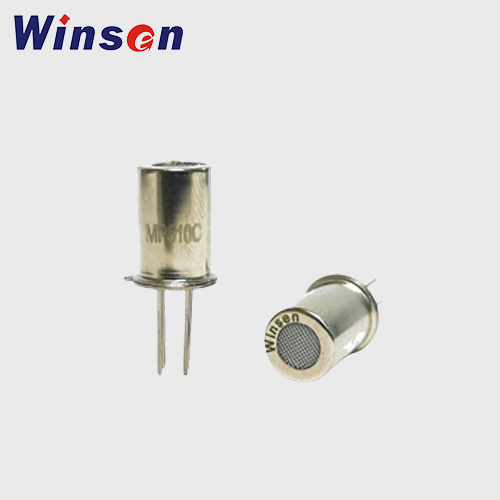
Αισθητήρας αερίου ψυκτικού μέσου MP510C
- ψυκτικά αέρια: R32, R134a, R410a, R290
- 100-10000 ppm
- Διαβάστε περισσότερα
How to Choose the Right Refrigerant Sensor
When selecting a refrigerant leak sensor, manufacturers should evaluate the following factors:
1. Target Refrigerant
Different refrigerants have different physical properties, flammability levels and detection requirements. The sensor should be matched to the target gas, such as R32, R454B, R290 or other refrigerants.
2. Detection Range and Alarm Threshold
The sensor range should match the safety control logic of the host system. For flammable refrigerants, early detection and reliable alarm thresholds are especially important.
3. Application Environment
Temperature, humidity, airflow, installation location, oil mist and interference gases should all be considered during selection.
4. Output Interface
The sensor output should be compatible with the equipment control board. Digital output, analog output or customized communication methods may be required depending on the system design.
5. Long-Term Stability
For HVAC and refrigeration equipment, the sensor must maintain reliable performance over long operating cycles.
6. System Cost and Product Positioning
High-end heat pumps, VRF systems and commercial refrigeration equipment may prioritize accuracy and reliability, while consumer air conditioners may require a balance between performance and cost.
Application Value for HVAC and Refrigeration Manufacturers
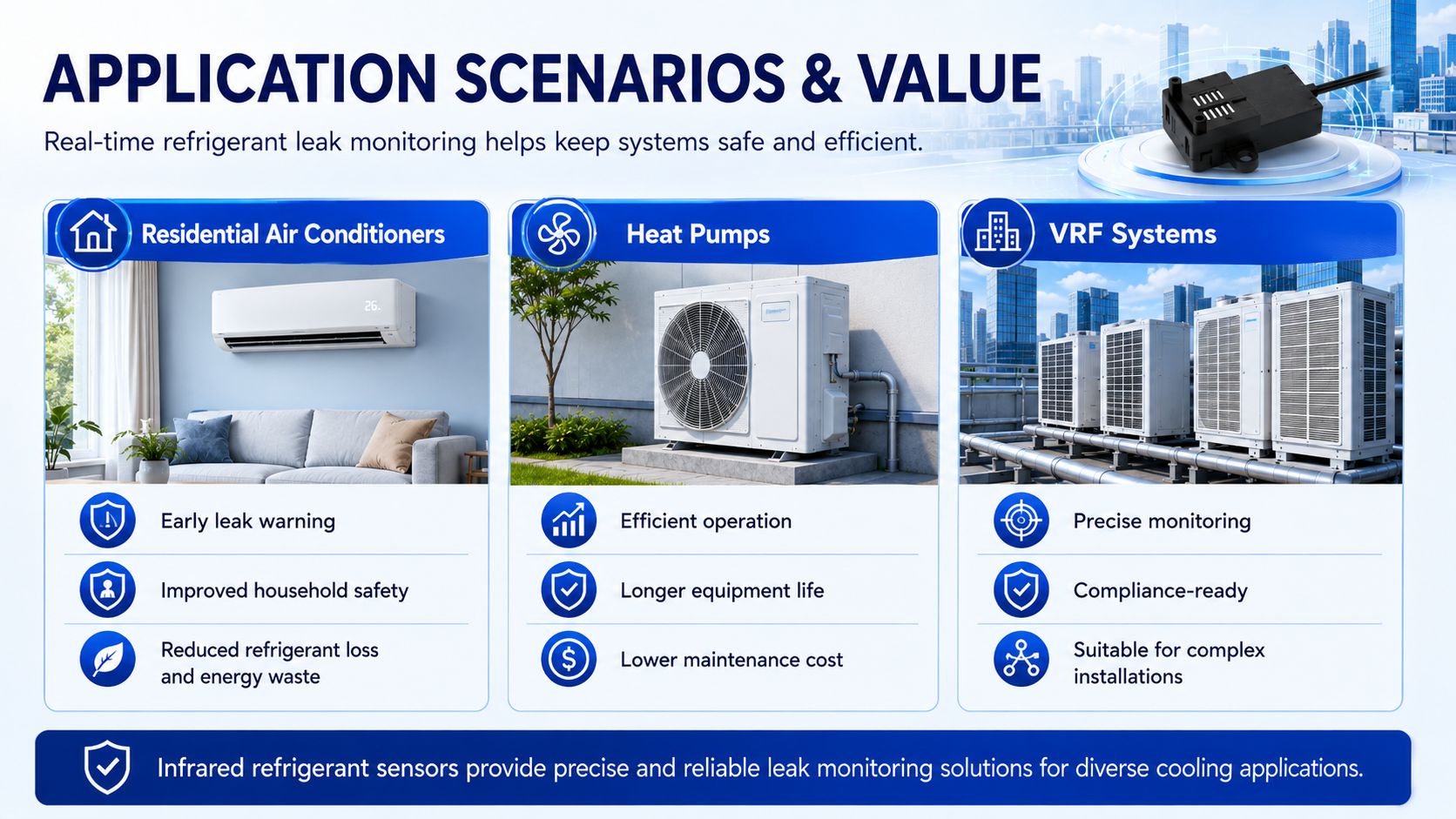
Integrating refrigerant leak detection into equipment design can bring multiple benefits:
| Value Area | Οφελος |
|---|---|
| Ασφάλεια | Early warning for refrigerant leakage, especially for flammable refrigerants |
| Reliability | Helps prevent performance degradation caused by refrigerant loss |
| Ενεργειακή απόδοση | Supports stable system operation and reduces unnecessary energy waste |
| Συντήρηση | Enables faster fault diagnosis and service response |
| Compliance readiness | Helps products adapt to evolving global safety and environmental requirements |
| Market competitiveness | Adds intelligent safety monitoring as a product advantage |
Future of Refrigerant Leak Detection
As the HVAC and refrigeration industry continues to adopt low-GWP refrigerants, leak detection will play a larger role in product design.
Future systems will not only detect leakage, but also integrate sensor data into intelligent equipment control. Refrigerant sensors may work together with ventilation control, compressor protection, system shutdown logic, fault diagnosis and cloud-based monitoring platforms.
This means refrigerant sensors are becoming more than safety components. They are becoming part of the intelligent control architecture of modern HVAC and refrigeration equipment.
Conclusion: Reliable Sensing for Safer and Greener Cooling
The transition to low-GWP refrigerants is reshaping the HVAC and refrigeration industry. While new refrigerants help reduce environmental impact, they also create higher requirements for safety monitoring and system reliability.
Infrared refrigerant sensors, with their high selectivity, accuracy, stability and anti-interference performance, provide a reliable solution for modern refrigerant leak detection.
At the same time, different applications require different technology routes. With NDIR, semiconductor and thermal conductivity refrigerant sensing solutions, Winsen helps equipment manufacturers select the right sensor for the right application.
From residential air conditioners to heat pumps, VRF systems and commercial refrigeration equipment, Winsen refrigerant sensors support safer operation, greener cooling and future-ready HVAC product design.
