AC Gas Leak Sensor

AC Gas Leak Sensor (Air Conditioner Refrigerant Leak Detector) — Split/VRF • Central AC • Heat Pump

Winsen® manufactures fixed AC gas leak sensors for residential and commercial air-conditioning systems. We cover A1 (R134a, R410A, R404A), A2L (R32, R454B, R1234yf/ze) and A3 (R290, R600a) gases. Choose NDIR for ppm early warning or MOS/NDIR for %LEL safety interlocks—ready for BMS/PLC via 4–20 mA, RS-485 Modbus, and relay outputs.

Model Guide — Pick by Refrigerant Class & Measurement

A1 (R410A / R134a) — NDIR PPM

  • Typical ranges: 0–1,000 / 0–5,000 ppm
  • Outputs: 4–20 mA, RS-485 Modbus, 1–2 relays
  • T90 ≤ 30 s • Low drift, long life

A2L (R32 / R454B / R1234yf/ze) — NDIR PPM / %LEL

  • PPM early warning and/or 0–100% LFL/LEL
  • 4–20 mA / RS-485 / relays
  • VRF/VRV rooms & hotel guestrooms

A3 (R290 / R600a) — %LEL Safety

  • Range: 0–100% LEL (NDIR-LEL or MOS)
  • Relays for ventilation & shutdown interlocks
  • IP options for plant rooms and cold spaces

What is an AC Gas Leak Sensor?

An AC gas leak sensor is a fixed, electronic detector that continuously measures refrigerant concentration around air-conditioning equipment and automatically drives alarms and interlocks (ventilation, fan/indoor-unit shutdown). It complements handheld detectors used by technicians for pinpoint leak search.

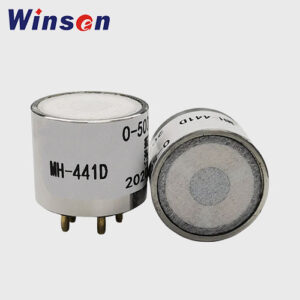
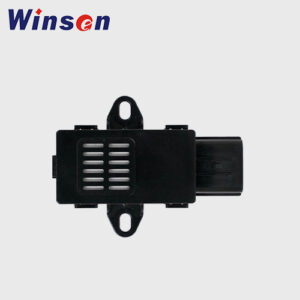
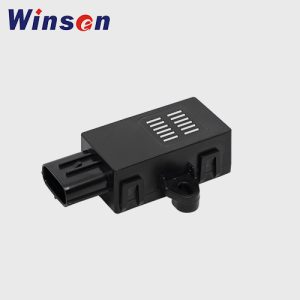
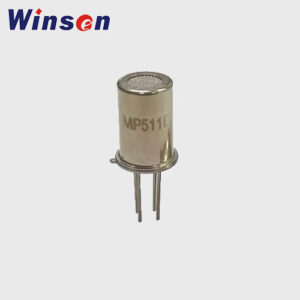
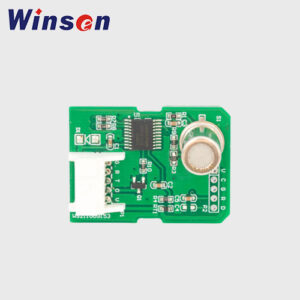
NDIR Refrigerant Sensor

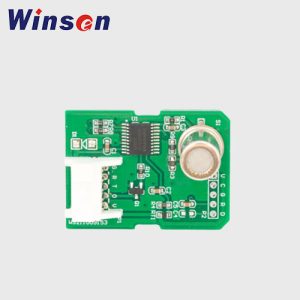
Semiconductor Refrigerant Sensor

Technology Options

TechnologyBest ForRangeAdvantagesConsiderations
NDIR (Infrared)A1 ppm; A2L ppm/%LELppm → %LELHigh selectivity & stability; not O₂-dependent; long lifeProtect from heavy condensation/dust (filters/enclosure)
MOS (Semiconductor)A2L/A3 %LEL0–100% LELFast response; robust; cost-effectiveCross-sensitivities possible; periodic calibration advised
Catalytic BeadGeneral hydrocarbons (A3)0–100% LELMature tech for flammablesRequires O₂; susceptible to poisons (silicones/lead)

Typical AC Applications

Split/VRF indoor units & hotel rooms

Mount low (~150–300 mm above floor) near indoor units and pooling points. Pre-alarm → fresh-air purge; main alarm → fan/indoor-unit shutdown.

Central AC (AHU/MAU) & mechanical rooms

Place near coils, expansion valves, and floor low spots/sumps; use IP-rated enclosures and BMS interlocks.

Line sets, condenser & evaporator sections

Monitor around brazed joints, service valves, manifolds; avoid strong supply streams that could bypass the sensor.

Heat pumps & general HVAC equipment

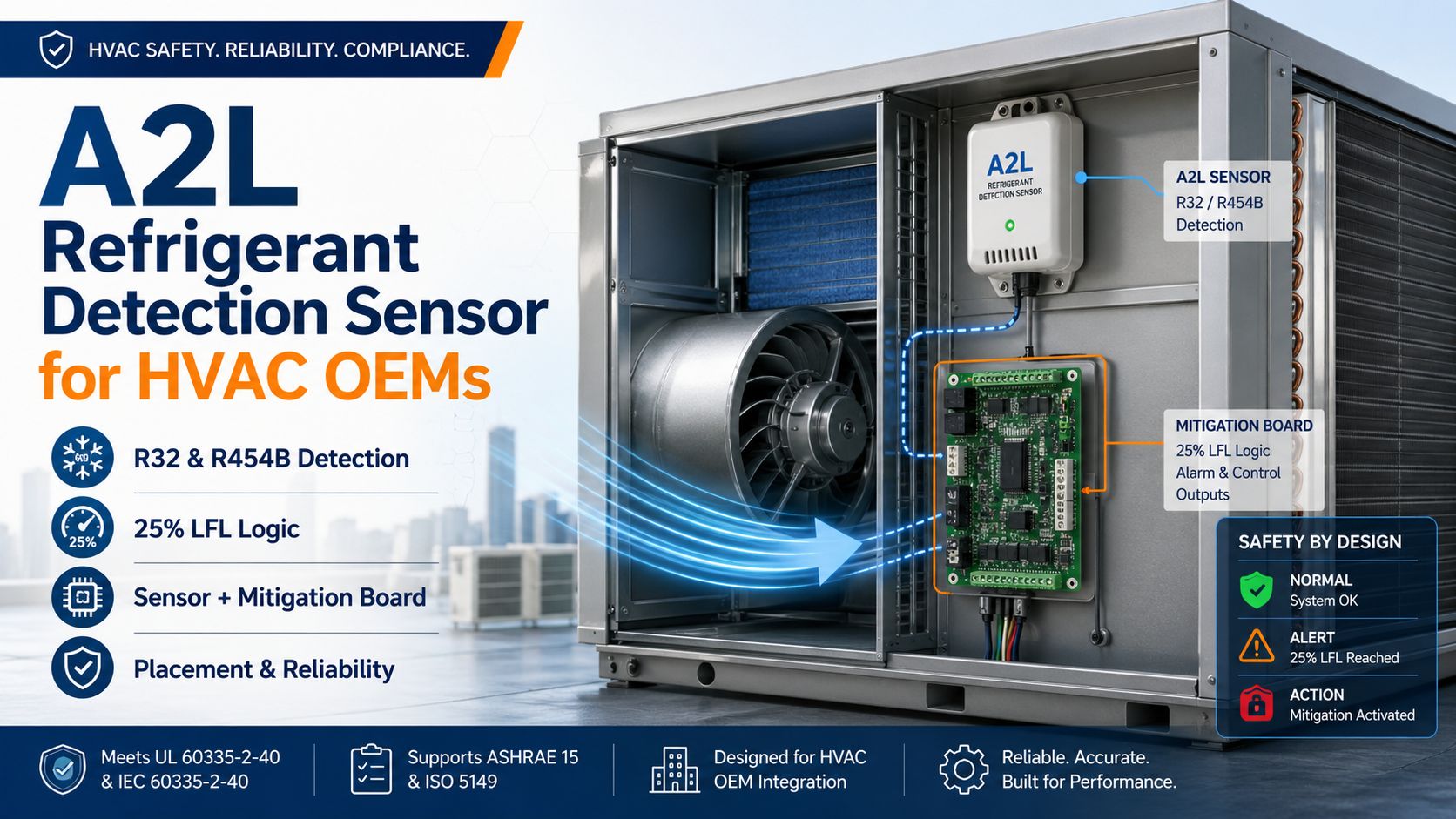
For A2L systems, use %LFL tiers (≈25% pre-alarm; ≈50% main) to trigger ventilation and safe shutdown.

Core Specifications

ParameterValue / Option
MeasurementNDIR ppm and/or %LFL (MOS/NDIR-LEL)
Outputs4–20 mA (2/3-wire), RS-485 Modbus RTU, 1–2 relays (N.O./N.C.)
Response Time (T90)≤ 20–30 s typical
Supply12–24 VDC (others on request)
Operating Conditions−20…+50 °C; 15–95% RH non-condensing (model-dependent)

Placement & Setpoints — Good Practice

  • Mounting height: Most AC refrigerants are heavier than air ⇒ mount low; confirm with on-site airflow.
  • Coverage: ~5–10 m radius per sensor in open rooms; add units near valves/joints and low pockets.
  • Alarms: A2L/A3: pre-alarm ≈25% LFL; main ≈50% LFL. A1: ppm bands (e.g., 1,000–5,000 ppm) per design spec.
  • Interlocks: Pre-alarm → ventilation; Main → equipment shutdown + beacons/horns/BMS events.

Finalize thresholds and quantities against local codes and your project specification.

Why Global Clients Choose Us?

The company consistently adheres to the quality policy of “Fine Craftsmanship, Scientific Innovation, Pursuit of Excellence, and Value-Added Service.” By formulating production process control plans and work instructions, it has established a standardized, accountable, and regulated process management system. Additionally, the company has independently developed an MES production management system, enabling comprehensive and visual management across the entire workflow.

30+ YEARS OF EXPERIENCE

R&D, manufacture and sales of sensors and sensing solutions.

QUALITY GUARANTEE CONTINOUS IMPROVEMENT

Complete and rigid process flow control, coupled with significant improvements.

INTERNATIONAL MARKET

Deliver sensing products to more than 100 countries and regions.

STABLE SUPPLY CHAIN RELIABLE PRODUCTION

Core components not subject to constraints, advanced equipments for manufaturing and test.

R&D STRENGTH TECHNOLOGY INNOVATION

200+ patents, 180+ R&D team members, self-built labs for continous innovation.

ONE-STOP SERVICE

Professional consultation, fast delivery, 24 hours after-sales support.

Leading the Industry, Innovative & Controllable Technology

With robust R&D capabilities, we maintain sustained input in R&D and unwavering commitment to technological innovation. This not only ensures that we remain at the forefront of industry but also drives continuous innovation, leading the future trend of the sensing industry.

10% R&D Input

The average annual R&D input exceeds 10% of the annual revenue.

5+ R&D Layout

With Zhengzhou headquarters as the core, a nationwide R&D and innovation system is being established, encompassing cities of Shanghai, Wuhan, Shenzhen, and Taiyuan.

180+ R&D Team

There are over 180 R&D personnel, including more than 10 with doctoral degrees and over 50 with master's degrees, who have an average of more than 8 years of experience in sensor development.

20+ Experiment Types

Gas-related, Climatic Environment, EMC, Electrical Performance, Mechanical Performance, etc.

10+ Advanced Laboratories

CNAS Laboratory, MEMS Laboratory, UL Laboratory, Nanocomposite Materials Laboratory, etc.

400+ sets Leading R&D Equipment

Cube Storage, Die Bonder, Lithography Machine, Coating Machine, SMT Placement Machine, Automatic Probe Station, etc.

Request Consultation

    Success! Your message has been sent to us.
    Error! There was an error sending your message.

    Wechat

    Whatsapp

    FAQs — Infrared (NDIR) Refrigerant Leak Sensors

    How many sensors do I need per room?

    Plan ~5–10 m radius coverage per sensor in open rooms. Add units near indoor units, valves, joints, and floor-level pockets where gas may accumulate. Irregular layouts typically need more sensors.

    What alarm thresholds should I use?

    For A2L/A3 gases: pre-alarm ≈25% LFL to start ventilation; main ≈50% LFL to trip equipment and trigger beacons/horns. For A1 gases, use ppm bands (e.g., 1,000–5,000 ppm) per project spec and risk assessment.

    Where should the sensor be mounted?

    Most AC refrigerants are heavier than air; mount low (≈150–300 mm above floor) near likely leak sources and pooling points. Avoid strong supply air that could bypass the sensor. Probe/duct versions can monitor return air.

    How often should I calibrate and bump-test?

    Typical calibration is every 12–24 months with periodic bump tests (quarterly/biannual). Dusty or humid sites, or areas with cleaning aerosols, may need more frequent checks and filter maintenance.

    Which technology should I choose: NDIR or MOS?

    Choose NDIR for ppm early warning and long-term stability; choose MOS or IR-LEL for %LEL safety interlocks on A2L/A3 systems. Many sites use both tiers for redundancy.

    Can Winsen customize for OEM/volume programs?

    Yes—ranges, firmware, Modbus mapping, connectors/harnesses, housings (IP rating), labels/branding, and packaging can be tailored for volume deployments.

    More Refrigerant Sensors Knowledge

    Not sure which sensor is right?

    Get a free initial consultation right now

    has been added to your cart.
    Checkout