Refrigerant Sensor Germany – Refrigerant Sensor Supply | China Sensor Factory

Refrigerant Sensor Germany – Reliable Supply from China Sensor Factory Winsen

Germany is recognized as the industrial powerhouse of Europe, with world-class engineering, a strong automotive sector, advanced building technologies, and strict environmental policies. In such a market, the role of refrigerant sensors is increasingly critical. From automotive air conditioning and industrial refrigeration to commercial HVAC and data centers, Germany has a strong and growing demand for reliable refrigerant detection solutions.

At the same time, Germany is a leading advocate of the EU Green Deal and strict environmental regulations such as the F-Gas Regulation, which targets high-GWP refrigerants. This regulatory landscape is accelerating the adoption of advanced refrigerant sensors for leak detection, compliance, and system optimization.

Refrigerant Sensor - Factory Wholesale Available Worldwide

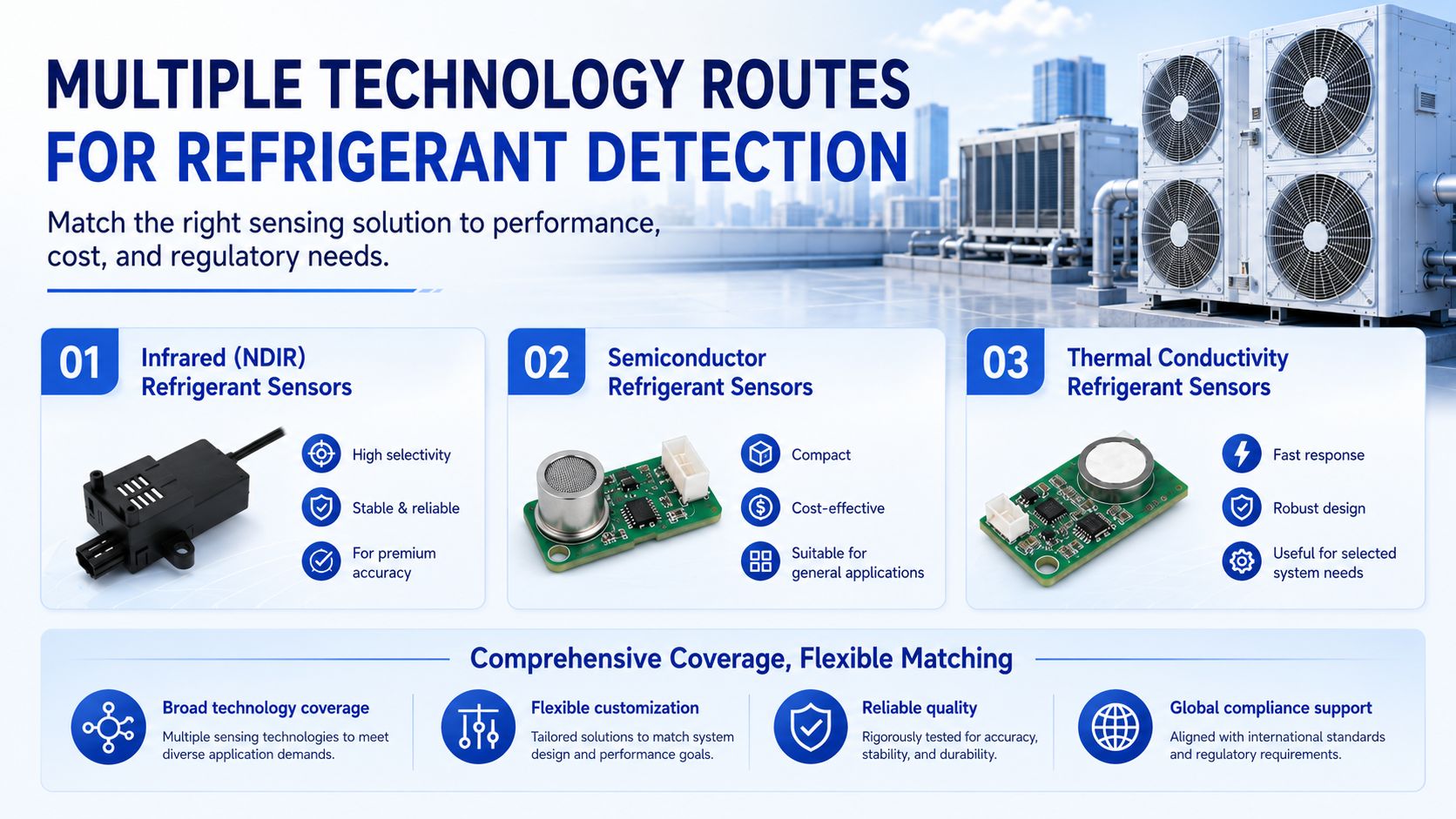
Winsen, a China-based stock market listed company, is one of the most complete sensor solution providers worldwide. With more than 30 years of R&D and manufacturing expertise, Winsen supplies refrigerant sensors based on multiple technologies, including NDIR (Non-Dispersive Infrared), MOS (Semiconductor).

Long operational lifespan

Stable calibration

High sensitivity

Fast response and recovery time

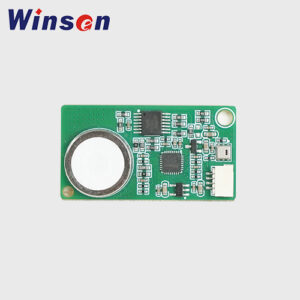
NDIR Refrigerant Sensor

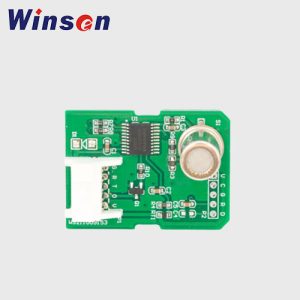
Semiconductor Refrigerant Sensor

What is a Refrigerant Sensor?

A refrigerant sensor is a gas detection device used to monitor refrigerant leaks, concentrations, and system safety. It is widely applied in:

  • HVAC (Heating, Ventilation, Air Conditioning) systems

  • Refrigeration equipment (supermarkets, cold storage, logistics)

  • Automotive air conditioning

  • Data center cooling

  • Industrial processing systems

Key Functions

  • Leak Detection: Identifies small refrigerant leaks before they escalate.

  • Safety Monitoring: Prevents hazardous concentrations of flammable or toxic refrigerants.

  • Environmental Compliance: Helps companies adhere to EU F-Gas and GWP reduction targets.

  • System Optimization: Improves maintenance efficiency and energy savings.

Types of Refrigerant Sensors

1. NDIR (Non-Dispersive Infrared) Sensors

  • Principle: Detect refrigerant gases by measuring infrared absorption.

  • Advantages: High accuracy, long lifespan, stable performance.

  • Applications: High-end HVAC, data centers, supermarkets, leak monitoring.

2. MOS (Metal-Oxide Semiconductor) Sensors

  • Principle: Gas interaction changes the resistance of a semiconductor layer.

  • Advantages: Cost-effective, compact, fast response.

  • Applications: Automotive AC, portable leak detectors, residential safety devices.

3. Electrochemical Sensors

  • Principle: Chemical reaction with the target gas generates an electrical signal.

  • Advantages: High sensitivity, selective detection.

  • Applications: Industrial safety, toxic refrigerant monitoring.

4. Photoacoustic Sensors

  • Principle: Detect gas concentration by measuring sound waves generated from IR absorption.

  • Advantages: Excellent selectivity and sensitivity.

  • Applications: Precision leak detection, research facilities.

5. MEMS-Based Sensors

  • Principle: Micro-electromechanical systems use miniaturized structures to sense gases.

  • Advantages: Miniaturization, low power, IoT integration.

  • Applications: Smart homes, wearable devices, portable monitors.

Refrigerant Sensor Applications in Germany

Automotive Industry

Germany is home to automotive giants like BMW, Volkswagen, Mercedes-Benz, and Audi. Vehicle air conditioning requires compact, reliable refrigerant sensors to monitor cabin air quality and refrigerant leaks, particularly as cars transition to low-GWP refrigerants like R-1234yf.

Supermarkets and Food Logistics

Refrigerated storage is vital for Germany’s food retail and export industry. NDIR refrigerant sensors are widely used in supermarket cold displays and logistics chains to reduce refrigerant loss and comply with EU safety standards.

HVAC in Commercial Buildings

Germany’s office complexes, hospitals, and public buildings use advanced HVAC systems. Leak detection sensors improve safety, reduce maintenance costs, and ensure compliance with EU energy efficiency regulations.

Smart Cities and Green Buildings

Germany leads in smart building solutions. Integration of MEMS and IoT refrigerant sensors enhances predictive maintenance, energy efficiency, and safety monitoring.

Industrial and Chemical Plants

German industry relies on cooling systems in manufacturing, pharmaceuticals, and chemicals. Refrigerant sensors protect workers, assets, and the environment.

Data Centers

With the rise of cloud computing, Germany is seeing rapid growth in data centers. Cooling systems rely on refrigerants, and NDIR sensors play a vital role in detecting leaks and preventing downtime.

Why Global Clients Choose Us?

The company consistently adheres to the quality policy of “Fine Craftsmanship, Scientific Innovation, Pursuit of Excellence, and Value-Added Service.” By formulating production process control plans and work instructions, it has established a standardized, accountable, and regulated process management system. Additionally, the company has independently developed an MES production management system, enabling comprehensive and visual management across the entire workflow.

30+ YEARS OF EXPERIENCE

R&D, manufacture and sales of sensors and sensing solutions.

QUALITY GUARANTEE CONTINOUS IMPROVEMENT

Complete and rigid process flow control, coupled with significant improvements.

INTERNATIONAL MARKET

Deliver sensing products to more than 100 countries and regions.

STABLE SUPPLY CHAIN RELIABLE PRODUCTION

Core components not subject to constraints, advanced equipments for manufaturing and test.

R&D STRENGTH TECHNOLOGY INNOVATION

200+ patents, 180+ R&D team members, self-built labs for continous innovation.

ONE-STOP SERVICE

Professional consultation, fast delivery, 24 hours after-sales support.

Leading the Industry, Innovative & Controllable Technology

With robust R&D capabilities, we maintain sustained input in R&D and unwavering commitment to technological innovation. This not only ensures that we remain at the forefront of industry but also drives continuous innovation, leading the future trend of the sensing industry.

10% R&D Input

The average annual R&D input exceeds 10% of the annual revenue.

5+ R&D Layout

With Zhengzhou headquarters as the core, a nationwide R&D and innovation system is being established, encompassing cities of Shanghai, Wuhan, Shenzhen, and Taiyuan.

180+ R&D Team

There are over 180 R&D personnel, including more than 10 with doctoral degrees and over 50 with master's degrees, who have an average of more than 8 years of experience in sensor development.

20+ Experiment Types

Gas-related, Climatic Environment, EMC, Electrical Performance, Mechanical Performance, etc.

10+ Advanced Laboratories

CNAS Laboratory, MEMS Laboratory, UL Laboratory, Nanocomposite Materials Laboratory, etc.

400+ sets Leading R&D Equipment

Cube Storage, Die Bonder, Lithography Machine, Coating Machine, SMT Placement Machine, Automatic Probe Station, etc.

Request Consultation

    Success! Your message has been sent to us.
    Error! There was an error sending your message.

    Wechat

    Whatsapp

    Environmental Regulations in Germany

    Germany enforces some of the world’s strictest refrigerant regulations through the EU F-Gas Regulation, which aims to cut greenhouse gas emissions by phasing down high-GWP refrigerants.

    • Montreal Protocol & Kigali Amendment: Commitment to phase out ozone-depleting substances.

    • EU F-Gas Regulation: Targets HFC reduction by two-thirds by 2030.

    • Local Regulations: Building codes require refrigerant leak detection in many applications.

    • Shift to Alternatives: Natural refrigerants (CO₂, ammonia, hydrocarbons) and low-GWP HFOs (R-1234yf, R-1234ze).

    Refrigerant sensors are critical to this transition, ensuring safety, compliance, and sustainability.

    Comparison of Refrigerant Sensor Technologies

    Sensor TypeAccuracyCostLifespanApplications
    NDIRHighMedium-HighLongHVAC, supermarkets, data centers
    MOSMediumLowMediumAutomotive AC, residential devices
    ElectrochemicalHighMediumMediumIndustrial safety, toxic gases
    PhotoacousticVery HighHighLongResearch, precision detection
    MEMSMediumLowLongIoT, smart homes, wearables

    FAQs

    Q1: Why are refrigerant sensors crucial in Germany?
    Because of strict environmental regulations, high refrigerant costs, and safety needs across industries.

    Q2: Which refrigerant sensor technology is most suitable for data centers?
    NDIR sensors are preferred due to their accuracy, stability, and long operational life.

    Q3: How do Chinese suppliers compare to European ones?
    Chinese suppliers like Winsen offer cost-effective, reliable, and customizable solutions, making them ideal partners for German companies.

    Q4: Why choose Winsen for refrigerant sensors?
    Winsen is a stock-listed Chinese manufacturer with 30+ years of experience, offering worldwide proven solutions.

    More Refrigerant Sensors Knowledge

    Not sure which sensor is right?

    Get a free initial consultation right now

    has been added to your cart.
    Checkout