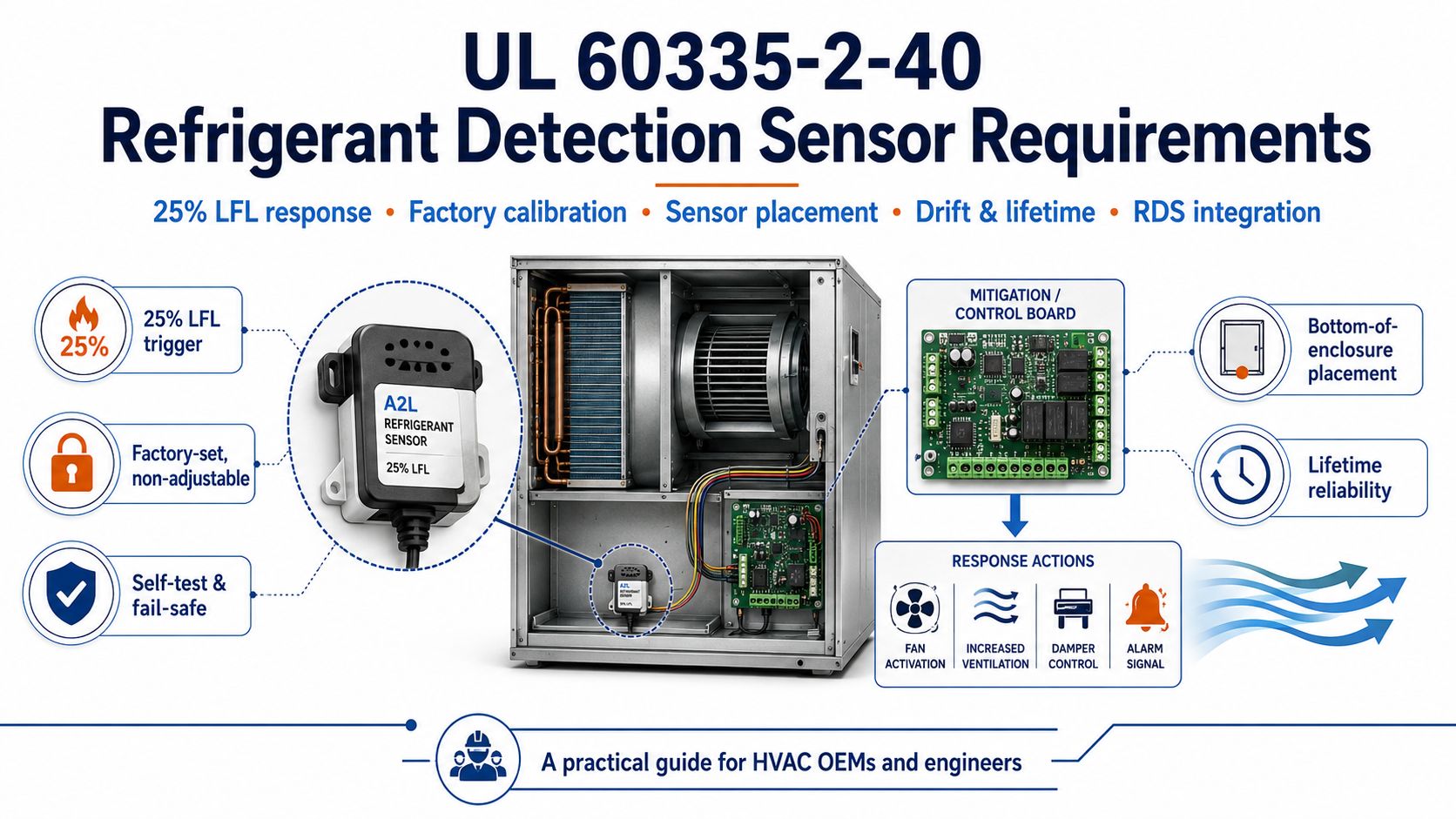
UL 60335-2-40 דרישות חיישן זיהוי נוזל קירור
אם אתה מייצר, מציין או משלב
ציוד HVAC A2L, הנקודה החשובה ביותר היא זו: מתחת
UL 60335-2-40, גלאי הקירור אינו מטופל כאל אביזר גנרי. זה חלק מא
מערכת זיהוי קירור (RDS) זה כולל את החיישן, לוגיקת הבקרה, תגובת הפחתה, שיטת ההתקנה וראיות מהימנות לטווח ארוך.
UL מתאר את התקן כדרישה הדו-לאומית של ארה"ב/קנדה למשאבות חום, מזגנים ומסירי לחות, ואומר שהמהדורה הרביעית חידדה את דרישות איתור הדליפות כדי לשפר את החוסן, האמינות והערכת הסחף לאורך החיים.
מה UL 60335-2-40 בעצם מווסת
UL 60335-2-40 אינו רק "תקן חיישנים". זהו תקן בטיחות המוצר עבור מכשירי HVAC מסוימים, ודרישות גלאי הקירור נמצאות בתוך מודל בטיחות רחב יותר המכסה גם
מגבלות טעינה, הנחות נפח החדר, בקרת מקור הצתה ופעולות הפחתה. UL אומר שדרושות מערכות איתור דליפות קירור
גם חיישנים וגם אלקטרוניקה לוגית בקרה שמפעילים את מאוורר המאייד ומשתמשים באוויר במחזור כדי לפזר ולדלל במהירות נוזל קירור במקרה של דליפה. UL גם אומר שגישת מגבלת החיוב כוללת א
מקדם בטיחות של 4 tied to the minimum occupied room volume.So when buyers ask about “sensor requirements,” the technically correct answer is: UL 60335-2-40 is evaluating the כל שרשרת הזיהוי והתגובה, לא רק אם בדיקה יכולה לראות גז במעבדה.
הדרישה החשובה ביותר: 25% LFL

רמת הטריגר הליבה בהנחיית UL הנוכחית היא
25% מגבול הדליקה התחתון (LFL) של נוזל הקירור. UL אומר את הכתוב מחדש
נספח LL במהדורה הרביעית קובע בבירור כי כאשר מערכת זיהוי נוזל הקירור חשה
25% LFL, עליו ליזום תגובת מערכת כדי להפחית את המפגע. UL מסבירה גם ששפה מוקדמת קשורה תגובה ל-100% LFL-או טווחים נמוכים יותר, בעוד שה-CRDs המעודכנים מגדירים במפורש תגובה סביב
25% LFL כי 100% LFL גבוה מכדי לנהל את סכנת השריפה בבטחה.
שֶׁלהערת התכנון של 2024 A2L מספקת גרסה הנדסית מעשית של אותו עיקרון, הקובעת שמערכת זיהוי הקירור תפיק פלט בתוך
30 שניות של חשיפה ישירה ל-25% LFL. מאמר רשות הקוד של UL משנת 2024 מוסיף פרשנות הפונה לשטח, ואומר ש-RDS אינטגרלי מתוכנן בדרך כלל כדי ליזום הקלה בתוך
15 שניות של גילוי
25% LFL או יותרו
למה 25% LFL חשוב
סף זה חשוב כי הוא דוחף את המערכת ל
לזהות מוקדם ולהפחית לפני שריכוז נוזל הקירור מתקרב לתערובת מתלקחת. במונחים מעשיים של HVAC, זה אומר שהגלאי הוא חלק מאסטרטגיית מניעה, לא רק כלי להודעות תחזוקה.
מה נחשב כ"מערכת זיהוי חומרי הקירור" לפי UL 60335-2-40
UL מגדירה an
RDS אינטגרלי כמערכת המשתמשת באחד או יותר
חיישנים נייחים כדי לזהות דליפת קירור בריכוז מוגדר ו
ליזום אוטומטית פעולה מקלה אחת או יותר. When required, UL says this integral RDS is evaluated as part of the HVAC equipment certification and must be installed within the HVAC equipment according to the manufacturer’s installation instructions.That means the compliant system usually includes:- חיישן קירור נייח,
- היגיון בקרה או הפחתה,
- תפוקות הפחתה כגון הפעלת מאוורר,
- וטיפול בתקלות/אזעקות.
זו גם הסיבה שלא ניתן להניח שגלאי גז אקראי לאחר השוק עומד בדרישות חיישן UL 60335-2-40, אלא אם זה פתרון ה-RDS הספציפי שהוערך עם המכשיר.
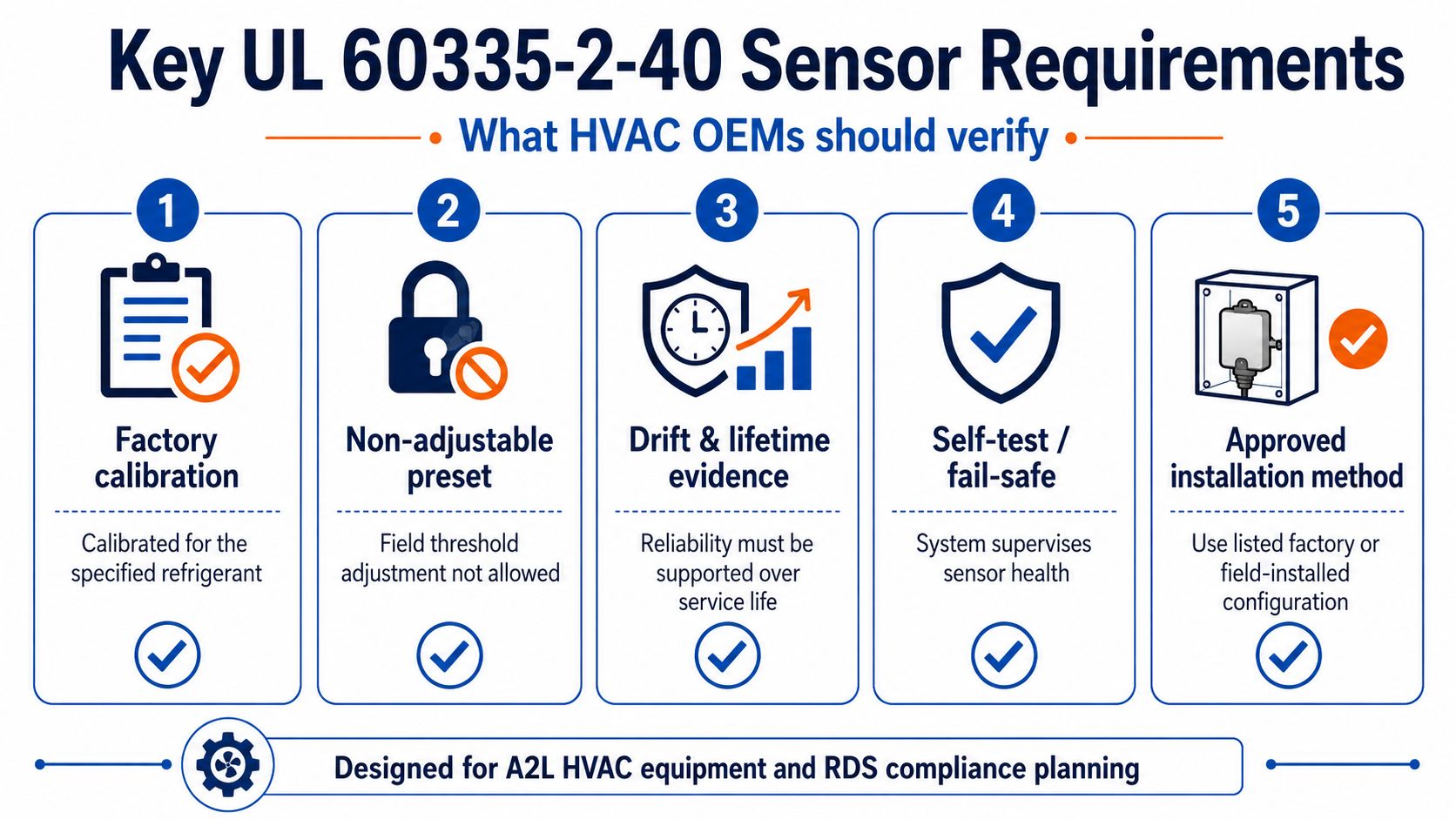
דרישות כיול: מוגדרות במפעל, אטומות ואינן ניתנות להתאמה בשטח
אחת הדרישות הפרקטיות החשובות ביותר היא בקרת כיול. ההנחיות שפורסמו של UL קובעות שגלאי דליפות הקירור
נקודת ההגדרה מוגדרת במפעל ואטומה, עם
אין התאמת שדה מותרת. מאמר הדרישות המעודכן של UL אומר גם שהמסגרת של המהדורה הרביעית מגדירה בבירור כיול, וטבלת ההשוואה קובעת שמערכות זיהוי קירור יהיו
מוגדר מראש ומכויל מהמפעל עבור נוזל הקירור המשמש, הרמה שנקבעה מראש
לא יהיה מתכוונן, וכיול מחדש מלבד
כיול עצמי מחדש בנקודת אפס is not allowed.For OEMs, this has a direct design implication: do not build your compliance strategy around a field technician “tuning” the threshold later. The intended concentration level and refrigerant target need to be established in the listed design.הסחף, סטייה והוכחות לכל החיים הם חלק מהדרישה
ההנחיה של המהדורה הרביעית של UL שמה דגש יוצא דופן על
סחיפה, סטייה ואמינות חיישנים לטווח ארוך. אומר UL
נספח 101.DVM was revised to include requirements for deviation and drift over the lifetime of the refrigerant sensor, and that it now describes acceptable paths for providing evidence supporting the claimed sensor life. UL also explains that the CRDs introduced allowances and evaluation methods specifically to address long-term reliability.This matters because HVAC equipment may stay in service for years in heat, humidity, dust, oil mist, and vibration. Under UL 60335-2-40, the compliance conversation is not only “does the sensor work on day one?” but also “can the manufacturer substantiate that it remains reliable over its claimed life?”בדיקה עצמית והתנהגות בטוחה לכשלים
טבלת ההשוואה המעודכנת של UL מדגישה גם מושגים של בדיקות עצמיות ובטיחות כישלון. הוא קובע כי מערכת גילוי נוזל הקירור תכלול א
אמצעים לבדיקה עצמית כדי לקבוע אם התרחשה תקלה בחיישן או באלמנט החישה, ובנוסף אומר שהתכנון נועד לכך
בטוח לכשלים והפעלת תגובת מערכת מתאימה.That means a compliant design is not only watching for refrigerant. It is also watching itself. For a buyer, that is a major distinction between a consumer-style gas alarm and an appliance-integrated detection system intended for safety-critical action.דרישות מיקום: מיקום החיישן אינו שרירותי
מיקום החיישן הוא אחת הדרישות החשובות ביותר מבחינה תפעולית של UL 60335-2-40. הנחיית רשות הקוד של UL משנת 2024 אומרת
חומרי קירור A2L כבדים יותר מאוויר, כך שהוראות ההתקנה יפרטו בדרך כלל מקומות שבהם סביר להניח שדלף נוזל קירור
לשקוע ולאסוף. UL אומר שזה לרוב
ליד הסלילים הפנימיים לכיוון החלק התחתון של המארז, ומערכות עם מספר סלילים פנימיים ישתמשו בדרך כלל
חיישנים מרובים.UL also notes that field verification or relocation may be needed depending on the כיוון מותקן של הציוד, מכיוון שתצורות זרימה כלפי מעלה, זרימה למטה או אופקית יכולות להשתנות במקום שבו מצטבר נוזל קירור.
מותקן במפעל או מותקן בשטח?
UL אומר ששתי הגישות מותרות. ה-RDS האינטגרלי עשוי להיות
מותקן במפעל אוֹ
מותקן בשטח, but the installation instructions determine whether the listed equipment requires an RDS, which specific RDS is permitted, and how it must be installed.That means “field installable” does not mean “installer can use any sensor they want.” It means the listed equipment and its instructions control the allowable hardware and the installation method.כאשר בדרך כלל נדרש RDS
UL אומר שהקביעה המדויקת נעשית תחת קריטריונים מפורטים ב-UL 60335-2-40 ובהוראות ההתקנה של היצרן, אך נותנת כלל שדה כללי: צפו שנדרש RDS אינטגרלי עבור ציוד HVAC עם
יותר מ-2 פאונד של תשלום עבור ציוד לא קבוע אטום במפעל אוֹ
מעל כ-4 פאונד עבור סוגים אחרים. UL’s 2025 installation checklist repeats the same “typically required” guidance.This is useful as a screening rule for content and sales discussions, but it is still not a substitute for the equipment’s actual listed instructions.תיוג וזיהוי
מאמר הבטיחות הישן אך עדיין שימושי של UL קובע שסימוני גלאים מזהים את
יצרן וחומרי קירור בשימוש, והערות דף עדכון התקנים לשנת 2025 של UL הוסיפו הבהרה עבור
דרישות תיוג for appliances containing flammable refrigerants.For buyers and OEMs, that reinforces another practical point: a compliant refrigerant detector is supposed to be clearly associated with the קירור/יישום ספציפי, לא מטופל כמכשיר גז דליק גנרי עם תאימות מעורפלת.
מה יצרני ציוד מקורי של HVAC וקונים צריכים לציין
אם אתה כותב גיליון מפרט, מדריך קנייה או דף מוצר סביב דרישות חיישני UL 60335-2-40, אלו הם הפריטים החשובים ביותר שיש להגדיר:
1. כיול ספציפי לקירור
הגלאי צריך להיות מכויל במפעל עבור נוזל הקירור המשמש במכשיר, עם התנהגות מפלס שאינה ניתנת להתאמה מראש.
2. היגיון תגובה של 25% LFL
המוצר צריך לציין בבירור כיצד הוא מגיב ב
25% LFL, מכיוון שזוהי נקודת הטריגר המרכזית בשפת הדרישות הנוכחית של UL.
3. התנהגות בזמן תגובה
הנחיית שטח של UL והנחיית עיצוב TI מצביעות שניהם על פעולה מהירה לאחר חשיפה של 25% ל-LFL.
4. עדות להיסחפות/חיים
חיישן OEM רציני צריך לתעד תמיכה בסטייה, סחיפה ואמינות לכל החיים.
5. הוראות מיקום
הגלאי צריך להגיע עם הנחיית התקנה התואמת את כיוון הציוד והתנהגות הצטברות דליפות.
6. פיקוח על תקלות והתנהגות בטוחה
מערכת החיישנים צריכה לכלול בדיקה עצמית ותגובה בטוחה מוגדרת לתקלה.
שאלות נפוצות
לאיזה ריכוז מערכת זיהוי קירור UL 60335-2-40 חייבת להגיב?
הנחיית המהדורה הרביעית של UL אומרת שמערכת זיהוי נוזל הקירור חייבת ליזום תגובת המערכת כשהיא חשה
25% מה-LFL של הקירורו
האם UL 60335-2-40 מאפשר התאמת שדה של נקודת ההגדרה של הגלאי?
לא. ההנחיה שפורסמה של UL אומרת שנקודת הקבע היא
סט מפעל ואטום עִם
אין התאמת שדה מותרתו
האם הגלאי חייב להיות חלק מ-RDS מלא?
ביישומים שבהם UL 60335-2-40 דורש RDS אינטגרלי, כן - המערכת כוללת חיישנים נייחים בתוספת פעולות הפחתה אוטומטיות ומוערכת כחלק מהסמכת הציוד.
האם סחיפה ואורך חיים הם חלק מהדרישה?
כֵּן. UL אומר כתובות נספח 101.DVM
סטייה וסחיפה לאורך החיים של חיישן הקירור ומתאר הוכחות מקובלות לחיים הנטענים.
היכן מותקנים בדרך כלל חיישני קירור A2L?
UL אומר שהם מותקנים בדרך כלל היכן שדלף נוזל קירור
לשקוע ולאסוף, לרוב
ליד הסלילים הפנימיים לכיוון החלק התחתון של המארזו
האם ניתן להתקין את ה-RDS בשטח?
כן, אך רק בהתאם לציוד הרשום והוראות ההתקנה שלו. UL אומר שגם התקנה במפעל וגם בשטח מותרת במסגרת הסטנדרטית.
באיזו מהירות המערכת צריכה להגיב?
הנחיית TI משנת 2024 אומרת שה-RDS ייצור פלט בתוך
30 שניות של חשיפה ישירה ל-25% LFL, בעוד שבמאמר השדה של UL משנת 2024 נאמר ש-RDS אינטגרלי מתוכנן בדרך כלל ליזום הפחתה בתוך
15 שניות של גילוי
25% LFL או יותרו

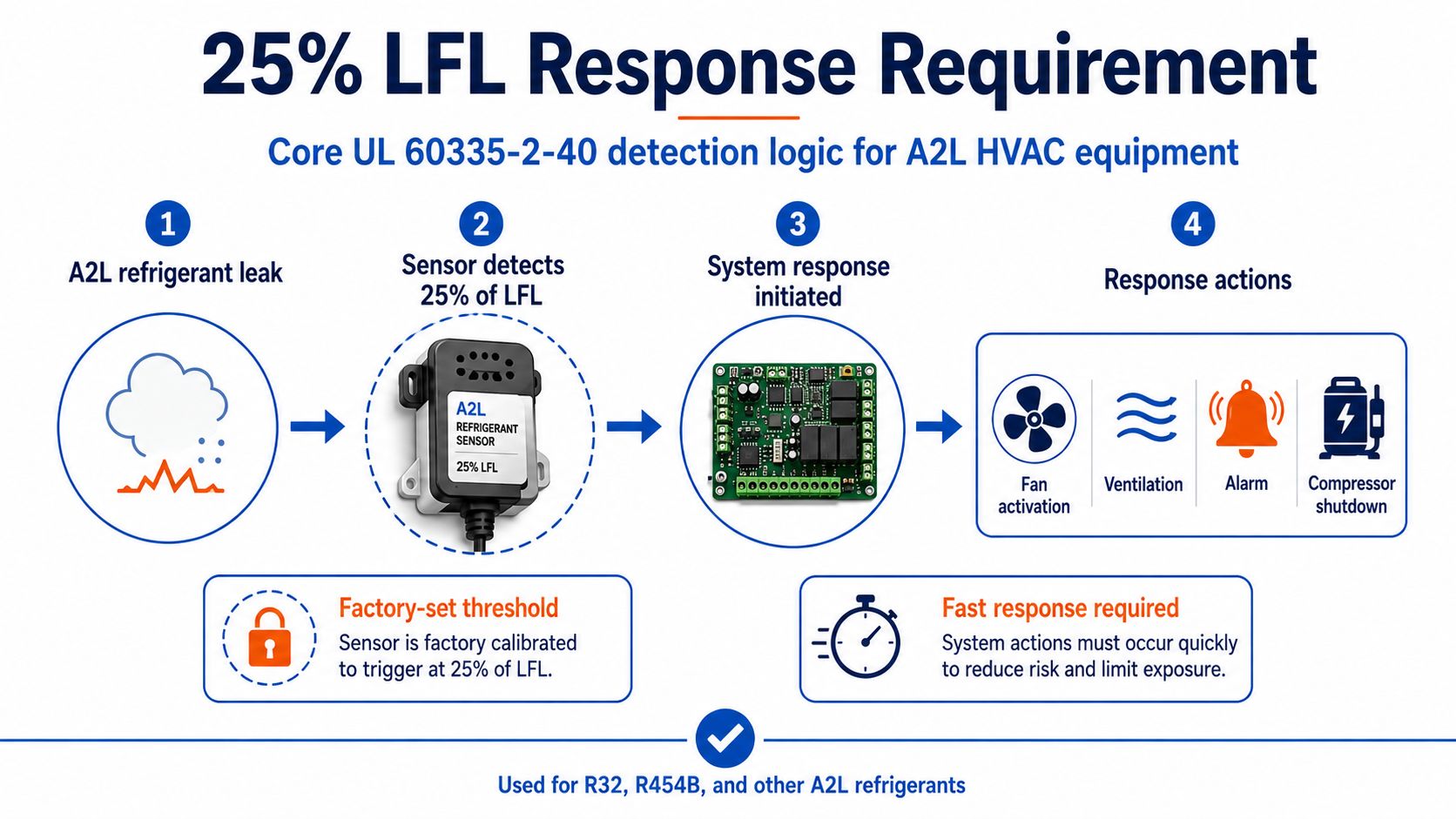 רמת הטריגר הליבה בהנחיית UL הנוכחית היא 25% מגבול הדליקה התחתון (LFL) של נוזל הקירור. UL אומר את הכתוב מחדש נספח LL במהדורה הרביעית קובע בבירור כי כאשר מערכת זיהוי נוזל הקירור חשה 25% LFL, עליו ליזום תגובת מערכת כדי להפחית את המפגע. UL מסבירה גם ששפה מוקדמת קשורה תגובה ל-100% LFL-או טווחים נמוכים יותר, בעוד שה-CRDs המעודכנים מגדירים במפורש תגובה סביב 25% LFL כי 100% LFL גבוה מכדי לנהל את סכנת השריפה בבטחה.שֶׁלהערת התכנון של 2024 A2L מספקת גרסה הנדסית מעשית של אותו עיקרון, הקובעת שמערכת זיהוי הקירור תפיק פלט בתוך 30 שניות של חשיפה ישירה ל-25% LFL. מאמר רשות הקוד של UL משנת 2024 מוסיף פרשנות הפונה לשטח, ואומר ש-RDS אינטגרלי מתוכנן בדרך כלל כדי ליזום הקלה בתוך 15 שניות של גילוי 25% LFL או יותרו
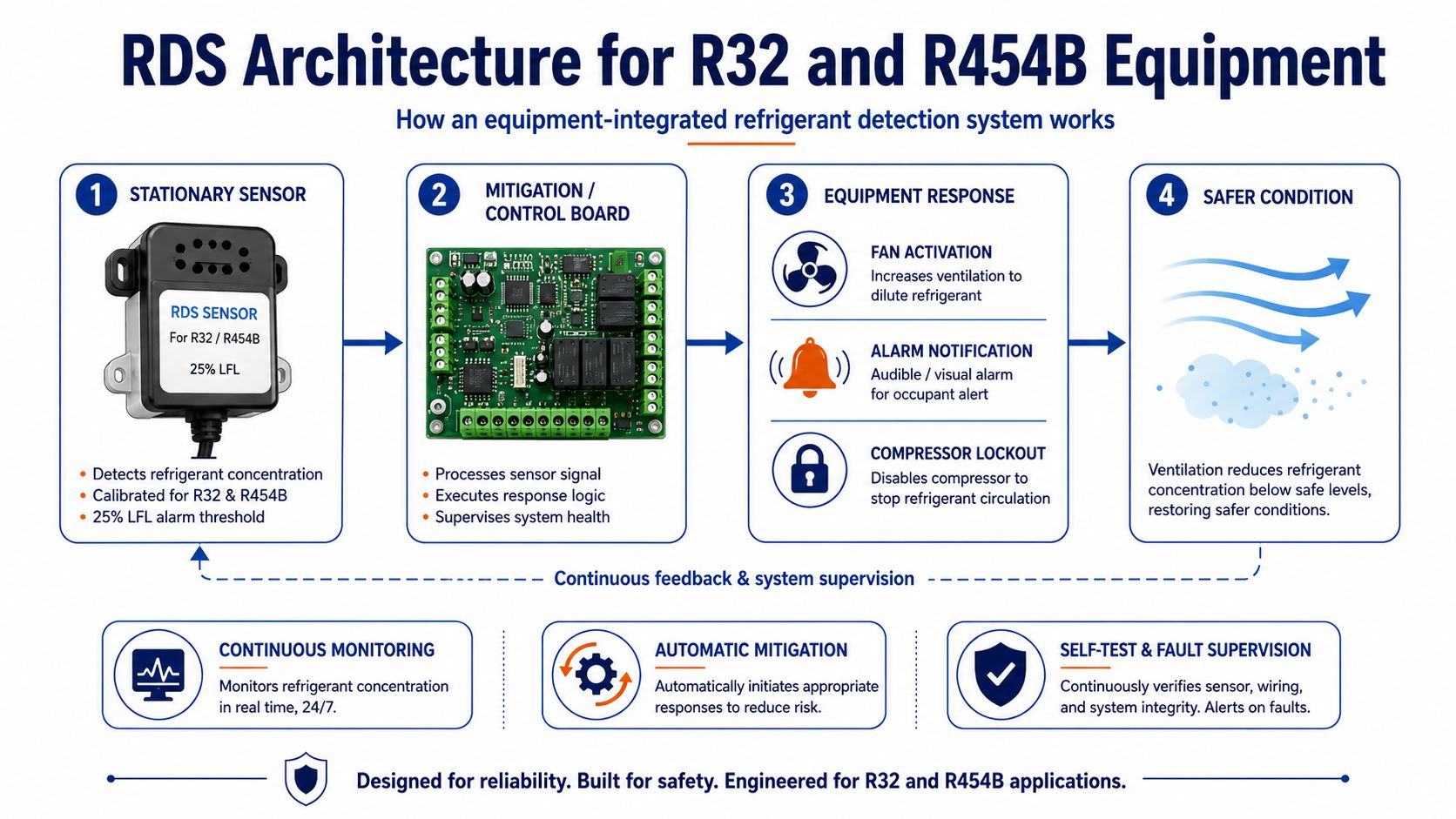 UL אומר שהקביעה המדויקת נעשית תחת קריטריונים מפורטים ב-UL 60335-2-40 ובהוראות ההתקנה של היצרן, אך נותנת כלל שדה כללי: צפו שנדרש RDS אינטגרלי עבור ציוד HVAC עם יותר מ-2 פאונד של תשלום עבור ציוד לא קבוע אטום במפעל אוֹ מעל כ-4 פאונד עבור סוגים אחרים. UL’s 2025 installation checklist repeats the same “typically required” guidance.This is useful as a screening rule for content and sales discussions, but it is still not a substitute for the equipment’s actual listed instructions.
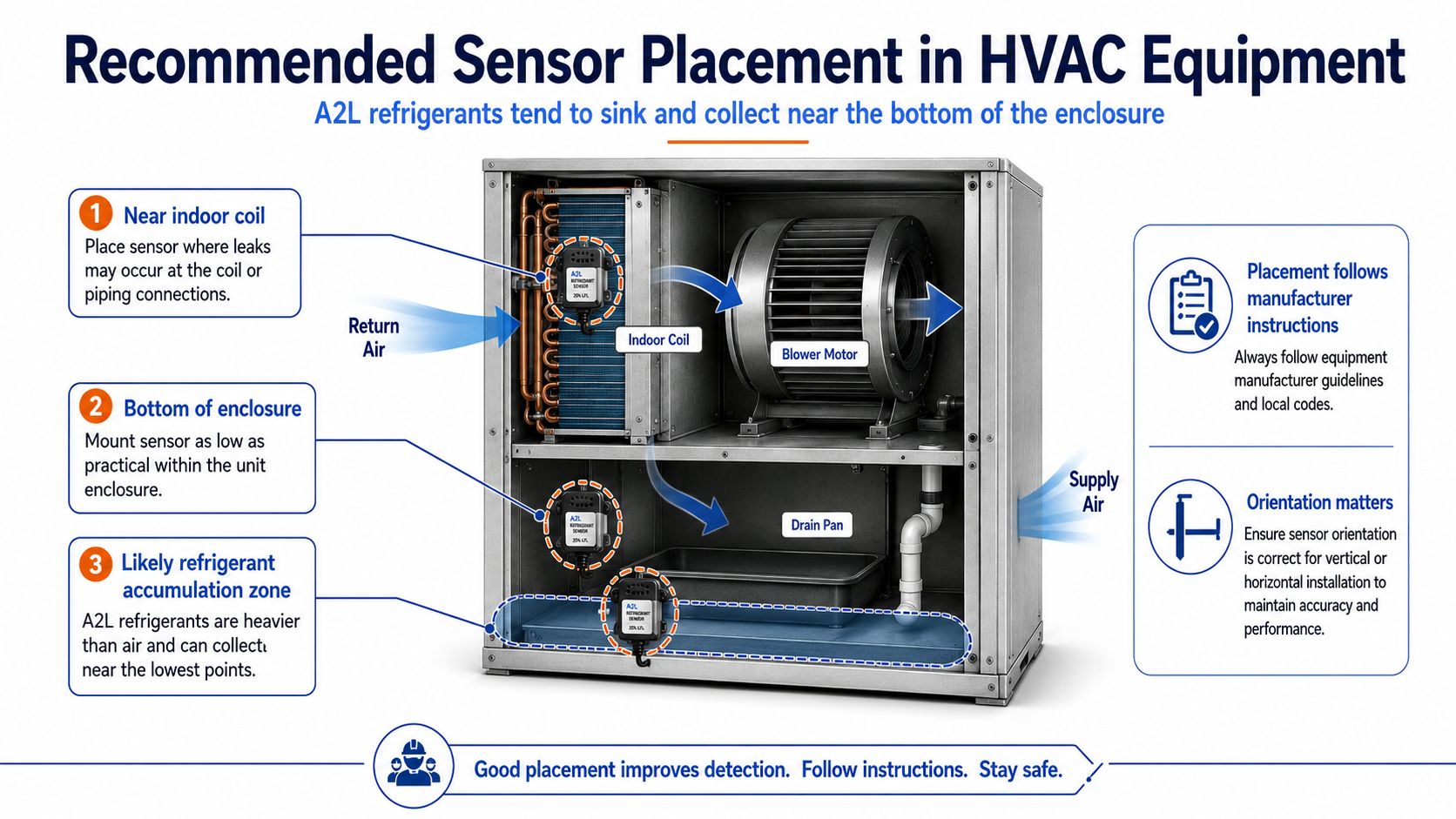 אם אתה כותב גיליון מפרט, מדריך קנייה או דף מוצר סביב דרישות חיישני UL 60335-2-40, אלו הם הפריטים החשובים ביותר שיש להגדיר:1. כיול ספציפי לקירור
הגלאי צריך להיות מכויל במפעל עבור נוזל הקירור המשמש במכשיר, עם התנהגות מפלס שאינה ניתנת להתאמה מראש.2. היגיון תגובה של 25% LFL
המוצר צריך לציין בבירור כיצד הוא מגיב ב 25% LFL, מכיוון שזוהי נקודת הטריגר המרכזית בשפת הדרישות הנוכחית של UL.3. התנהגות בזמן תגובה
הנחיית שטח של UL והנחיית עיצוב TI מצביעות שניהם על פעולה מהירה לאחר חשיפה של 25% ל-LFL.4. עדות להיסחפות/חיים
חיישן OEM רציני צריך לתעד תמיכה בסטייה, סחיפה ואמינות לכל החיים.5. הוראות מיקום
הגלאי צריך להגיע עם הנחיית התקנה התואמת את כיוון הציוד והתנהגות הצטברות דליפות.6. פיקוח על תקלות והתנהגות בטוחה
מערכת החיישנים צריכה לכלול בדיקה עצמית ותגובה בטוחה מוגדרת לתקלה.
אם אתה כותב גיליון מפרט, מדריך קנייה או דף מוצר סביב דרישות חיישני UL 60335-2-40, אלו הם הפריטים החשובים ביותר שיש להגדיר:1. כיול ספציפי לקירור
הגלאי צריך להיות מכויל במפעל עבור נוזל הקירור המשמש במכשיר, עם התנהגות מפלס שאינה ניתנת להתאמה מראש.2. היגיון תגובה של 25% LFL
המוצר צריך לציין בבירור כיצד הוא מגיב ב 25% LFL, מכיוון שזוהי נקודת הטריגר המרכזית בשפת הדרישות הנוכחית של UL.3. התנהגות בזמן תגובה
הנחיית שטח של UL והנחיית עיצוב TI מצביעות שניהם על פעולה מהירה לאחר חשיפה של 25% ל-LFL.4. עדות להיסחפות/חיים
חיישן OEM רציני צריך לתעד תמיכה בסטייה, סחיפה ואמינות לכל החיים.5. הוראות מיקום
הגלאי צריך להגיע עם הנחיית התקנה התואמת את כיוון הציוד והתנהגות הצטברות דליפות.6. פיקוח על תקלות והתנהגות בטוחה
מערכת החיישנים צריכה לכלול בדיקה עצמית ותגובה בטוחה מוגדרת לתקלה.