
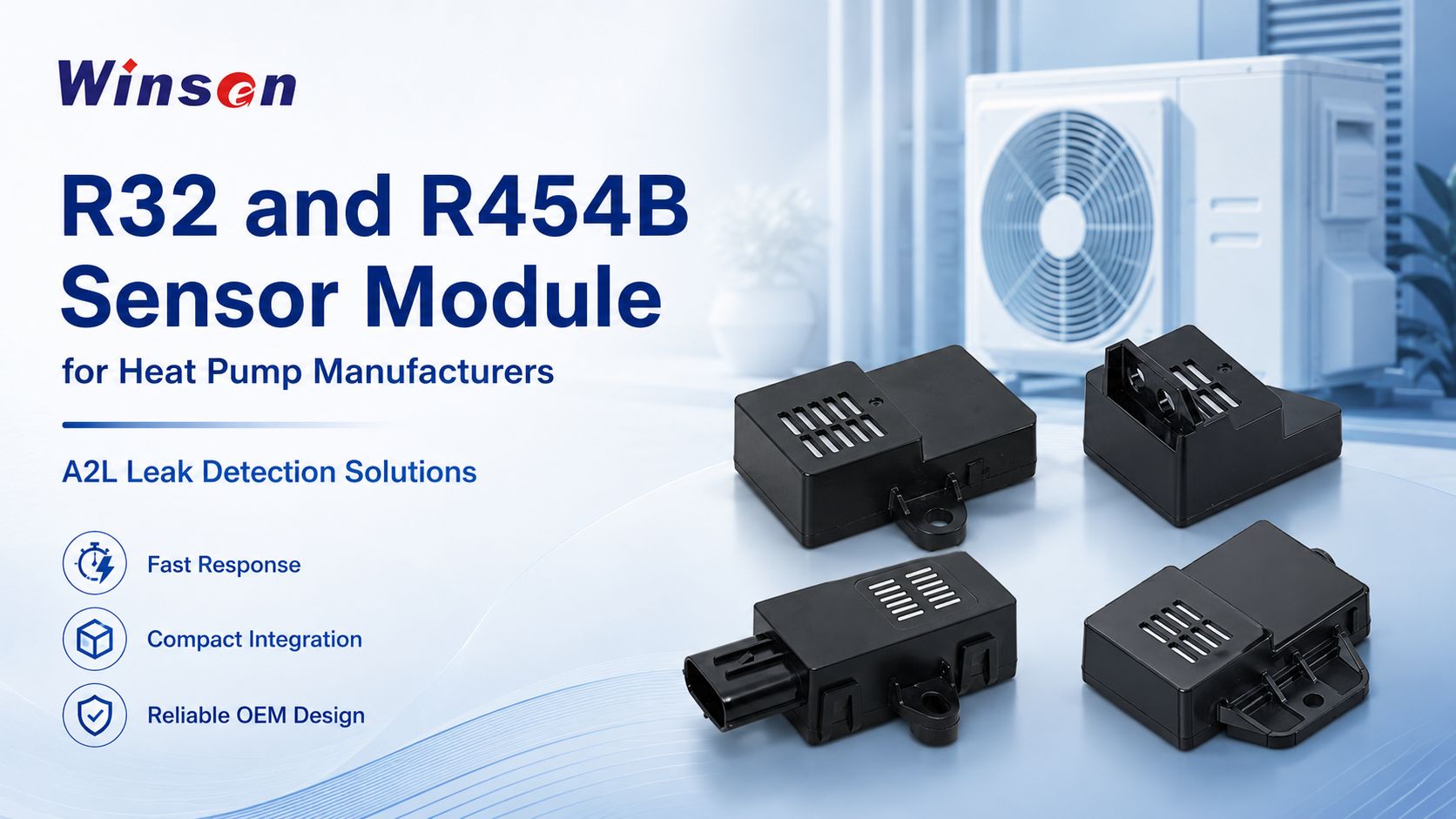
As heat pump systems continue to transition toward lower-GWP refrigerants, R32 I R454B have become two of the most important refrigerants in new product development. For manufacturers, this transition is not only about refrigerant replacement. It also changes how the equipment should detect leaks, respond to abnormal concentration, and integrate safety logic into the control system.
At Winsen, we focus on refrigerant detection solutions that help heat pump manufacturers build safer, more compact, and more integration-friendly products. Our refrigerant gas sensors and modules are designed for refrigerant leak detection in applications such as leakage alarm and automatic switch-off, with product options covering R32W R454B, and other refrigerants through Jest nW thermal conduction, I półprzewodnik solutions. Our refrigerant sensor solutions are also positioned for applications aligned with UL 60335-1W UL60335-2-40, I Ce related requirements.
Why heat pump manufacturers need dedicated R32 and R454B sensor modules
For heat pump equipment, refrigerant detection is not simply a standalone gas-sensing function. In real OEM projects, the sensor module must work as part of the complete appliance strategy, including leak monitoring, controller communication, protective response, installation position, and long-term operating stability.
This is especially important in R32 and R454B platforms, where manufacturers need a solution that can combine fast responseW stable outputW compact structure, I easy electrical integration. Winsen’s refrigerant sensor portfolio is built around exactly these needs, with both module-level and sensor-level solutions for different heat pump architectures.
A practical solution strategy for R32 and R454B heat pump projects
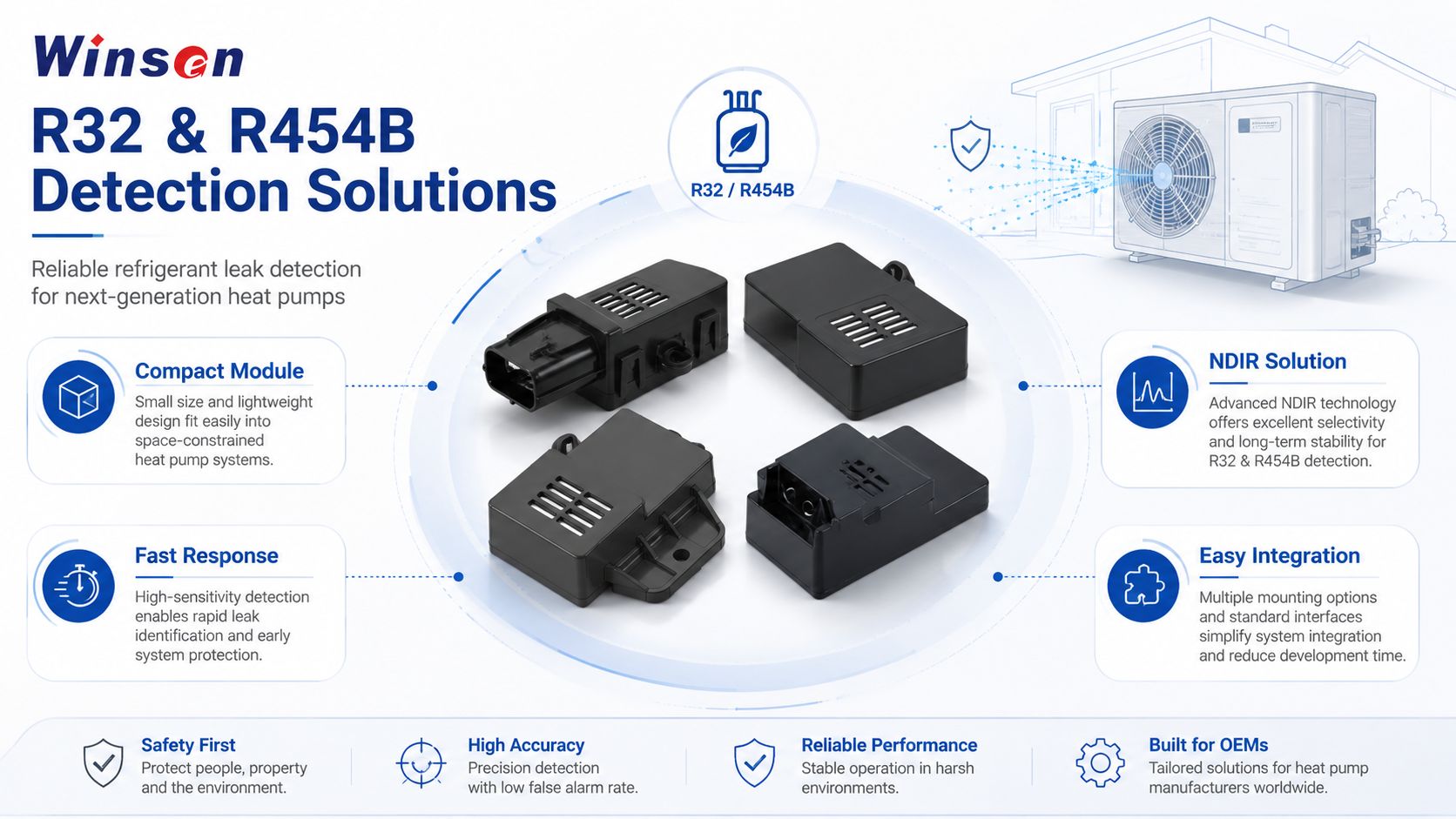
In our engineering experience, the right solution should be selected based on the product architecture, not only on the refrigerant name. Some heat pump manufacturers need a compact module for limited internal space. Others need digital communication for the main controller. Some projects prioritize 0–50% LFL monitoring, while others need a wider 0–100% LFL detection range.
That is why Winsen offers multiple module paths for R32 and R454B projects rather than forcing all customers into one platform. On our refrigerant sensor page, the core product families for these applications include the ZRT512E seriesW ZR210W Seria ZRT512C, I Seria ZRT510.
Solution 1: For higher-range A2L detection and controller communication
For projects that need broader LFL-range monitoring together with digital communication, the ZRT512E-R454B & R32 Series refrigerant detection module is one of the most suitable options. This module targets R454B and R32, supports a 0–100% LFL detection range, and the Winsen comparison section describes it as an Jest n solution with high sensitivity, high resolution, fast response time, and RS485 protocol. The listed module size is 54.0 × 49.1 × 17.9 mm.
For heat pump manufacturers, this type of module is especially suitable when the refrigerant detector needs to communicate directly with a controller or upper-level board through a structured interface rather than only provide a simple alarm signal.
Solution 2: For compact heat pump structures and low-power designs
For projects where installation space is tight and low-power operation matters, the ZR210 refrigerant detection module is a strong solution. It targets R32 and R454B and is described on our product page as a thermal conduction module with fast response speed, small size, low power consumption, long service life, and good anti-condensation effect. Its listed size is only 37 × 20 × 7 mm.
This makes the ZR210 especially valuable in compact indoor units, integrated heat pump assemblies, and designs where condensation resistance and board space are both critical concerns.
Solution 3: For mainstream OEM A2L detection platforms
For manufacturers looking for NDIR-based refrigerant modules in the common A2L detection range, the ZRT512C family provides a very practical solution path. Winsen currently offers ZRT512C-R454B-4-OFW ZRT512C-BW ZRT512C-A, I ZRT512J in this range. These modules cover R454B Lub R32/R454B/R290, and are listed with 0–50% LFL detection ranges. In our comparison section, the ZRT512C family is described as offering high sensitivity, high resolution, and fast response time based on Jest n technology.
For many heat pump OEM programs, this type of platform is a good balance between performance, safety logic support, and integration flexibility.
Solution 4: For dedicated refrigerant-specific module planning
Some manufacturers prefer a more dedicated refrigerant-specific design path. For those projects, Winsen provides both ZRT510 Moduł czujnika czynnika chłodniczego R32 I ZRT510 Moduł czujnika czynnika chłodniczego R454B. The R32 version targets R32, and the R454B version targets R454B. On our product page, both are described as Jest n modules with high sensitivity, high resolution, and fast response. The listed size is 75.4 × 57 × 21.5 mm without connecting cable. The page also notes customization flexibility between R32, R454B, and R290 for this family.
This kind of module is often preferred when the design team wants a more direct refrigerant-specific validation path for a given platform.
Solution 5: For customized assemblies, embedded integration, or ppm-level alarm logic
Some OEM projects do not start with a complete enclosure module. Instead, they need a smaller sensor core or a lower-range solution that can be built into a custom board or product structure. In these cases, Winsen also provides supporting options such as:
. MH-Z1542B-R32 Moduł czujnika czynnika chłodniczego, listed with Jest n principle, 0–5.00% Vol detection range, and UART output, with a size of 32,9 × 22,3 × 11,9 mm.
. MH-441D NDIR CHERRED LOTORANT, listed for R32, R454B, R410A i R134A, z 0–5% Vol range and UART / analog voltage signal output.
. MP511D Czujnik gazu chłodniczego, A półprzewodnik solution with 200–10 000 ppm range and characteristics including high selectivity, fast response, and good anti-interference.
. MP510C Czujnik gazu czynnika chłodniczego, also półprzewodnik, for refrigerants including R32, R134a, R410a i R290, z 100–10 000 ppm range.
. ZP201 Moduł wykrywania gazu czynnika chłodniczego, positioned for R32 leak detection in air-conditioning and refrigeration systems, with an alarm value of 5000 ppm.
These options are useful when the product design requires a custom enclosure, a compact board-level integration path, or ppm-based alarm implementation instead of a fully packaged LFL-oriented module.
How we recommend selecting the right Winsen solution
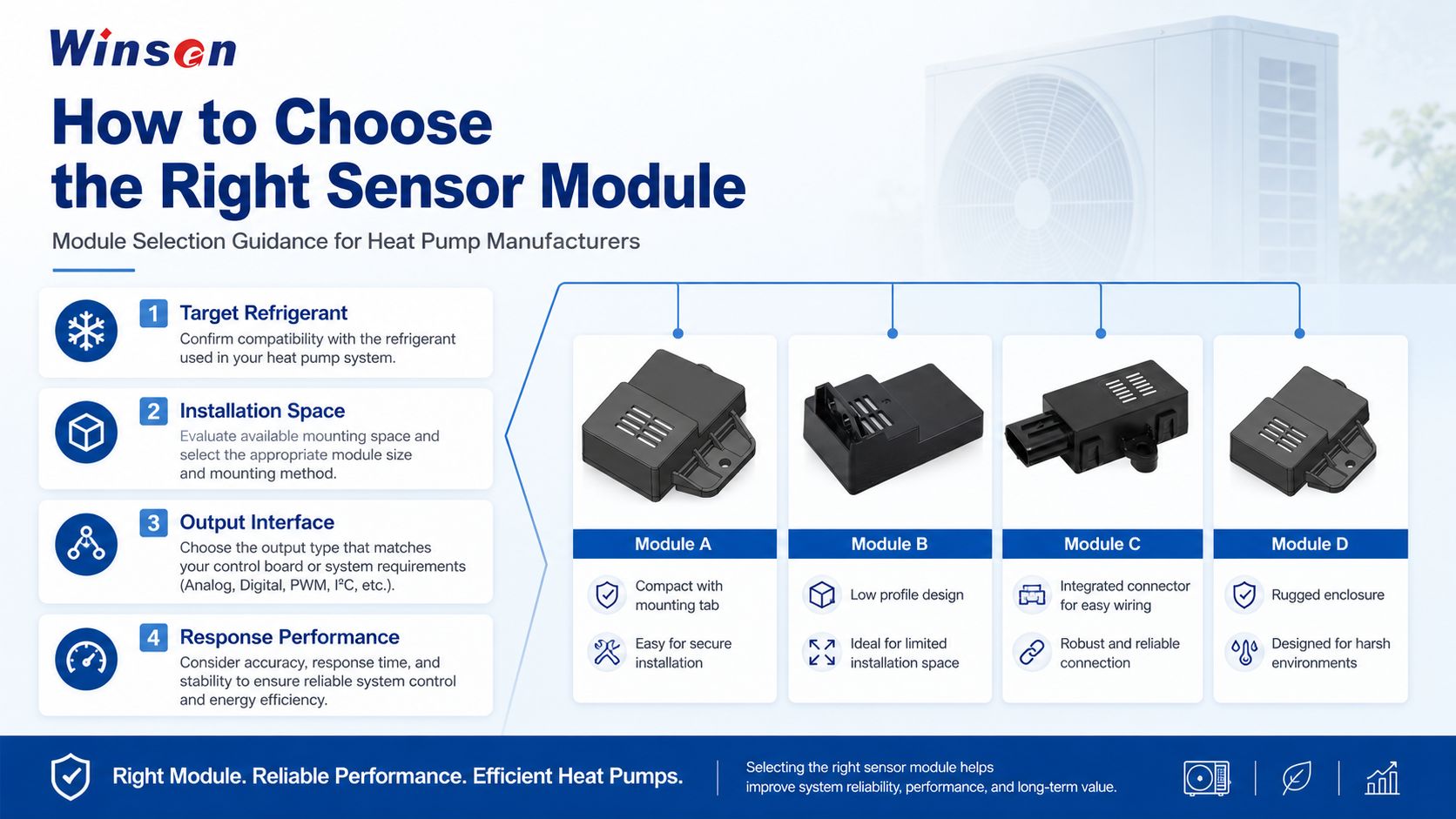
For heat pump manufacturers, module selection should start from the equipment architecture:
If your project needs controller communication and wider LFL-range monitoring, The ZRT512E-R454B & R32 Series is a strong direction.
If your project is space-constrained and requires small size, low power, and anti-condensation performance, The ZR210 is one of the best fits in the current portfolio.
If you want a mainstream NDIR OEM module family for 0–50% LFL monitoring, the ZRT512C family is the practical starting point.
If your product strategy is refrigerant-specific, The ZRT510-R32 I ZRT510-R454B modules offer a clearer dedicated path.
If you are building a custom structure or embedded control platform, products such as MH-Z1542BW M-441DW MP511DW MP510C, I ZP201 can support more specialized designs.
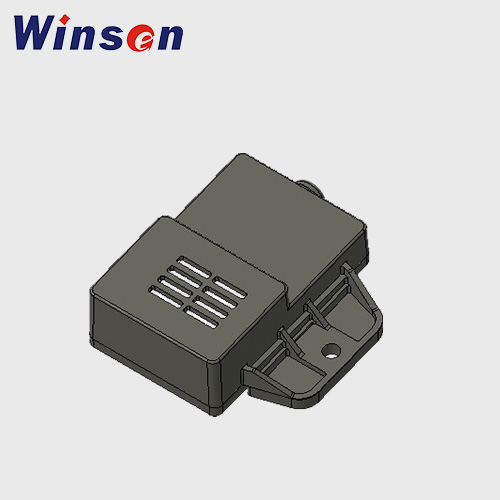
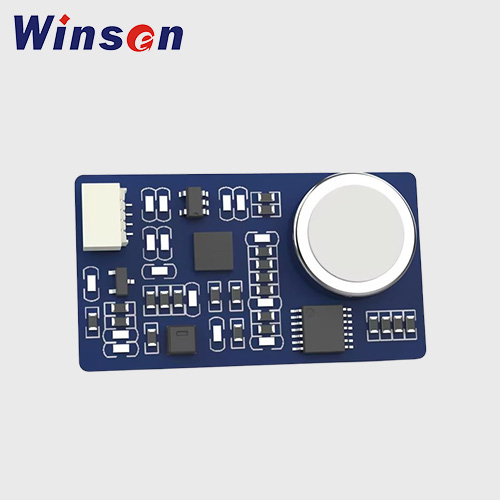
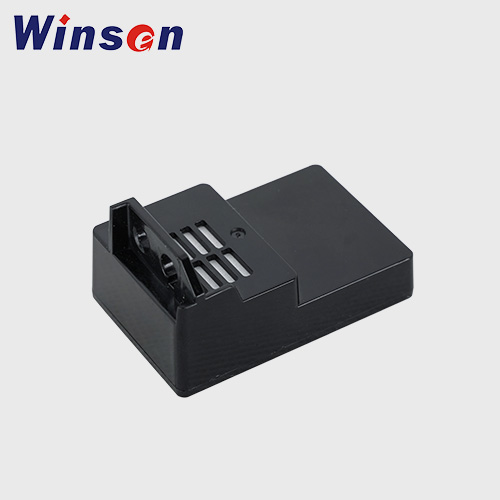
ZRT512C-B Moduł wykrywania czynnika chłodniczego – zasilacz niskonapięciowy
- R32/R454B/R290
- 0 – 50%LFL
- Przeczytaj więcej
ZRT512C-A Moduł wykrywania czynnika chłodniczego – zasilacz szerokonapięciowy
- R32/R454B/R290
- 0 – 50%LFL
- Przeczytaj więcej
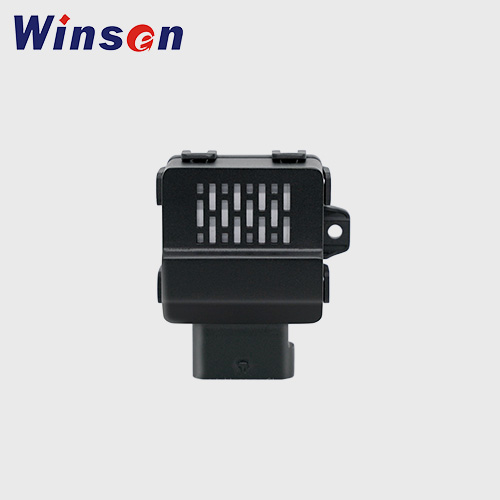
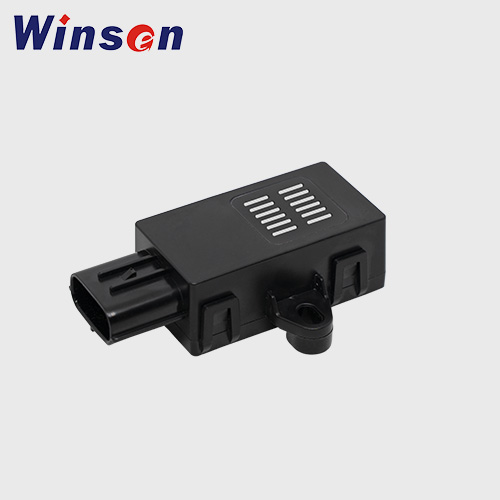
ZRT510 Moduł czujnika czynnika chłodniczego R454B
- R454B (Można dostosować R32 lub R290)
- Przeczytaj więcej
ZRT510 Moduł czujnika czynnika chłodniczego R32
- R32 (R454B lub R290 można dostosować)
- Przeczytaj więcej
ZRT510 Moduł czujnika czynnika chłodniczego R290
- R290 (R454B lub R32 można dostosować)
- Przeczytaj więcej
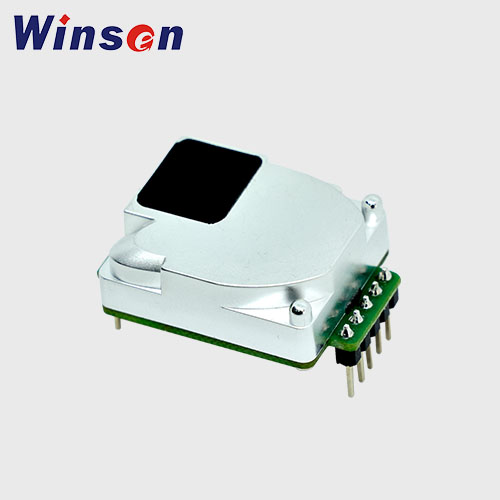
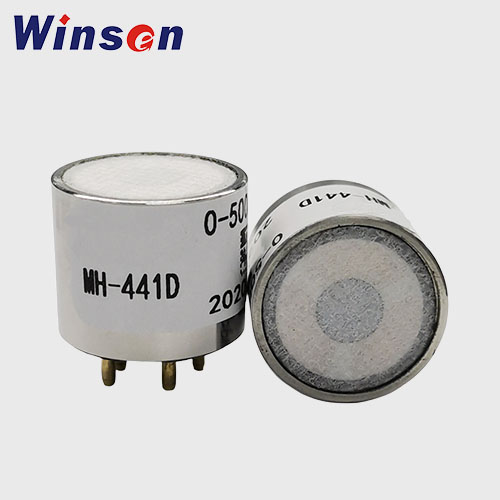
MH-441D NDIR CHERRED LOTORANT
- Czynnik chłodniczy, R32, R454B, R410A, R134A
- 0~5% obj
- Przeczytaj więcej
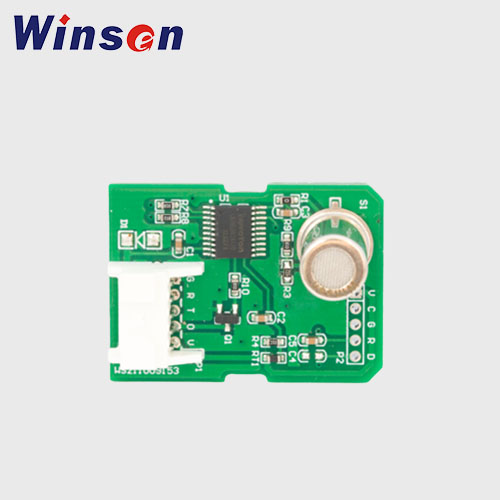
ZP201 Moduł detekcji gazu chłodniczego
- Gaz chłodniczy R32
- Wartość alarmowa 5000 ppm
- Przeczytaj więcej
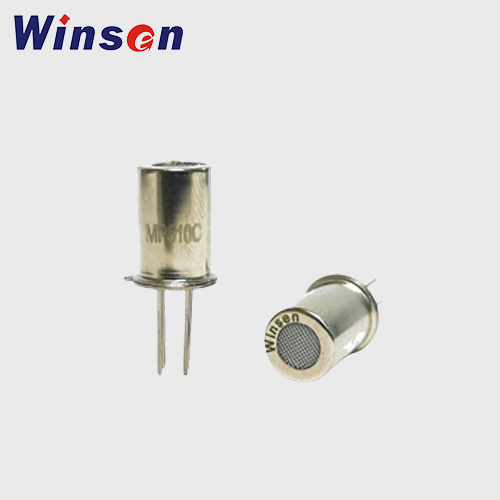
MP510C Czujnik gazu czynnika chłodniczego
- gazy chłodnicze: R32, R134a, R410a, R290
- 100-10000 ppm
- Przeczytaj więcej
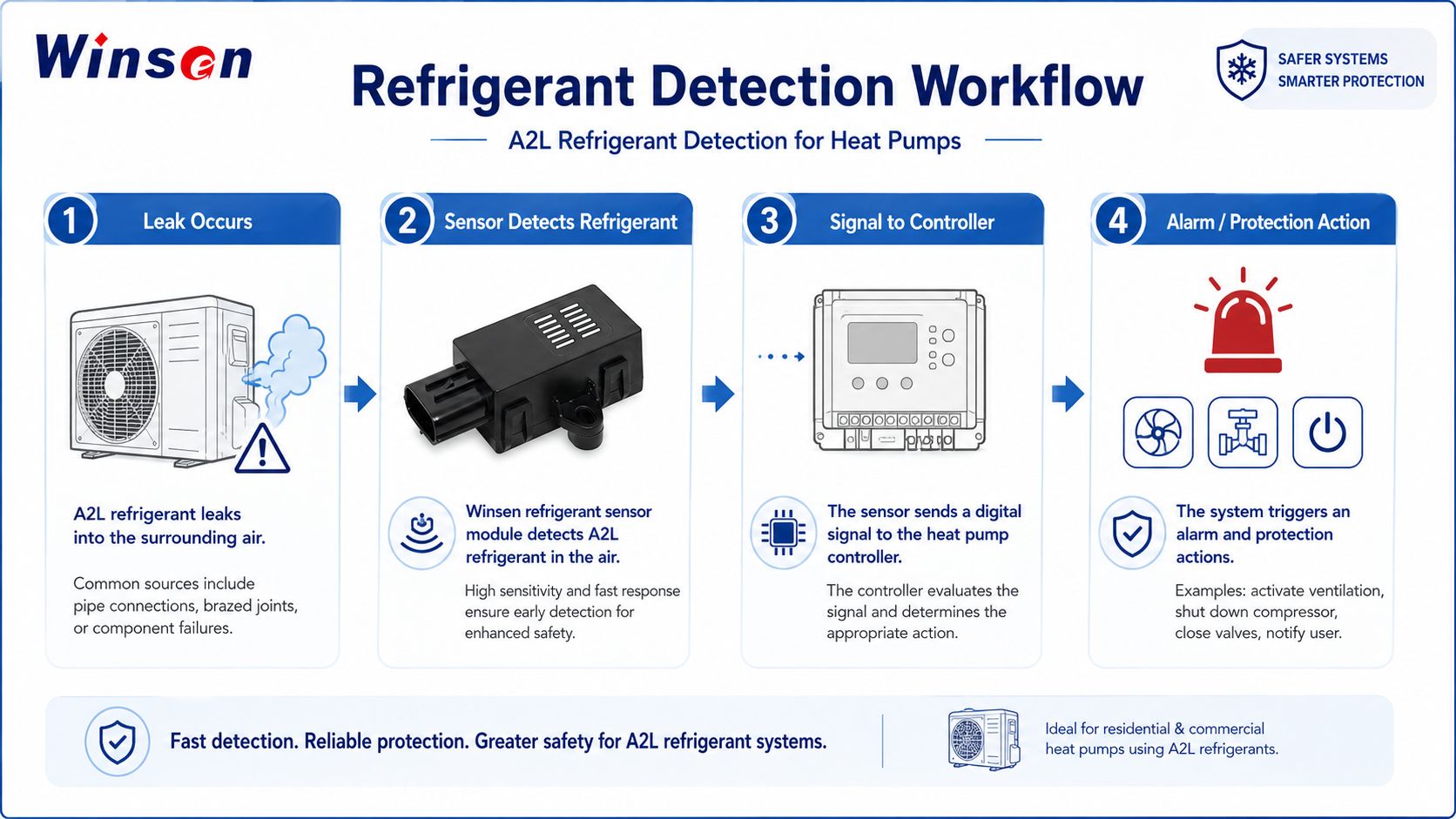
What makes the Winsen solution practical for heat pump OEMs
The real value of a professional refrigerant detection solution is not only detection accuracy. For OEM projects, the solution must also be practical in engineering terms. That includes module size, interface method, sensor principle, anti-condensation ability, integration flexibility, and long-term operating stability.
This is exactly why Winsen offers different technical routes across the refrigerant sensor portfolio. Our page combines Jest nW thermal conduction, I półprzewodnik approaches across different products, allowing manufacturers to choose the most suitable balance of size, response, structure, and output method for their own heat pump platform.
Często zadawane pytania
Which Winsen module supports both R32 and R454B?
Several Winsen products support both gases directly, including ZRT512E-R454B & R32 SeriesW ZR210, and selected ZRT512C family modules.
Which Winsen refrigerant module is best for compact heat pump products?
For compact designs, the ZR210 is one of the strongest choices because it combines mały rozmiarW niskie zużycie energiiW fast response, I good anti-condensation effect, with a listed size of 37 × 20 × 7 mm.
Does Winsen provide NDIR solutions for R32 and R454B?
Yes. Winsen’s refrigerant sensor portfolio includes multiple Jest n solutions for these refrigerants, including the ZRT512EW ZRT512C family, ZRT510 family, and M-441D.
Does Winsen provide ppm-level refrigerant gas sensing solutions?
Yes. Products such as MP511DW MP510C, I ZP201 support ppm-level refrigerant detection for different application needs.
Can Winsen support solution selection for different heat pump projects?
Yes. Our refrigerant sensor portfolio includes module and sensor options with different principles, structures, and target gases, which makes it possible to match the solution to different OEM product architectures. The refrigerant sensor page also provides direct contact through [email protected] for project consultation.
Wniosek
For R32 and R454B heat pump development, a professional refrigerant detection solution should not be written as a catalog summary. It should start from the real engineering task: what the equipment needs to detect, how the signal will be used, how much installation space is available, and what kind of integration path the controller requires.
At Winsen, we provide multiple solution paths for this exact purpose—from compact ZR210 modules to higher-range ZRT512E solutions, mainstream ZRT512C family options, dedicated ZRT510 modules, and supporting embedded sensors for customized projects. That allows heat pump manufacturers to choose a solution based on engineering fit, not just on a product name.
