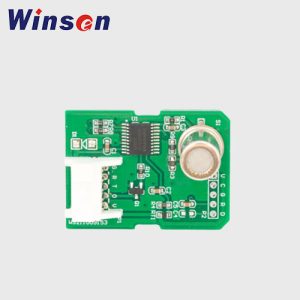
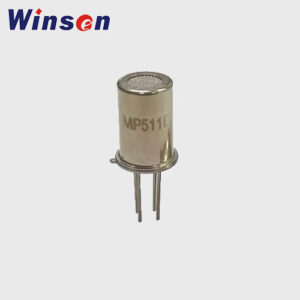
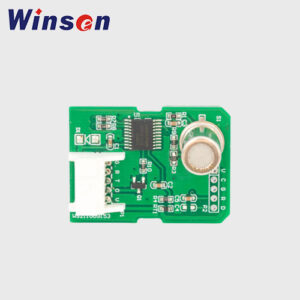
Electronic AC Leak Sensor (Electronic AC Leak Detector) — Split/VRF • Central AC
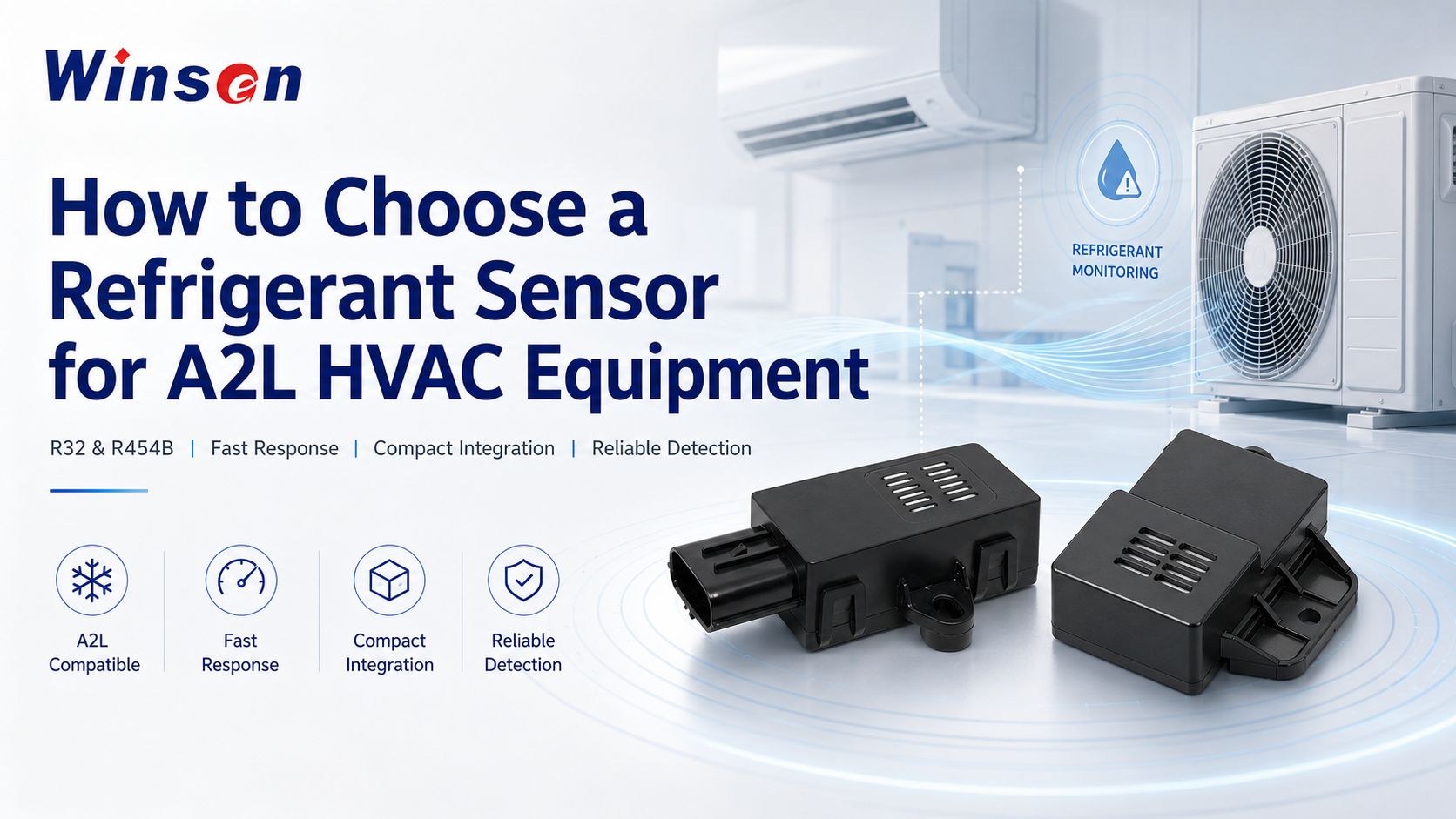
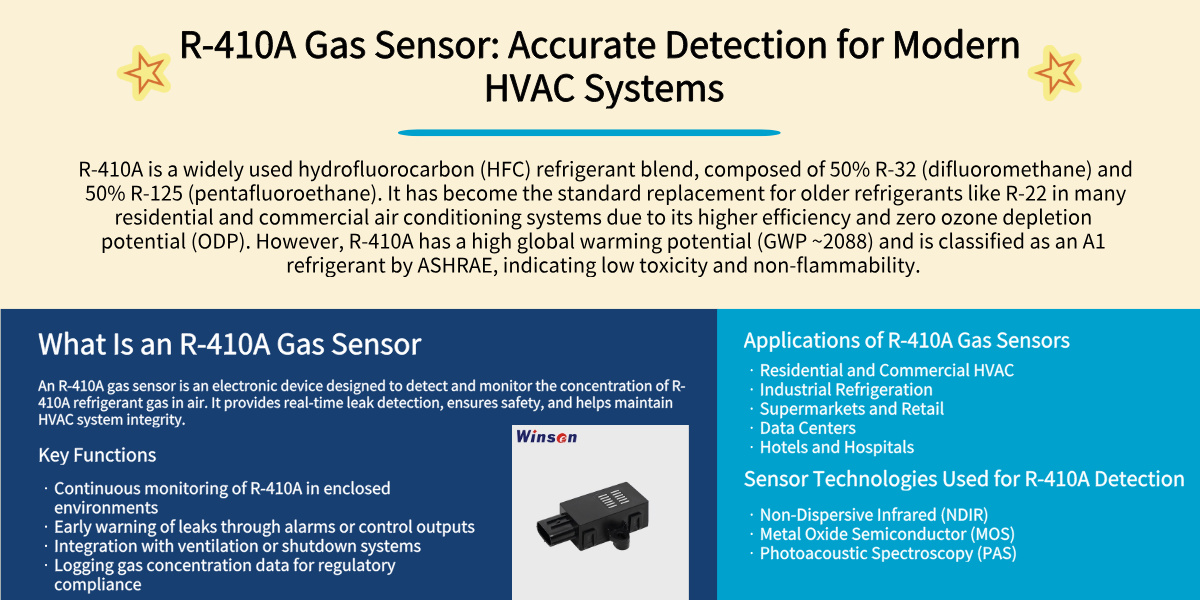
Winsen® electronic AC leak sensors provide continuous, fixed monitoring for czynniki chłodnicze do klimatyzacji across residential and commercial buildings. We support A1 (R134a, R410A, R404A), A2L (R32, R454B, R1234yf/ze) and A3 (R290, R600a) gases. Choose Jest n dla wczesnego ostrzegania ppm lub MOS/IR-LEL for %LEL safety interlocks—ready for BMS/PLC via 4–20 mAW Modbus RS-485, I wyjścia przekaźnikowe.
- Zasięg A1/A2L/A3
- NDIR ppm & MOS %LEL
- OEM/ODM • Zamówienia masowe
- Szybki czas realizacji


Model Guide — Pick by Refrigerant Class & Measurement
A1 (R410A / R134a) — NDIR PPM
- Ranges: 0–1,000 / 0–5,000 ppm (customizable)
- Wyjścia: 4–20 mA, RS-485 Modbus, 1–2 przekaźniki
- T90 ≤ 30 s • Niski dryft, długa żywotność
A2L (R32 / R454B / R1234yf/ze) — NDIR PPM / %LEL
- PPM early warning and/or 0–100% LFL/LEL
- 4–20 mA / RS-485 / przekaźniki
- VRF rooms & hotel guestrooms
A3 (R290 / R600a) — %LEL Safety
- Range: 0–100% LEL (IR-LEL or MOS)
- Relays for ventilation & shutdown interlocks
- IP options for cold/mechanical spaces
What is an Electronic AC Leak Sensor?
An electronic AC leak sensor is a fixed, continuously-monitoring detector installed near indoor units, AHUs, or mechanical rooms to measure refrigerant concentration and automatically trigger alarms I interlocks (purge fans, equipment shutdown). It complements the handheld sniffers technicians use for pinpointing leaks.
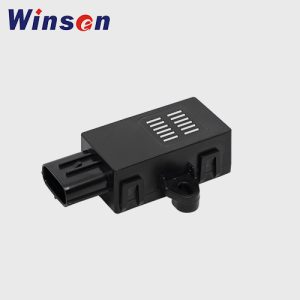
Czujnik czynnika chłodniczego NDIR
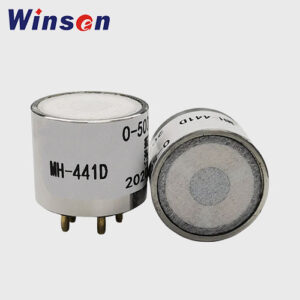
Półprzewodnikowy czujnik czynnika chłodniczego
Opcje technologiczne
| Technologia | Najlepsze dla | Zakres | Zalety | Rozważania |
|---|---|---|---|---|
| NDIR (podczerwień) | A1 ppm; A2L ppm/%LEL | ppm → %LEL | High selectivity & stability; not O₂-dependent; long life | Chronić przed silną kondensacją/kurzem (filtry/obudowa) |
| MOS (półprzewodnik) | A2L/A3%DGW | 0–100% DGW | Szybka reakcja; solidny; opłacalne | Możliwe przekrojowe wrażliwości; zalecana okresowa kalibracja |
| Koralik katalityczny | Węglowodory ogólne (A3) | 0–100% DGW | Dojrzała technologia materiałów łatwopalnych | Wymaga O₂; podatny na trucizny (silikony/ołów) |
Typowe zastosowania
Split/VRF indoor units & hotel rooms
Mount low (~150–300 mm above floor) near indoor units and pooling points. Pre-alarm → fresh-air purge; main alarm → fan/indoor-unit shutdown.
Central AC (AHU/MAU) & mechanical rooms
Place near coils, TXVs, and floor low spots/sumps; use IP-rated housings. Integrate with BMS to start purge fans at pre-alarm and trip systems at main alarm.
Line sets, condenser/evaporator sections
Monitor around brazed joints, service valves, manifolds; avoid strong supply streams that could bypass the sensor.
Heat pumps
For A2L/A3 systems, use %LFL tiers (~25% pre-alarm; ~50% main) to trigger ventilation and safe shutdown.
Podstawowe specyfikacje
| Parametr | Wartość / Opcja |
|---|---|
| Pomiar | NDIR ppm and/or %LFL (MOS/IR-LEL) |
| Wyjścia | 4–20 mA (2/3-przewodowy), RS-485 Modbus RTU, 1–2 przekaźniki (N.O./N.C.) |
| Czas reakcji (T90) | ≤ 20–30 s typowo |
| Dostarczać | 12–24 VDC (inne na zamówienie) |
| Warunki pracy | −20…+50°C; 15–95% RH, bez kondensacji (w zależności od modelu) |
| Obudowy | Ściana, panel, kanał; obudowy do IP65 |
| Zgodność | CE & RoHS; designed for BMS/PLC integration |
Placement & Setpoints — Good Practice
- Wysokość montażu: Większość czynników chłodniczych prądu przemiennego jest cięższa od powietrza ⇒ montować nisko; potwierdzić przepływem powietrza w pomieszczeniu.
- Zasięg: promień ~5–10 m na czujnik w otwartych pomieszczeniach; dodaj jednostki w pobliżu zaworów/złączy i niskich kieszeni.
- Alarmy: A2L/A3: alarm wstępny ≈25% LFL; główny ≈50% LFL. A1: poziomy ppm (np. 1 000–5 000 ppm) zgodnie ze specyfikacją projektową.
- Blokady: Pre-alarm → ventilation; Main → equipment shutdown + beacons/horns/BMS event.
Sfinalizuj progi i ilości zgodnie z lokalnymi przepisami i specyfikacją projektu.
Dlaczego globalni klienci wybierają nas?
Firma konsekwentnie przestrzega polityki jakościowej „drobnego rzemiosła, innowacji naukowych, dążenia do doskonałości i usługi o wartości dodanej”. Sformułując plany kontroli procesu produkcji i instrukcje pracy, ustanowił standardowy, odpowiedzialny i regulowany system zarządzania procesami. Ponadto firma niezależnie opracowała system zarządzania produkcją MES, umożliwiając kompleksowe i wizualne zarządzanie w całym przepływie pracy.

Ponad 30 lat doświadczenia
R&D, manufacture and sales of sensors and sensing solutions.
Gwarancja jakości ciągła poprawa
Pełna i sztywna kontrola przepływu procesu, w połączeniu ze znaczącą ulepszeniami.


Rynek międzynarodowy
Dostarczanie produktów wykrywających do ponad 100 krajów i regionów.
Stabilna niezawodna produkcja łańcucha dostaw
Komponenty podstawowe nie podlegają ograniczeniom, zaawansowanym urządzeniom do produkcji i testowania.


R&D STRENGTH TECHNOLOGY INNOVATION
200+ patents, 180+ R&D team members, self-built labs for continous innovation.
Usługa jednokrotna
Profesjonalne konsultacje, szybka dostawa, 24-godzinne wsparcie po sprzedaży.

Leading the Industry, Innovative & Controllable Technology
With robust R&D capabilities, we maintain sustained input in R&D and unwavering commitment to technological innovation. This not only ensures that we remain at the forefront of industry but also drives continuous innovation, leading the future trend of the sensing industry.
10% R&D Input
The average annual R&D input exceeds 10% of the annual revenue.
5+ R&D Layout
With Zhengzhou headquarters as the core, a nationwide R&D and innovation system is being established, encompassing cities of Shanghai, Wuhan, Shenzhen, and Taiyuan.
180+ R&D Team
There are over 180 R&D personnel, including more than 10 with doctoral degrees and over 50 with master's degrees, who have an average of more than 8 years of experience in sensor development.
Ponad 20 rodzajów eksperymentów
Związane z gazem, środowisko klimatyczne, EMC, wydajność elektryczna, wydajność mechaniczna itp.
Ponad 10 zaawansowanych laboratoriów
CNAS Laboratory, MEMS Laboratory, UL Laboratory, Nanokomposite Materials Laboratory itp.
400+ sets Leading R&D Equipment
Storage kostki, Die Bonder, Maszyna litograficzna, maszyna do powlekania, maszyna do umieszczania SMT, automatyczna stacja sondy itp.
FAQs — Freon Gas Sensors
How many sensors do I need per room?
Plan ~5–10 m radius coverage per sensor in open rooms. Add units near indoor units, valves, joints, and floor-level pockets where gas may accumulate. Irregular layouts typically need more sensors.
What alarm thresholds should I use?
For A2L/A3 gases: pre-alarm ≈25% LFL to start ventilation; main ≈50% LFL to trip equipment and trigger beacons/horns. For A1 gases, use ppm bands (e.g., 1,000–5,000 ppm) per project spec and risk assessment.
Where should the sensor be mounted?
Most AC refrigerants are heavier than air; mount low (≈150–300 mm above floor) near likely leak sources and pooling points. Avoid strong supply air that could bypass the sensor. Probe/duct versions can monitor return air.
How often should I calibrate and bump-test?
Typical calibration is every 12–24 months with periodic bump tests (quarterly/biannual). Dusty or humid sites, or areas with cleaning aerosols, may need more frequent checks and filter maintenance.
Which technology should I choose: NDIR or MOS?
Choose NDIR for ppm early warning and long-term stability; choose MOS or IR-LEL for %LEL safety interlocks on A2L/A3 systems. Many sites use both tiers for redundancy.
Can Winsen customize for OEM/volume programs?
Yes—ranges, firmware, Modbus mapping, connectors/harnesses, housings (IP rating), labels/branding, and packaging can be tailored for volume deployments.