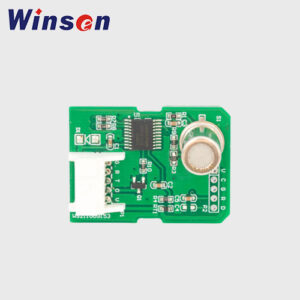
AC Gas Leak Sensor (Air Conditioner Refrigerant Leak Detector) — Split/VRF • Central AC • Heat Pump
Winsen® manufactures fixed AC gas leak sensors for residential and commercial air-conditioning systems. We cover A1 (R134a, R410A, R404A), A2l (R32, R454B, R1234yf/ze) ja A3 (R290, R600a) gaasid. Vali On n ppm varajase hoiatuse jaoks või MOS/DIR %LEL turvablokeeringutele – valmis BMS/PLC jaoks 4–20 mA, RS-485 Modbusja relee väljundid.
- A1 / A2L / A3 katvus
- NDIR ppm & MOS %LEL
- OEM/ODM • Hulgitellimused
- Kiire teostusaeg


Model Guide — Pick by Refrigerant Class & Measurement
A1 (R410A / R134a) – NDIR PPM
- Tüüpilised vahemikud: 0–1000 / 0–5000 ppm
- Väljundid: 4–20 mA, RS-485 Modbus, 1–2 releed
- T90 ≤ 30 s • Väike triiv, pikk kasutusiga
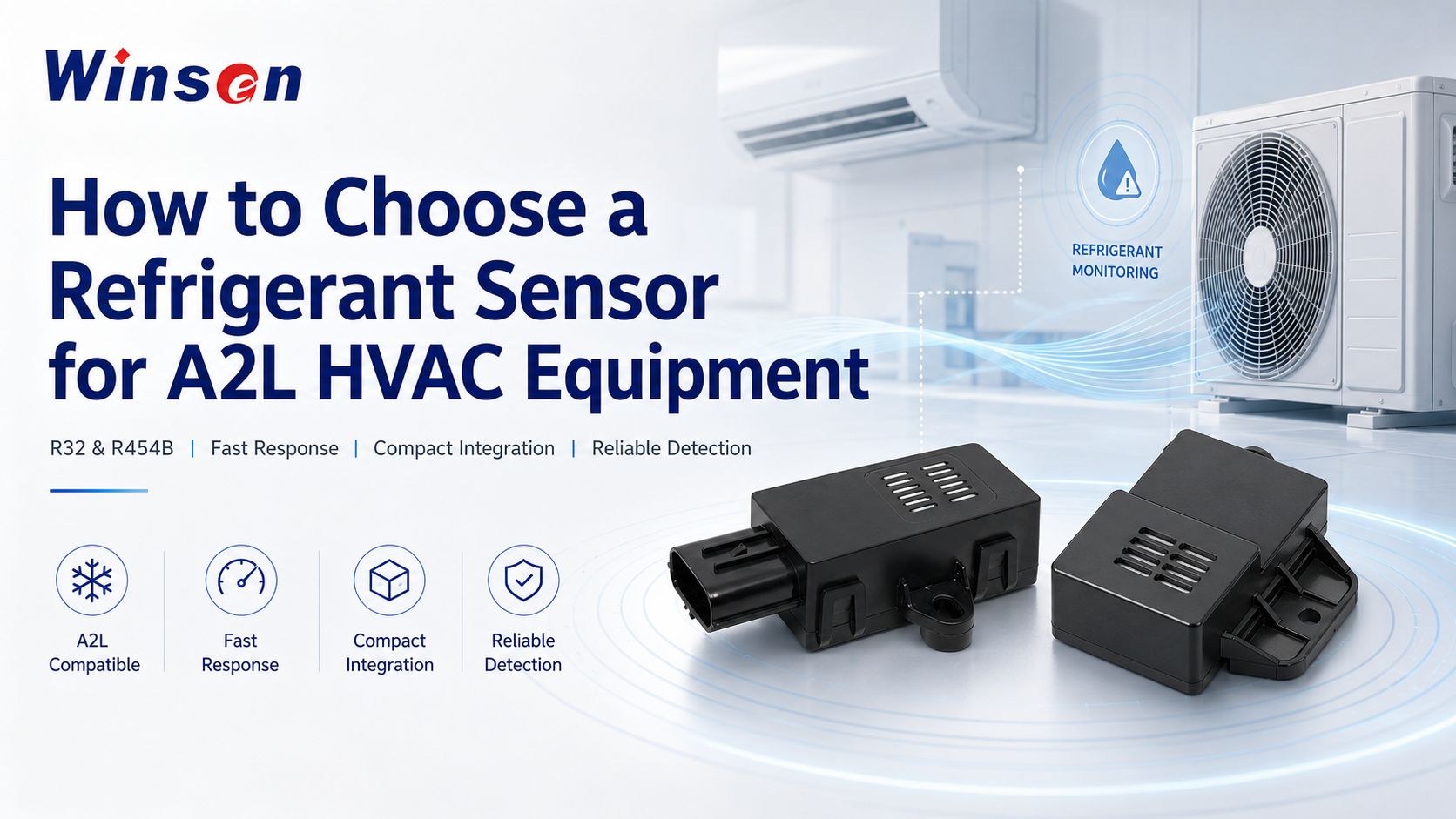
A2L (R32 / R454B / R1234yf/ze) – NDIR PPM / %LEL
- PPM varajane hoiatus ja/või 0–100% LFL/LEL
- 4–20 mA / RS-485 / releed
- VRF/VRV rooms & hotel guestrooms
A3 (R290 / R600a) — %LEL Ohutus
- Vahemik: 0–100% LEL (NDIR-LEL või MOS)
- Relays for ventilation & shutdown interlocks
- IP options for plant rooms and cold spaces
What is an AC Gas Leak Sensor?
An AC gas leak sensor is a fikseeritud, elektrooniline detektor that continuously measures refrigerant concentration around air-conditioning equipment and automatically drives alarmid ja blokeeringud (ventilation, fan/indoor-unit shutdown). It complements handheld detectors used by technicians for pinpoint leak search.
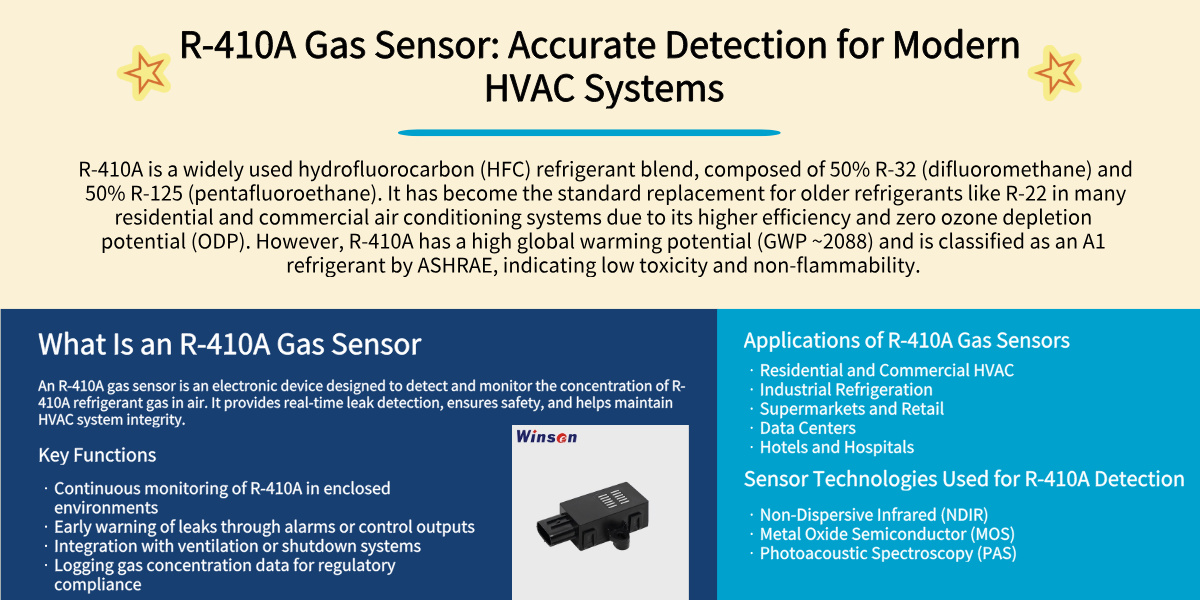
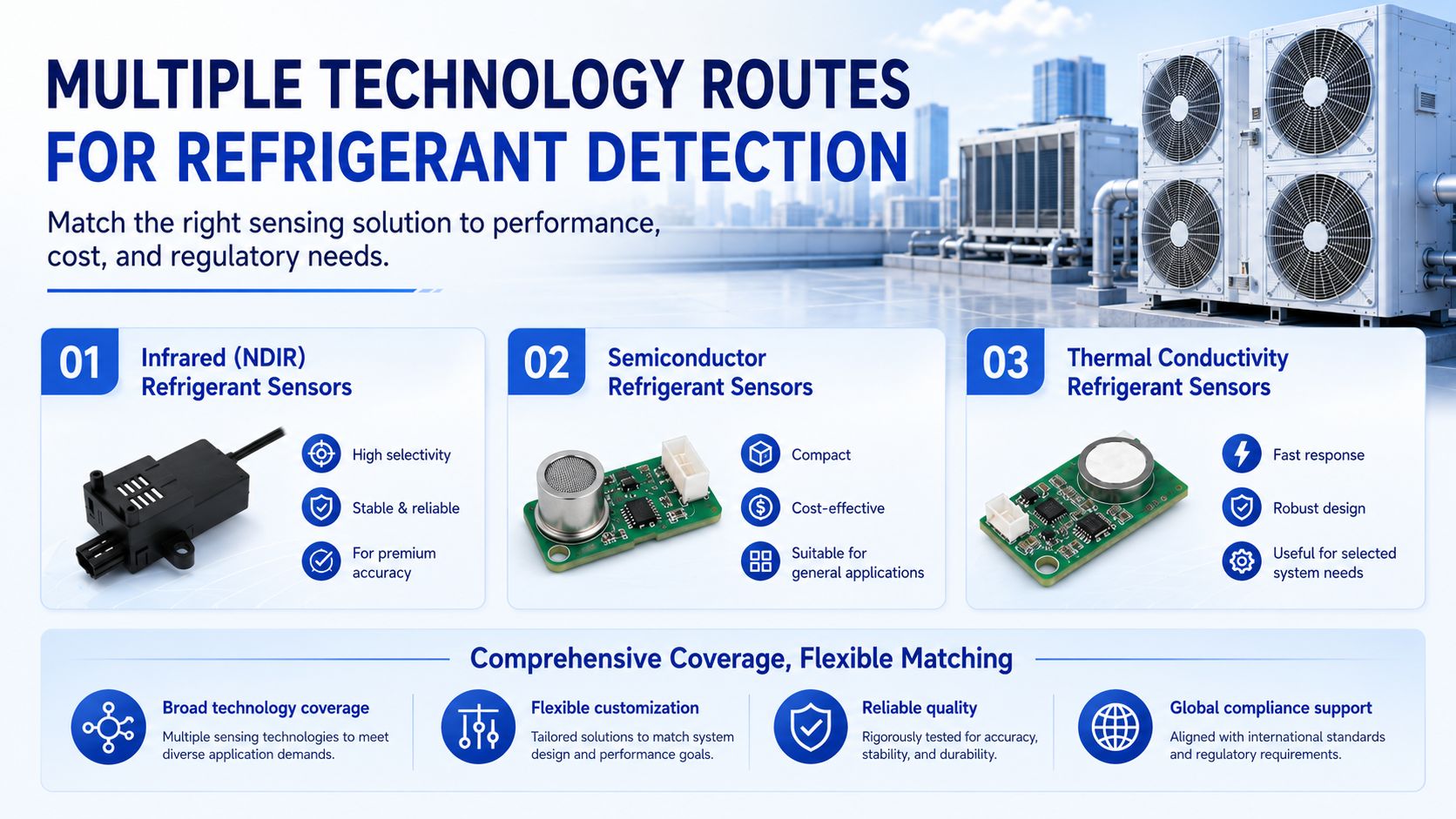
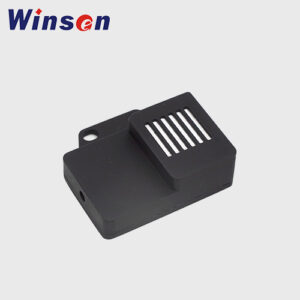
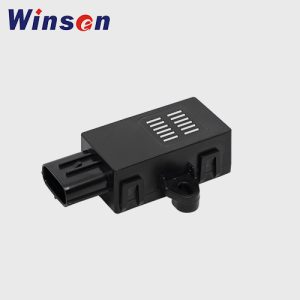
NDIR külmutusagensi andur
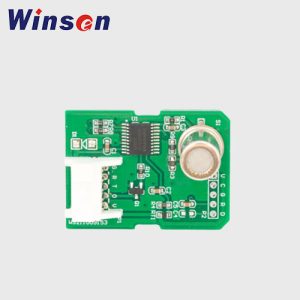
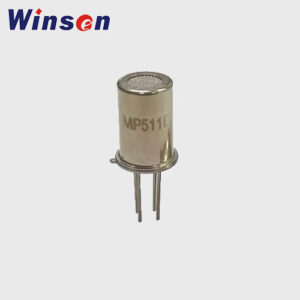
Pooljuht külmutusagensi andur
Tehnoloogia valikud
| Tehnoloogia | Parim jaoks | Vahemik | Eelised | Kaalutlused |
|---|---|---|---|---|
| NDIR (infrapuna) | A1 ppm; A2L ppm/%LEL | ppm → %LEL | High selectivity & stability; not O₂-dependent; long life | Protect from heavy condensation/dust (filters/enclosure) |
| MOS (pooljuht) | A2L/A3%LEL | 0–100% LEL | Kiire reageerimine; vastupidav; tasuv | Cross-sensitivities possible; periodic calibration advised |
| Katalüütiline rant | Üldised süsivesinikud (A3) | 0–100% LEL | Mature tech for flammables | Requires O₂; susceptible to poisons (silicones/lead) |
Typical AC Applications

Split/VRF indoor units & hotel rooms
Paigaldage madalale (~150–300 mm põrandast kõrgemale) siseseadmete ja kogumiskohtade lähedusse. Eelhäire → värske õhu puhastamine; põhihäire → ventilaatori/siseseadme väljalülitamine.

Central AC (AHU/MAU) & mechanical rooms
Place near coils, expansion valves, and floor low spots/sumps; use IP-rated enclosures and BMS interlocks.

Line sets, condenser & evaporator sections
Monitor around brazed joints, service valves, manifolds; avoid strong supply streams that could bypass the sensor.

Heat pumps & general HVAC equipment
A2L-süsteemide puhul kasutage ventilatsiooni ja ohutu seiskamise käivitamiseks %LFL taset (≈25% eelhäire; ≈50% põhi).
Põhispetsifikatsioonid
| Parameeter | Väärtus / valik |
|---|---|
| Mõõtmine | NDIR ppm ja/või %LFL (MOS/NDIR-LEL) |
| Väljundid | 4–20 mA (2/3-juhtmeline), RS-485 Modbus RTU, 1–2 releed (N.O./N.C.) |
| Reageerimisaeg (T90) | ≤ 20–30 s tüüpiline |
| Pakkumine | 12–24 VDC (muud nõudmisel) |
| Kasutustingimused | −20…+50 °C; 15–95% suhteline õhuniiskus mittekondenseeruv (sõltub mudelist) |
Placement & Setpoints — Good Practice
- Paigalduskõrgus: Most AC refrigerants are heavier than air ⇒ mount low; confirm with on-site airflow.
- Katvus: ~5–10 m raadiusega anduri kohta avatud ruumides; lisada üksused ventiilide/liigendite ja madalate taskute lähedusse.
- Alarmid: A2L/A3: pre-alarm ≈25% LFL; main ≈50% LFL. A1: ppm bands (e.g., 1,000–5,000 ppm) per design spec.
- Blokeeringud: Pre-alarm → ventilation; Main → equipment shutdown + beacons/horns/BMS events.
Lõpetage künnised ja kogused vastavalt kohalikele koodidele ja oma projekti spetsifikatsioonile.
Miks globaalsed kliendid meid valivad?
Ettevõte järgib järjekindlalt kvaliteedipoliitikat "peen käsitöö, teaduslik innovatsioon, tipptaseme saavutamine ja lisandväärtusega teenus". Tootmisprotsesside juhtimisplaanide ja tööjuhendite koostamisega on ta loonud standardiseeritud, vastutustundliku ja reguleeritud protsesside juhtimissüsteemi. Lisaks on ettevõte iseseisvalt välja töötanud MES-i tootmisjuhtimissüsteemi, mis võimaldab terviklikku ja visuaalset juhtimist kogu töövoo ulatuses.

30+ AASTAT KOGEMUST
R&D, manufacture and sales of sensors and sensing solutions.
KVALITEEDI GARANTII PIDEV TÄIENDAMINE
Täielik ja jäik protsessivoo juhtimine koos oluliste täiustustega.


RAHVUSVAHELINE TURG
Tarnige anduritooteid enam kui 100 riiki ja piirkonda.
STABIILNE TARNEAHEL KINNITAV TOOTMINE
Põhikomponendid, millele ei kehti piirangud, täiustatud seadmed tootmiseks ja testimiseks.


R&D STRENGTH TECHNOLOGY INNOVATION
200+ patents, 180+ R&D team members, self-built labs for continous innovation.
Ühetoruteenus
Professionaalne konsultatsioon, kiire tarne, 24-tunnine müügijärgne tugi.

Leading the Industry, Innovative & Controllable Technology
With robust R&D capabilities, we maintain sustained input in R&D and unwavering commitment to technological innovation. This not only ensures that we remain at the forefront of industry but also drives continuous innovation, leading the future trend of the sensing industry.

10% R&D Input
The average annual R&D input exceeds 10% of the annual revenue.
5+ R&D Layout
With Zhengzhou headquarters as the core, a nationwide R&D and innovation system is being established, encompassing cities of Shanghai, Wuhan, Shenzhen, and Taiyuan.
180+ R&D Team
There are over 180 R&D personnel, including more than 10 with doctoral degrees and over 50 with master's degrees, who have an average of more than 8 years of experience in sensor development.
20+ katsetüüpi
Gaasiga seotud, kliimakeskkond, elektromagnetiline ühilduvus, elektriline jõudlus, mehaaniline jõudlus jne.
10+ täiustatud laborit
CNAS Laboratory, MEMS Laboratory, UL Laboratory, Nanocomposite Materials Laboratory jne.
400+ sets Leading R&D Equipment
Kuubikuhoidla, stantsimismasin, litograafiamasin, katmismasin, SMT paigutusmasin, automaatne sondijaam jne.
Taotlege konsultatsiooni
KKK – infrapuna (NDIR) külmutusagensi lekkeandurid
How many sensors do I need per room?
Plan ~5–10 m radius coverage per sensor in open rooms. Add units near indoor units, valves, joints, and floor-level pockets where gas may accumulate. Irregular layouts typically need more sensors.
What alarm thresholds should I use?
For A2L/A3 gases: pre-alarm ≈25% LFL to start ventilation; main ≈50% LFL to trip equipment and trigger beacons/horns. For A1 gases, use ppm bands (e.g., 1,000–5,000 ppm) per project spec and risk assessment.
Where should the sensor be mounted?
Most AC refrigerants are heavier than air; mount low (≈150–300 mm above floor) near likely leak sources and pooling points. Avoid strong supply air that could bypass the sensor. Probe/duct versions can monitor return air.
How often should I calibrate and bump-test?
Typical calibration is every 12–24 months with periodic bump tests (quarterly/biannual). Dusty or humid sites, or areas with cleaning aerosols, may need more frequent checks and filter maintenance.
Which technology should I choose: NDIR or MOS?
Choose NDIR for ppm early warning and long-term stability; choose MOS or IR-LEL for %LEL safety interlocks on A2L/A3 systems. Many sites use both tiers for redundancy.
Can Winsen customize for OEM/volume programs?
Yes—ranges, firmware, Modbus mapping, connectors/harnesses, housings (IP rating), labels/branding, and packaging can be tailored for volume deployments.